Binary Numbers and Base Systems as Fast as Possible
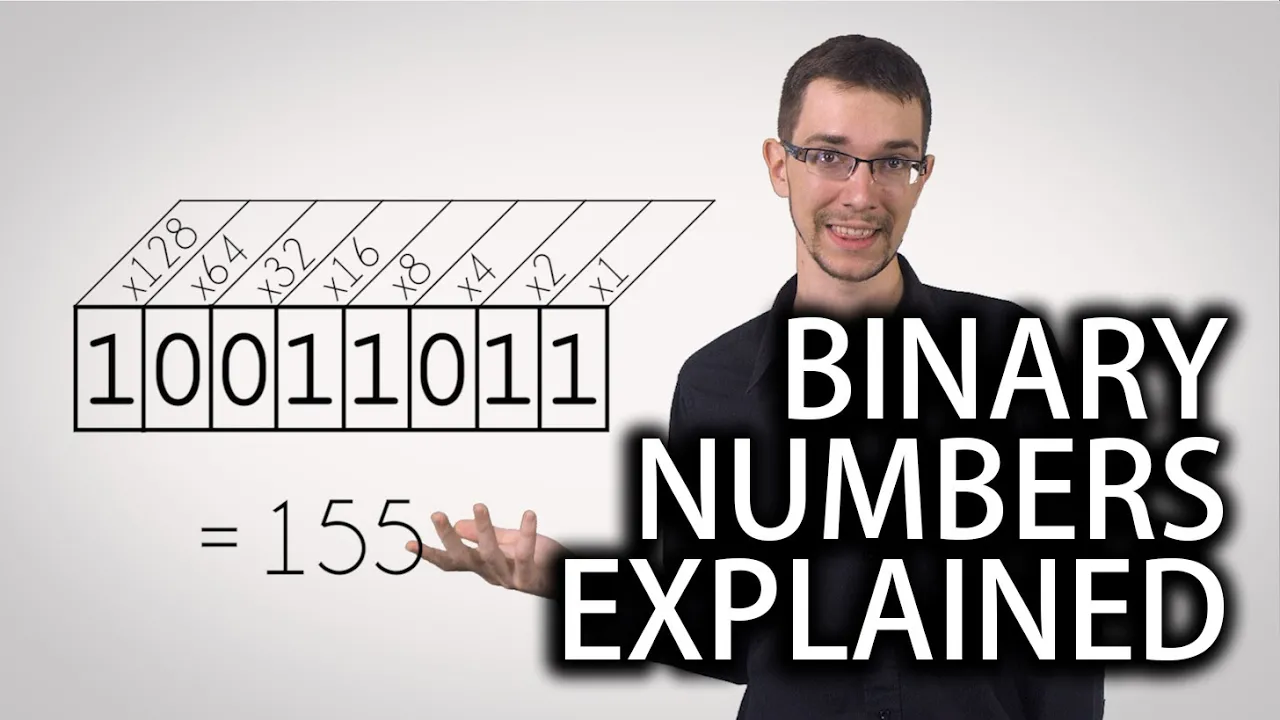
The video starts by explaining how modern computing relies on electricity that is either on or off, which is encoded as binary digits 1 and 0. It introduces the decimal base 10 system, detailing how we use ten symbols from 0 to 9 and how positional notation allows a new digit to the left when counting reaches 10, since each digit represents a power of the base. The presenter then shows how a two-symbol system, base 2, still follows the same rules of positional notation, where each new digit is double the value of the one to its right, and walks through a binary example that expands to a sum of powers of two to yield a final value. The discussion broadens to other base systems, noting that bases two, eight, twelve, or higher all follow the same core principles, with letters used to represent values above 9 in bases greater than ten. Alphanumeric encoding is touched upon for bases up to 36 and beyond, illustrating how URLs and identifiers can occupy many symbols without losing the underlying arithmetic logic. The segment concludes with a quick tour of base 12 and base 10 usage, the advantages of different bases for computation and daily math, and a light aside about the metric system and American usage, followed by a short plug for the sponsor Lyda.com offering a seven-day trial. The video wraps up by recapping the key ideas: binary as a simple yet powerful representation, various bases as extensions of positional notation, and practical implications for computing and data encoding.
Topics · science · technology · education · computer science
Questions answered
- What is the fundamental idea behind base systems like decimal and binary?
- Base systems use positional notation where each digit represents a value times a power of the base, and when counting reaches the base, a new digit is added to the left, increasing the power.
- How many symbols are needed to represent numbers in bases higher than ten, and how are they usually written?
- Bases higher than ten use additional symbols, typically letters, to represent values above 9, such as A for 10, B for 11, etc., enabling bases up to at least 36 in common usage.