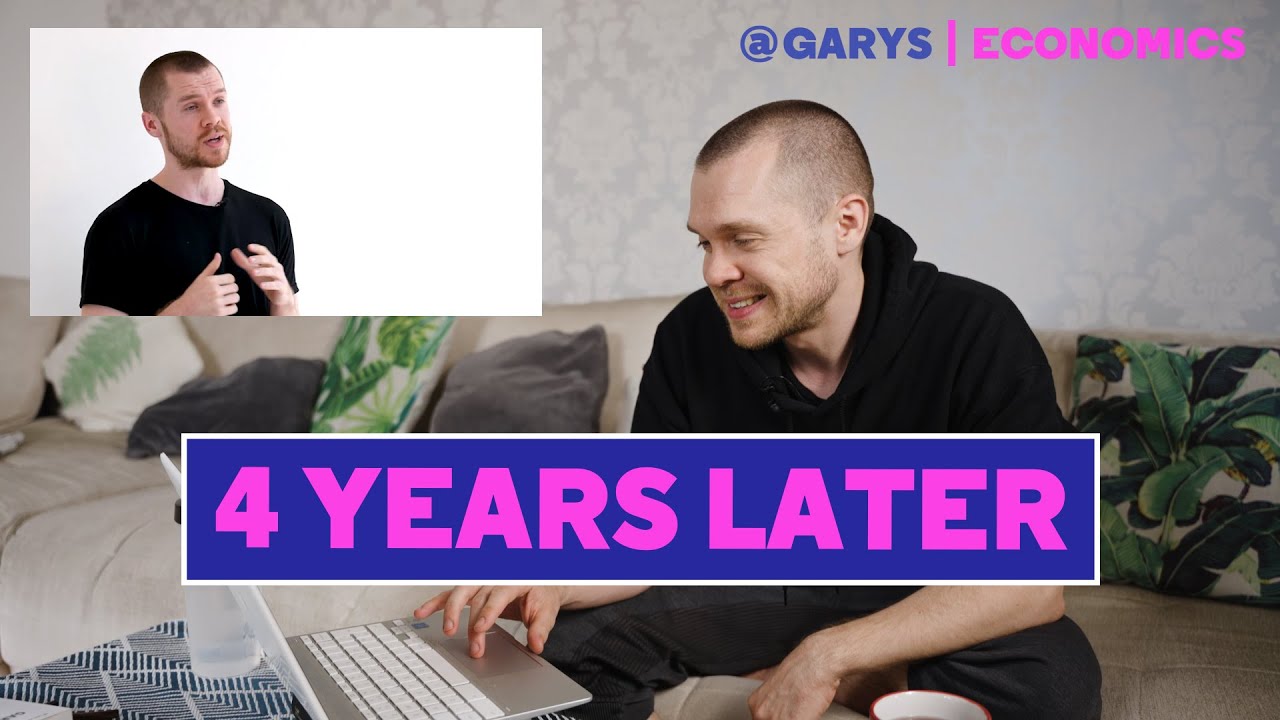
My predictions were right!
0 up · 0 down · 0 ratings
Channels and socials
This channel started 4 years ago today. Which of my predictions came true? UNDERSTAND, SHARE & PUSH BACK WEBSITE - garyseconomics.org TWITTER - twitter.com FACEBOOK - @garyseconomics INSTAGRAM - @garyseconomics TIKTOK - @garyseconomics YOUTUBE - youtube.com PATREON - patreon.com DISCORD - discord.gg BLUESKY - bsky.app SUBSCRIBE, SHARE & START A CONVERSATION Performed by Gary Stevenson @garyseconomics
Gary's Economics marks its four year anniversary by revisiting the channel's very first video, a bold attempt to connect macro money flows to everyday living standards during the Covid shock. The host sets the frame by recalling the initial prediction that government pandemic relief would largely enrich the wealthy and deepen inequality, a claim he maintains with confidence four years on. He walks through the context of the early Covid period, noting a massive influx of money and the theoretical mechanics behind monetary and fiscal stimulus. The video then pivots to explain the central banking action, specifically the Bank of England's quantitative easing and the government deficit, and why the two figures can be conceptually confusing yet are crucial for understanding who benefits. We see a deliberate breakdown of the money creation process, distinguishing between printing, lending, and borrowing, while emphasizing that in all cases the fiscal flows tend to concentrate wealth in asset holders. The host uses simple analogies to describe complex flows, such as a debt owed to the rich when deficits are funded by borrowing, and then traces those flows through households, companies, and ultimately to the wealthiest segments. The overarching conclusion reconnects to a recurring theme of inequality as a structural consequence of Covid policy, a theme that Gary asserts has persisted and worsened since the video first aired, despite changing conditions and evolving data. The four year retrospective ends with a call to action for viewers to share, discuss, and push back against policies that, in his view, entrench wealth disparities, while reiterating his goal of educating the public and influencing policymakers to tax wealth and curb inequality.
Topics · education · economics · inequality · public policy