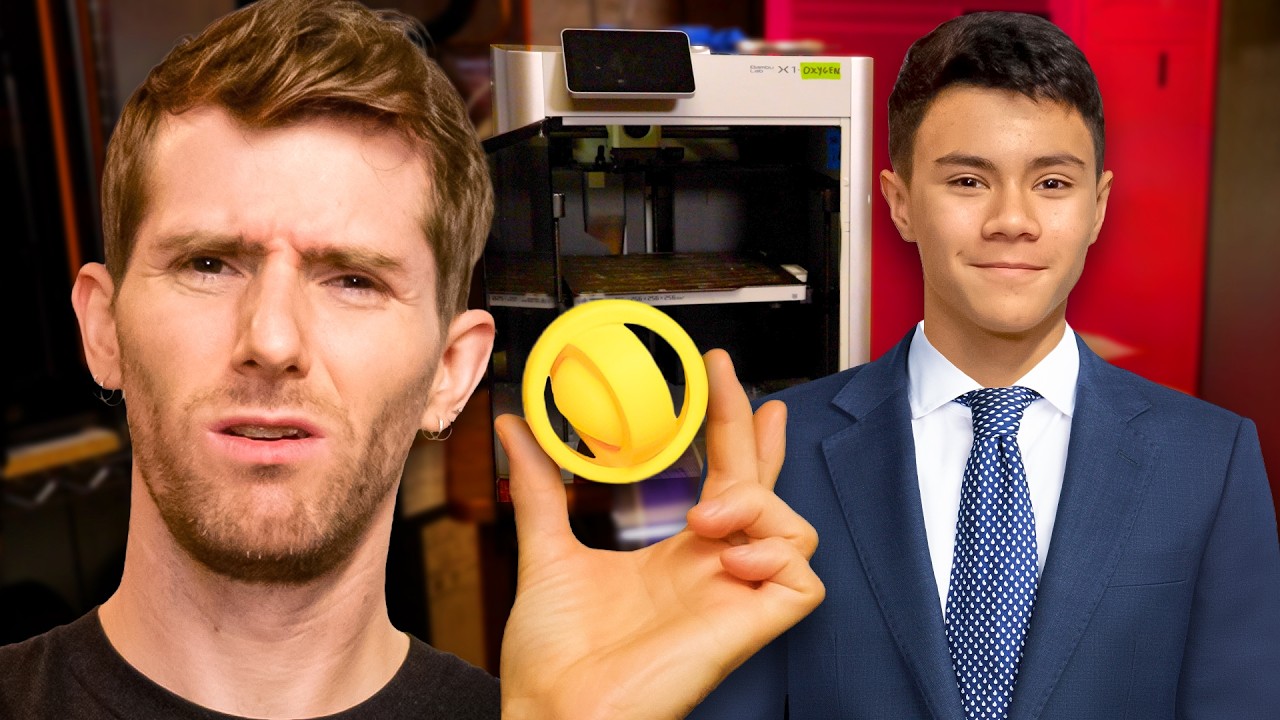
My Kids Started a Business in my Basement
0 up · 0 down · 0 ratings
Description
Check out ObXidian Nozzles: lmg.gg
Promos
Pick up a Night Reaper pre-built PC from META PCs using code LTT to save a couple of bucks: metapcs.com Linus’ kids are making the most of their 3D printers - and even profiting. Time to get serious and upgrade this basement setup to a real 3D print farm.
Channels and socials
Check out @TeachingTech: youtube.com Discuss on the forum: linustechtips.com Buy a Prusa CORE One+ 3D Printer: lmg.gg Buy a Bambu Lab P1S 3D Printer: geni.us
Check out our Channel Partners: Secretlab - Grab a TITAN Evo ergonomic gaming chair: lmg.gg PIA - Get the VPN of our choice: piavpn.com dbrand - Buy a "Circuit" series skin for your device: dbrand.com ► SHOP LTT PRODUCTS: lttstore.com ► GET EXCLUSIVE CONTENT ON FLOATPLANE: lmg.gg ► SPONSORS, AFFILIATES, AND PARTNERS: lmg.gg Purchases made through some store links may provide some compensation to Linus Media Group. Affiliate links powered in part by affilimate.com Linus Sebastian is an investor in Framework Computer, Inc and HexOS by Eshtek. CHAPTERS --------------------------------------------------- 0:00 Intro 2:05 New Print Head 2:58 Who the heck are you? 3:12 Print Head Install 3:48 E3D Revo Nozzles 4:52 New Desiccant 5:48 Nozzle Profile 6:19 Cleanup Time 7:48 Moving the Printers 8:44 Will they fit? 9:29 3D printer fumes? 11:01 Low-Temp Materials 11:23 New Print Beds 13:06 Bed Adhesion 13:59 Minimizing Filament Waste 15:25 The Future? 16:29 Outro
The video opens with Linus describing a chaotic mechanical room that has become a backyard for his kids' budding business. He reflects on giving his children a 3D printer as a Christmas gift and how that gift evolved from a toy-making spark into real-world entrepreneurship, including selling printed fidgets at school and wiring up an entrepreneur fair that earned them money. The initial segment centers on the scale of the operation, the need to organize a growing print farm, and the decision to bring in additional printers like the Prussa Core 1 as part of expanding capacity. The hosts introduce Sean, a former 3D printer professional, who helps install a new print head and recommends a mix of hotends and nozzles to accommodate different materials. They discuss the importance of maintenance, desiccants, and controlled storage for filament to protect print quality and reduce waste, while also planning the physical reorganization of the basement to fit more printers and create a safer, more efficient workspace. The narrative then shifts to practical upgrades: swapping in Obsidian nozzles, upgrading desiccants, and fine-tuning the AMS system to minimize filament waste, with a focus on balancing cost, performance, and accessibility for the kids' ongoing business progress. By the end of the segment, the group maps out a clean, organized print farm layout, props up the workspace with shelves and air purifiers, and discusses future enhancements like automation and queuing systems to streamline production while maintaining a family-friendly, educational environment. The video blends hands-on repair, equipment choices, and entrepreneurial ambition, underscoring how a basement project can evolve into a scalable learning experience for kids and adults alike, with sponsorships and partnerships aiding the upgrade journey. The closing notes touch on ongoing optimization opportunities, potential investments in better tooling, and gratitude toward the partners that support their basement-based manufacturing venture, inviting viewers to explore related content and sponsor links for deeper dives into 3D printing setups and business ideas.
Topics · 3d printing · entrepreneurship · family and education · maker movement · workshop setup · technology and hardware · home-based business
Questions answered
- What upgrades were implemented to the 3D printing setup in the basement?
- The team installed new print heads and Obsidian nozzles, introduced a two-part desiccant system, and added new beds and a more organized shelf layout to improve workflow, reduce waste, and support multi-printer operation.
- How did they address filament waste and bed adhesion problems?
- They enabled longer retractions in the AMS, reduced purge into infill, adjusted flushing multipliers, improved bed cleaning with appropriate detergents, and experimented with different bed surfaces and glue bonding options to improve adhesion.
- Who contributed to the setup and what roles did they play?
- Sean, a former 3D printer manufacturer employee, helped with hardware upgrades and explained technical choices, while Linus and his kids managed the reorganization and day-to-day printing, with Randy assisting on shelving and logistics.
- What future improvements are discussed for the print farm?
- Potential improvements include moving to a queuing system for filament drying, automation for print removal, exploring different hotends for higher throughput, and potentially adopting a paid automation service like Autofarm or OctoPrint plugins for continuous printing.