How to Choose a Headphone Amp and DAC
0 up · 0 down · 0 ratings
Promos
High-end headphones are great, but often need an amplifier to sound their best. How should you pick one, and is getting a separate DAC a good idea? Freshbooks message: Head over to freshbooks.com and don’t forget to enter Tech Quickie in the “How Did You Hear About Us” section when signing up for your free trial. Follow: twitter.com Join the community: linustechtips.com Headphone power calculators: digizoid.com auditry.blogspot.com robrobinette.com nwavguy.blogspot.com License for image used in this video: creativecommons.org Thanks to HeadRoom (Headphone.com) for allowing us to use their visuals in this episode.
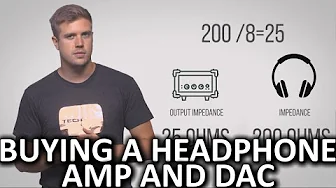
The video explains why high impedance headphones often require more powerful amplification and how to determine if you need an external amp. It starts by defining impedance as a resistor to electrical current, noting that higher impedance can improve sound quality but also increases the need for adequate power to reach proper loudness and accurate frequency response. Viewers are guided to check headphone impedance on packaging or specs, and then to estimate the required power using sensitivity or efficiency figures along with impedance. The speaker introduces practical steps for selecting an amplifier, including verifying that the amp can deliver enough current in milliamps at the headphone’s impedance and ensuring the amp’s output impedance is at least eight times lower than the headphone impedance. The discussion also emphasizes using power calculators to translate impedance and sensitivity into a target loudness, with a recommendation to choose a device more capable than the calculator’s minimum to accommodate impedance variations across frequency. The second part covers digital to analog converters, clarifying that onboard computer audio is usually sufficient for casual listening, but a separate DAC can reduce electrical noise from the PC and potentially open up the soundstage for open-back headphones or enthusiasts pursuing high-end hi-fi experiences. It concludes by weighing scenarios when an external DAC is justified and when it is not, highlighting that improvements depend on your current setup and audio goals rather than a universal rule. The host also promotes related resources and calculators linked in the video description to help viewers make informed buying decisions.
Topics · audio hardware · headphones · audio amplifiers · digital-to-analog-converters
Questions answered
- What factor most determines whether you need an amplifier for your headphones?
- The need for an amplifier is primarily determined by headphone impedance and sensitivity; higher impedance (and sometimes lower efficiency) headphones require more power to reach suitable listening levels, so an amp becomes important when impedance is above about 50 ohms or when the target loudness requires more current.
- When is a separate DAC worth considering?
- A separate DAC is worth considering if you experience electrical noise, hiss, or crackling from onboard computer audio, or if you are seeking potentially improved soundstage on high-end or open-back headphones, though many casual listeners may not notice a benefit.