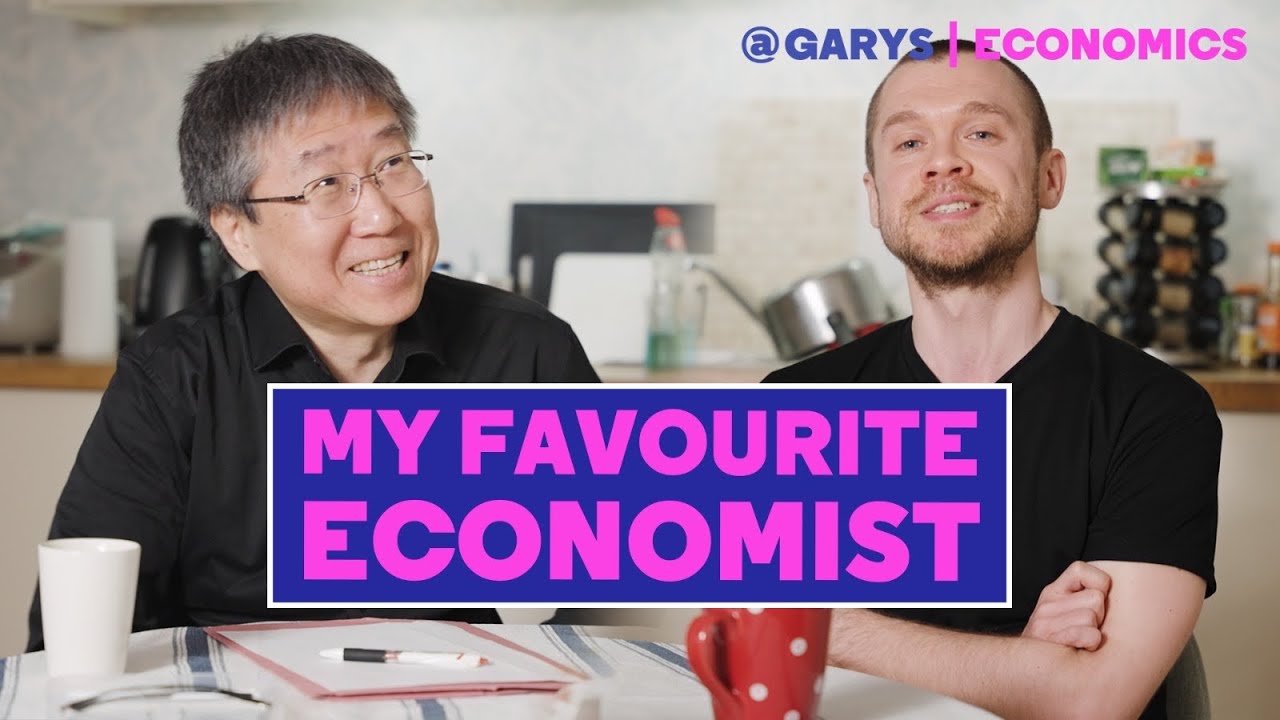
Meeting Gary's favourite economist: Ha-Joon Chang
0 up · 0 down · 0 ratings
Promos
Ha-Joon Chang is best selling author of '23 Things They Don't Tell You About Capitalism'. If you want to understand how our economic system is failing us, this is the economist to study. Timestamps 00:00 Introduction to the Guest and the Channel's Focus 02:11 Ha-Joon Chang's Background and Inspiration 07:19 Parallels Between South Korea's Growth and Modern Urban Challenges 08:32 Reflections on Housing and Early Education in Korea 10:07 Economic Upheaval and the Search for Alternatives 14:38 Exploring Diverse Economic Theories at Cambridge 17:46 The Dominance of Neoclassical Economics 19:14 Advice for Aspiring Economists 20:33 The Disconnect Between Economics Education and Real-World Issues 24:12 Challenges in Economics Education 25:55 Disconnect Between Economics Training and Real-World Application 30:33 Economics as a Modern Theology 31:40 Historical Justifications and Economic Narratives 32:37 Wealth Inequality and Exclusion of the Poor 36:21 Taxation, Financial Markets, and Political Reluctance 38:30 Historical Taxation and Economic Growth 39:40 COVID-19 Economic Response and Distribution Inequality 41:12 Taxing the Wealthy: Historical and Modern Perspectives 42:25 Challenges in Addressing Economic Inequality 44:15 Strategies for Economic Change 46:14 Hope for Economic and Social Progress UNDERSTAND, SHARE & PUSH BACK GET THE TRADING GAME - penguin.co.uk SPOTIFY - open.spotify.com INSTAGRAM - @garyseconomics TIKTOK - @garyseconomics BLUESKY - bsky.app X - twitter.com FACEBOOK - @garyseconomics PATREON - patreon.com DISCORD - discord.gg WEBSITE - garyseconomics.org SUBSCRIBE, SHARE & START A CONVERSATION Performed by Gary Stevenson @garyseconomics
Gary Stevenson interviews Ha-Joon Chang, a prominent economist known for accessible writing on capitalism and development. The conversation explores Chang’s background from South Korea’s rapid postwar growth to his academic journey in the United Kingdom, highlighting how different economic schools of thought shape real-world policy. Chang explains the limitations of heavily mathematical neoclassical economics and defends a pluralistic approach that includes Keynesian, Marxist, and development perspectives. The host and guest discuss how economic education at elite universities often emphasizes abstract models over concrete social issues like housing, poverty, and inequality, and how this gap affects public understanding and policy debate. They reflect on the historical context of Korea’s growth, drawing parallels with urbanization, informal settlements, and worker exploitation during fast development. The interview emphasizes the political economy of distribution, power, and wealth, arguing that inequality translates into political influence and media control. Chang critiques the dominance of representative agent modeling and encourages thinking about millions of real people rather than abstract averages. They discuss the role of education as a driver of change and the need for economists to engage with real-world problems rather than purely mathematical abstractions. The dialogue underscores the idea that economic theories must be tested against lived experience, with housing policy, taxation, and social safety nets as central concerns. They also address strategies for achieving economic reform, including tax reforms on the wealthy and a broader conversation about the distribution of wealth and power in society. The episode closes with a hopeful call to action, arguing that historically significant progress has come from collective effort and persistent advocacy, even in the face of entrenched interests.
Topics · economy · education · inequality · public policy · development
Questions answered
- What is Ha-Joon Chang’s main critique of neoclassical economics?
- He argues that heavily mathematical neoclassical economics relies on representative agents and abstract models that ignore real-world diversity and distribution, and he advocates for pluralist approaches that include Keynesian, Marxist, and development perspectives.
- Why does the host discuss economics education in elite universities?
- To highlight how curricula often prioritize math over understanding real-world social and economic issues, which can limit students’ ability to think critically about inequality, housing, and policy.
- What policy changes does Chang advocate for addressing inequality?
- He supports stronger taxation on the rich, wealth taxes, and policies that address the distribution of wealth and power, alongside broader public debates about resource allocation.
- How does the interview relate economic theory to everyday life?
- By connecting theoretical models to issues like housing, living costs, and poverty, illustrating how policy choices affect ordinary people rather than just abstract equilibria.
- What historical example does Chang reference to argue for taxation during crises?
- He cites wartime and post-war periods when taxation and public investment helped reduce inequality and supported reconstruction.