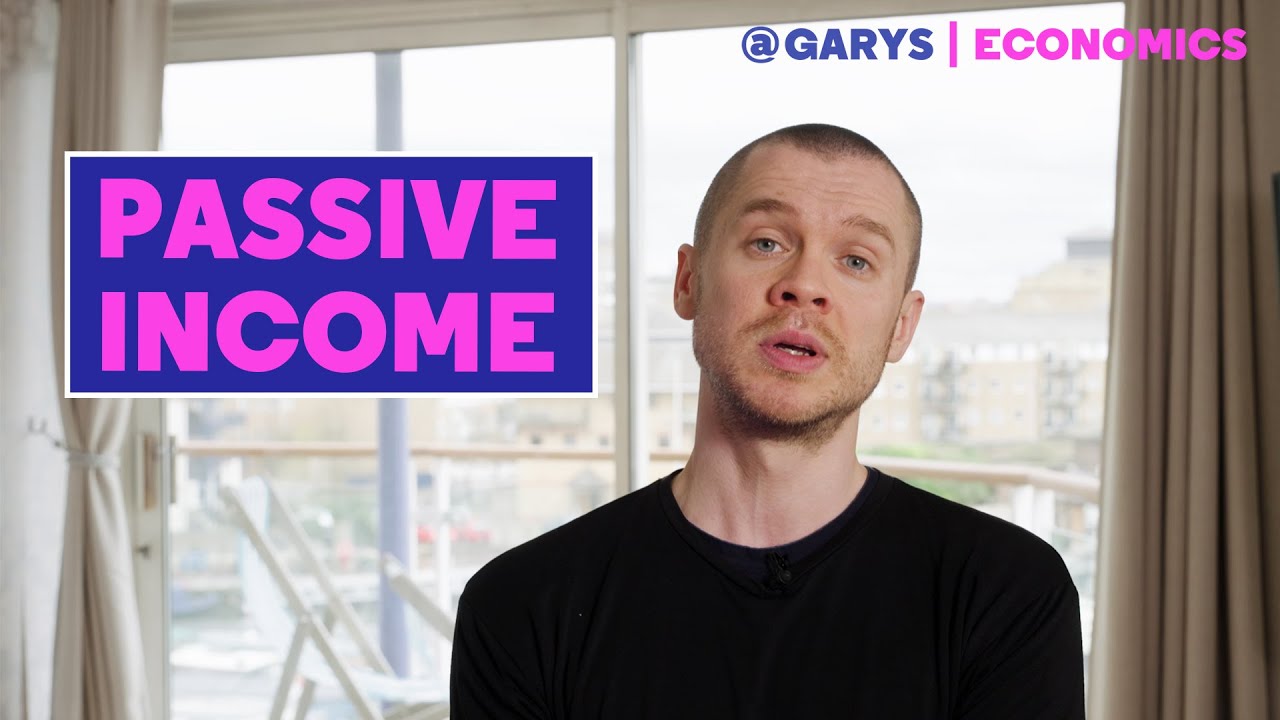
Is Passive Income The Answer?
0 up · 0 down · 0 ratings
Channels and socials
Passive income is about who owns the resources. UNDERSTAND, SHARE & PUSH BACK WEBSITE - garyseconomics.org TWITTER - twitter.com FACEBOOK - @garyseconomics INSTAGRAM - @garyseconomics TIKTOK - @garyseconomics YOUTUBE - youtube.com PATREON - patreon.com DISCORD - discord.gg BLUESKY - bsky.app SUBSCRIBE, SHARE & START A CONVERSATION Performed by Gary Stevenson @garyseconomics
Gary Stevenson’s Is Passive Income The Answer? examines passive income through the lens of ownership and the structure of modern economies. The video begins by defining passive income as the cash flows that accrue to asset owners from the production of goods and services, rather than wages earned through work. Gary emphasizes that in most economies a large portion of wealth and consumption flows to those who own assets such as buildings, land, and financial instruments, while workers receive only a portion as wages. He argues that passive income is fundamentally about who owns the resources and assets in society, and his critique centers on how ownership has become concentrated among the rich while the middle class loses ground. The discussion then shifts toward real-world mechanisms, including debt and real estate markets, where the middle tier often serves as intermediaries or managers for wealthier owners, effectively maintaining a feudal-like dynamic of control and access to capital. Gary asserts that the path to broad-based passive income would require widespread asset ownership among ordinary people, including houses, stock market shares, and natural resources, rather than maintaining ownership behind closed doors. He cautions that without redistribution or policy changes, wealth tends to migrate upward, reducing the ability of common households to secure a stable, self-sustaining passive income. The video closes with an explicit policy stance: to achieve a more equal distribution of wealth and enable universal access to passive income, taxation on the rich should be increased and wealth should be more broadly owned by the populace. Gary argues that such a shift would allow people to live more comfortable lives with less dependence on traditional employment. Overall, the video frames passive income as a proxy for wealth distribution and political economy, inviting viewers to consider ownership, policy reform, and the social implications of economic inequality.
Topics · Economics · Education · Societal issues · Finance
Questions answered
- What is passive income according to Gary Stevenson, and why does ownership matter?
- Passive income, as explained in the video, is the cash flow that owners receive from the assets they own, such as buildings, land, or financial instruments, rather than wages from work. Ownership matters because it determines who receives these ongoing cash flows, meaning wealth concentrates with asset owners and can widen inequality if ownership is not broadly shared.
- What policy changes does Gary advocate to increase broad-based ownership and passive income?
- Gary advocates increasing taxation on the wealthy to redistribute wealth and enable ordinary people to acquire assets like homes, stocks, and natural resources, thereby expanding the potential for universal passive income and reducing economic inequality.