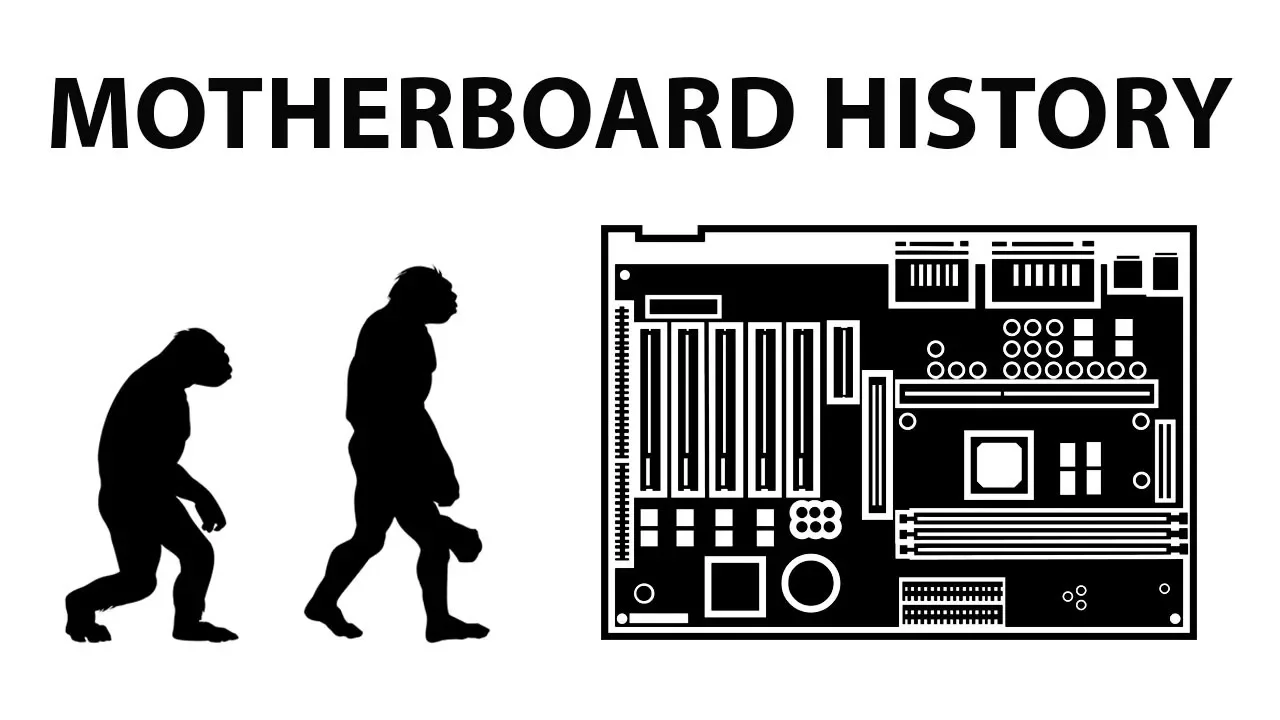
History of the Motherboard
0 up · 0 down · 0 ratings
Promos
Sign up for Private Internet Access VPN at privateinternetaccess.com The first true PC motherboard appeared in 1981, but the road that let up to it was quite long - as was the journey it took afterwards! Buy a new Motherboard On Amazon (PAID LINK): geni.us On Newegg (PAID LINK): geni.us Techquickie Merch Store: designbyhumans.com Techquickie Movie Poster: shop.crowdmade.com Follow: twitter.com Leave a reply with your requests for future episodes, or tweet them here: twitter.com Join the community: linustechtips.com Intro Theme: Showdown by F.O.O.L from Monstercat - Best of 2016 Video Link: youtube.com iTunes Download Link: itunes.apple.com Listen on Spotify: open.spotify.com Licenses for images used: creativecommons.org creativecommons.org
The video narrates the evolution of the motherboard starting from the era when electronic systems relied on individual wires to connect components, through the early printed circuit boards (PCBs) of the 1950s, to the purpose-built backplanes that preceded modern motherboards. It explains that backplanes were essentially dumb connections that grouped expansion slots, and how the Altair 8800 exemplified this approach with separate cards for the processor and memory. The turning point arrives in 1981 with the IBM PC, which introduced a planar board that integrated memory, a built-in CPU, and external I/O, enabling the first recognizable standard for modern computing motherboards. The narrative then highlights how the 1980s and 1990s saw rapid consolidation of functionality onto motherboards, including the rise of super I/O chips that combined drive controllers, ports, and basic peripheral support, reducing the need for separate expansion cards. By the mid-1980s to late 1990s, integrated graphics began appearing on motherboards with examples like IBM’s PS/2 and later GPUs from 3D and ATI, setting the stage for on-board graphics to become commonplace. The timeline continues with the shift from soldered CPUs to socket-based designs, the adoption of PCI and PCI Express as expansion standards, and the introduction of onboard networking and audio with standards such as Ethernet and AC97, culminating in modern boards that deliver RGB headers, Wi-Fi, refined power delivery, and compact form factors. The overarching message is that cost reduction, miniaturization, and increasing feature density transformed the motherboard from a simple connector backbone to a highly integrated and capable platform for contemporary computers.
Topics · technology · history · computers · hardware
Questions answered
- What was the key breakthrough of the 1981 IBM PC in relation to motherboards?
- The 1981 IBM PC introduced a planar board that integrated memory, a built-in CPU, and external I/O, marking a significant step toward the modern motherboard as a cohesive, multifunction platform.
- How did PCI and PCI Express influence motherboard design?
- PCI and PCI Express provided standardized expansion slots that enabled more versatile and higher performance add-in cards, driving continued integration and feature expansion on motherboards.