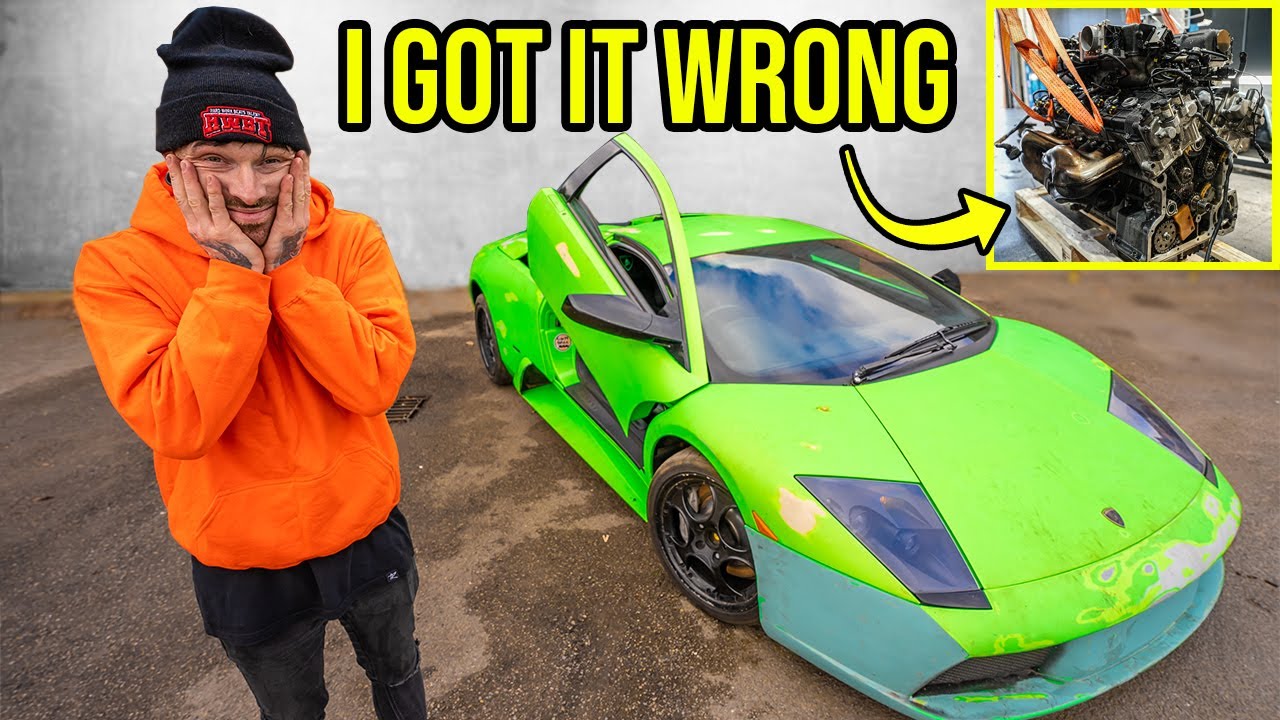
REBUILDING AN ABANDONED LAMBORGHINI MURCIELAGO | PT9
0 up · 0 down · 0 ratings
Promos
Check if your car was damaged with Car Vertical - 10% off here carvertical.com This abandoned Lamborghini Murcielago cost me £100,000 from a track experience company. Ive been rebuilding the car aswell as the engine. In the last video we finally put the V12 engine back in the car after 7 years of being apart. But it didnt last long because id made a stupid mistake!
ALL MA MERCHANDISE
Channels and socials
FOR MORE CONTENT
CHECK OUT MY SECOND CHANNEL
Follow Me Here Aswell
Notes
The video follows Mat Armstrong and his dad as they continue the ambitious rebuilding of an abandoned Lamborghini Murcielago. After months of work, they manage to reinstall the V12 engine, only to confront a series of electrical and instrumentation hurdles that threaten the project. A central challenge is the brand new instrument cluster, which refuses to power up reliably despite sourcing a genuine Lamborghini unit and multiple loom configurations. The team experiments with a 2003 loom adapted to fit a 2002 model, carefully matching power and earth wires while risking a potential short. A blown fuse in the GFA control module provides the first clear clue that the dashboard electronics are not simply a matter of swapping parts, and the fix proves to be both delicate and expensive. By salvaging the instrument cluster and resolving the power feed, they achieve a moment of victory: a functioning cluster with zero miles, signaling a fresh start for the build and a renewed focus on completing the engine and drivetrain assembly. The narrative then shifts to a methodical reassembly of critical systems around the engine bay. They connect coolant, vacuum lines, and essential electricals, prioritizing the bare minimum to get the car started rather than fully reassembling the transmission and drive components. The decision to power up with the engine out of the car, and to test with fuel relays unplugged, is a cautious approach designed to avoid flooding the engine. When the engine finally turns over, the team begins a series of diagnostic checks, including a compression test to gauge cylinder health. The initial readings highlight a potential issue in a couple of cylinders, which is quickly traced to an overlooked O-ring that had not been installed, underscoring how a single small part can derail a major rebuild. The episode closes with practical lessons about attention to detail, such as reading manuals more carefully and verifying all seals before attempting to run the engine, while the team prepares to extract the engine again to install the missing O-rings. Throughout, the video emphasizes resilience and hands-on problem solving. Viewers witness the emotional highs of the instrument cluster lighting up and the lows of discovering an O-ring omission that requires another round of engine removal. The collaboration between Mat and his father stands out as a core driver of progress, combining mechanical intuition with a willingness to learn from mistakes in a high-stakes restoration. The footage underscores how restoration is as much about patience and process as it is about final performance, with each setback reframed as a learning opportunity. By documenting the journey in real time, the video conveys authenticity, persistence, and the satisfaction of incremental breakthroughs on the way to reviving a rare supercar. The episode also weaves in broader context about the car’s history and provenance. The team uses CarVertical to verify the Murcielago’s history, highlighting the importance of transparency in restoration projects and the role of detailed checks in confirming mileage integrity and prior accidents. This broader lens reinforces the value of due diligence when acquiring used exotics, while keeping the focus squarely on the mechanical rebuild and the emotional arc of bringing the Lamborghini back to life. As maintenance challenges loom,fuses, wiring looms, and precision sealing,the video sets the stage for the next installment, in which the engine and electronics will be returned to a more complete state and the car will be prepared for a proper startup and test drive.
Topics · restoration · automotive_repair · lamborghini · car_rebuild · motorsport · diy · education · video_journal
Questions answered
- What caused the initial instrument cluster failure and how was it addressed?
- The new instrument cluster would not reliably power up due to differences in back-end wiring; a failed GFA control module fuse added to the challenge. After examining the loom options, the team replaced the fuse and reworked wiring to restore power to the dashboard, achieving a working cluster with zero miles.
- Why was the O-ring error critical in the engine rebuild?
- An omitted O-ring in the cylinder head/oil system caused oil to leak, requiring the engine to be removed again to install the seals. This highlighted how a single small gasket can necessitate major disassembly and set back progress.
- What is the main strategy for testing the engine before full reassembly?
- They test with minimal connections, only oil lines, fuel feed, and essential sensors, and they unplug fuel relays to prevent flooding until the ignition system is ready, then perform a compression test to verify cylinder health.
- How does this video frame the restoration in terms of reliability and history?
- The series situates the project within a broader commitment to transparency and provenance, using CarVertical to verify mileage and history, which reinforces trust and demonstrates the importance of knowing a car’s background before restoring it.