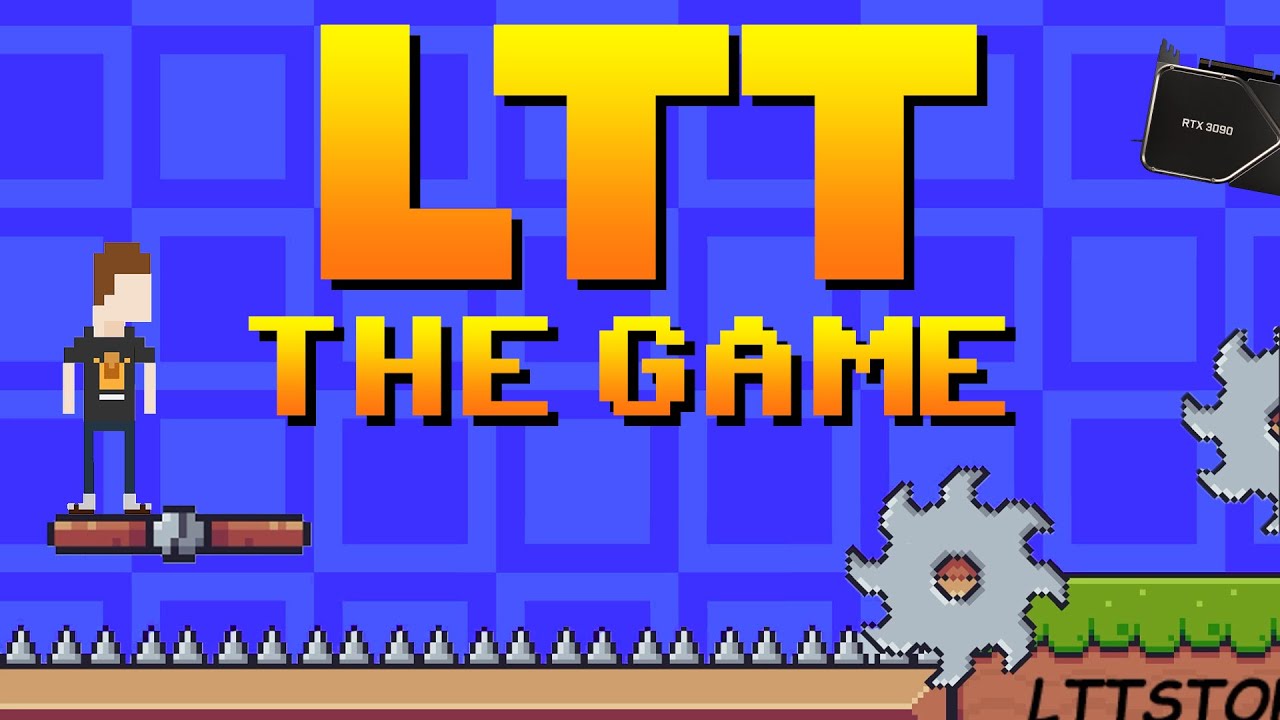
LTT: The Video Game!
0 up · 0 down · 0 ratings
Description
Thanks to Gigabyte for sponsoring the video! Learn more about the Gigabyte AERO 16 laptop here: lmg.gg Want to make a game? It's both easier AND harder than you might think, but with some patience and the ability to Google issues, anything is possible. Thanks as well to Unity for providing their Pro license for this video.
Check out Unity Pro at lmg.gg Finally, thanks to Coding in Flow for his tutorial. If you want to do this yourself,
Promos
check out the tutorial here: youtube.com Link to game: lmg.gg Discuss on the forum: linustechtips.com Purchases made through some store links may provide some compensation to Linus Media Group. ► GET MERCH: lttstore.com ► AFFILIATES, SPONSORS & REFERRALS: lmg.gg ► PODCAST GEAR: lmg.gg ► SUPPORT US ON FLOATPLANE: floatplane.com FOLLOW US ELSEWHERE --------------------------------------------------- Twitter: twitter.com Facebook: @LinusTech Instagram: @linustech TikTok: @linustech Twitch: twitch.tv MUSIC CREDIT --------------------------------------------------- Intro: Laszlo - Supernova Video Link: youtube.com iTunes Download Link: itunes.apple.com Artist Link: soundcloud.com Outro: Approaching Nirvana - Sugar High Video Link: youtube.com Listen on Spotify: spoti.fi Artist Link: youtube.com Intro animation by MBarek Abdelwassaa @mbarek_abdel Monitor And Keyboard by vadimmihalkevich / CC BY 4.0 geni.us Mechanical RGB Keyboard by BigBrotherECE / CC BY 4.0 geni.us Mouse Gamer free Model By Oscar Creativo / CC BY 4.0 geni.us CHAPTERS --------------------------------------------------- 0:00 Game dev is hard 1:11 End result after 12 hours 2:25 Assets we used 4:02 What hardware can you use for game dev? 5:58 Playing Plouffe's old student project 8:38 Is game dev easy?
LTT’s exploration of making a video game in a compressed time frame provides a practical look at how accessible game development can be, yet how demanding it remains in practice. The hosts explain that modern development can leverage templates and engines like Unity, GameMaker, or Unreal Engine to jumpstart a project, rather than building an engine from scratch. They highlight that the real work comes in polishing, balancing, and debugging, a process famously summarized by the 80/20 rule where most finishing work happens at the end. The video showcases a 12 hour sprint using free assets from the Unity Asset Store, emphasizing how prebuilt components can form a solid base for a playable prototype, including a start screen, an end screen, and a simple yet functioning 2D platformer mechanic. The narrative moves through asset selection, animation fixes, and integrating basic audio and visual feedback to create a coherent, if imperfect, game experience. The sponsors’ hardware and software tools are framed as enablers for rapid iteration, while viewers are reminded that success in game development often hinges on iteration speed and problem solving rather than purely raw talent alone. A second detailed paragraph delves into the specifics of what was built and how it was built. The team uses Pixel Adventure assets and casual SFX/BGM to bring the game to life, noting that even basic rotating saws and level blocks can feel dynamic when animation and physics are correctly synchronized. They discuss the challenges of a jumping animation that initially failed to render properly, requiring a sprite swap to avoid invisibility in air time, illustrating the kind of practical troubleshooting developers routinely perform. The dialogue emphasizes the value of following accessible tutorials, like Coding in Flow, to bootstrap a project, and acknowledges that level design expertise can compensate for gaps in programming know-how. They also explain how adding a finishing layer, such as a responsive start screen, end screen, and a functional quit/exit mechanism, raises the perceived quality of the prototype. The narrative reinforces that templates are a starting point, with real growth coming from adding unique maps, hazards, and enemy behaviors to differentiate a project from a boilerplate demo. The final paragraph connects the hardware, process, and potential outcomes of portable game development. The discussants compare running a game on a high powered laptop versus a desktop, noting that performance is broadly comparable for many projects, with the Aero laptops offering portability and battery life that can be decisive during power outages. They touch on the tradeoffs of professional connectivity, including multiple displays and ports, while recognizing that adapters can be a practical burden in a mobile workstation. The conversation broadens to consider what makes game dev accessible to newcomers: templates and tutorials lower the barrier, but without solid debugging and problem solving, projects can stall when issues arise. They conclude by contrasting the first easy entry game with the more demanding second project, underscoring that real-world development requires patience, persistence, and a willingness to learn from mistakes. The video closes with reflections on why sharing these experiments is valuable for the community and aspiring developers, and a nod to the ongoing discussions around hardware and software tools for creators.
Topics · technology · gaming · game_development · hardware
Questions answered
- What tools did the team use to create the prototype within 12 hours?
- They used Unity with free assets from the Unity Asset Store, a prebuilt template approach, and a tutorial-based workflow to assemble and animate a simple 2D platformer.
- Why are finishing touches like optimization important in game development?
- Optimization typically happens at the end; without careful finishing work, games can be poorly optimized, leading to performance issues even if the core gameplay works.
- What hardware was highlighted as beneficial for game development on the go?
- The Gigabyte AERO 16 and AERO 17 laptops were discussed for their performance, portability, battery life, and professional connectivity features including multiple ports.