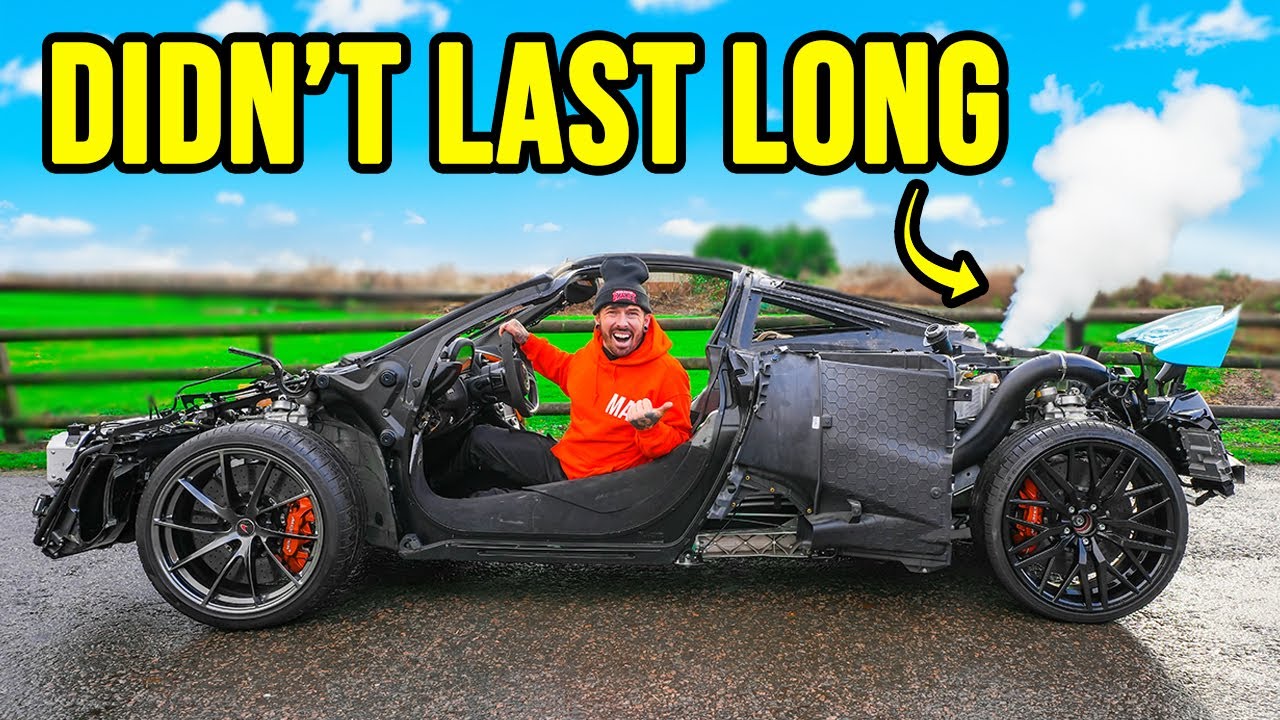
I ATTEMPTED TO DRIVE MY WRECKED MCLAREN 720s
0 up · 0 down · 0 ratings
Promos
Check if your car was damaged with Car Vertical - 10% off here carvertical.com I bought a wrecked Mclaren 720s from Amsterdam in hopes to rebuild it for myself. After i got it back to the UK Mclaren said it wasnt possible to repair the damage to so i was forced to buy a new carbon tub. Richard Hammond didnt think i could get the car back on the road before Christmas and i want to prove him wrong but after rebuilding it and attempting to drive it another huge problem occured! BRAND NEW SECOND HAND MERCH matarmstrong.co.uk
ALL MA MERCHANDISE
Channels and socials
FOR MORE CONTENT
CHECK OUT MY SECOND CHANNEL
Follow Me Here Aswell
Notes
This video chronicles a high stakes rebuild of a wrecked McLaren 720s that the creator purchased in hopes of rebuilding for personal use. It opens with an acknowledgement that McLaren deemed the original tub non-repairable, forcing the team to source a brand new carbon tub and adapt the car from right-hand drive to left-hand drive. The host walks through the interior challenges, detailing how components were swapped, bolted back together, and aligned in a careful, step-by-step process. He emphasizes the importance of reassembling in the same order the parts were removed, using the interior as a template to ensure the dashboard, screen, center console, roof lining, and carpet align properly. The video then shifts focus to the suspension rebuild, where the team sources parts from salvage yards, assesses bent components, and documents the expensive reality of McLaren’s bespoke hardware, including the need for an exact four-wheel alignment and hydraulic bleeding. As work continues, the narrative covers the complexity of the rear wing, hydraulic lines, the anti roll bar, and the need for specialized tools and support from McLaren for system setup. The test drive segment becomes the turning point: after assembling components, wiring, and systems like the radiator and charges cooler, the team attempts to start the car only to encounter dramatic failures and an onboard smoke show that suggests a major engine issue. The ending pivots to a candid assessment of possible causes, including a blown head gasket or charge cooler failure, and a plan to source replacement parts while documenting the emotional rollercoaster of the father-son collaboration on screen. Throughout, the creator interweaves practical tech explanations with candid humor and family moments, culminating in a dramatic but incomplete road test and an invitation for viewers to stay tuned for the next update. The overall tone blends meticulous mechanical detail with personal storytelling, aiming to prove Hammond wrong while highlighting the relentless, humorous persistence of the build crew.
Topics · car restoration · diy repair · vlog · autos & vehicles
Questions answered
- What was the initial obstacle that forced a tub replacement on the McLaren 720s rebuild?
- McLaren deemed the original tub non-repairable, so the team had to source a brand new carbon tub and convert the car from right-hand drive to left-hand drive.
- Why is the suspension particularly expensive and complex on this project?
- The McLaren 720s uses a hydraulic, electronically controlled suspension system with custom dampers and lines; secondhand components are costly and require exact setup by McLaren, including valve-controlled dampers and proper bleeding of the high-pressure system.
- What role does the car vertical service play in this project?
- Car vertical is used to check the vehicle's damage history, ownership timeline, and potential red flags like prior accidents, as well as to view a historical photo timeline of the car.
- What critical issue did the team encounter during the first engine start attempt after the rebuild?
- The engine started with smoke and there was concern about potential head gasket failure or charge cooler issues, leading to questions about the engine’s overall health and further teardown needs.