How AMD is Making CPUs More Affordable - Chiplets Explained
0 up · 0 down · 0 ratings
Promos
Get an unrestricted 30-day free trial of FreshBooks at freshbooks.com How could chiplets make CPUs both faster AND cheaper? Techquickie Merch Store: lttstore.com Follow: twitter.com Leave a reply with your requests for future episodes, or tweet them here: twitter.com
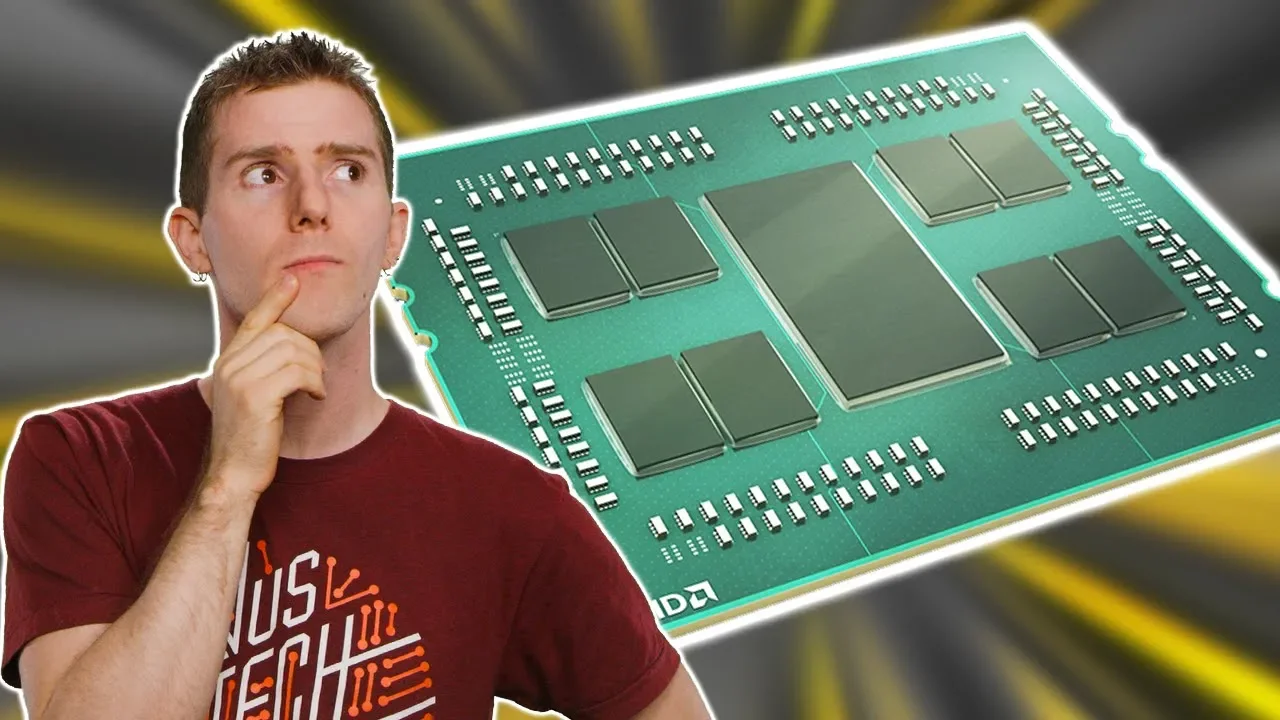
The video begins by revisiting Moore’s Law and the historical push to cram more transistors onto a single silicon die. It explains that shrinking transistors has become progressively harder due to silicon’s material limits, leading to what the presenter describes as Moore’s Law turning into a pipe dream. The core alternative presented is the concept of chiplets, which are modular mini dies that can be combined into one CPU package. The discussion covers how chiplets can improve overall yields during fabrication, allowing defective regions to be salvaged and reassembled into functioning components, thereby reducing waste. The host then clarifies that even though chiplets often result in physically larger CPUs, they can lead to faster production, lower costs, and the potential to mix and match high-end performance with lower-end components through a high-speed interconnect like AMD’s Infinity Fabric. The video also points out practical benefits such as separating non-crunching blocks from CPU cores, enabling those parts to be added as needed, which can simplify manufacturing and later product updates. The speaker closes this segment by acknowledging that while chiplets have drawbacks, they remain a leading strategic path for pushing performance and affordability in the CPU market, with implications for both high-end servers and consumer CPUs like upcoming Ryzen models. The discussion ties back to real-world economics, noting that AMD’s Epic server CPUs already achieved roughly half the cost of a single large die thanks to chiplet-based design, and it highlights how competition could push Intel to rethink its own strategies. The video then briefly touches on the broader market impact, suggesting that chiplet technology may trickle down to consumer-grade products and influence pricing dynamics across the industry, before transitioning to a plug for FreshBooks as part of the video’s sponsorship. Finally, viewers are encouraged to subscribe for more tech explainers and to share feedback on future topics, signaling an ongoing series focus on hardware design and industry trends.
Topics · technology · computing · semiconductors · economics of hardware · server hardware · consumer electronics
Questions answered
- What is a chiplet and why might it be cheaper to manufacture CPUs with chiplets?
- A chiplet is a modular mini die that can be combined with other chiplets to form a complete CPU. This approach reduces waste from defects during wafer fabrication, improves yields, and allows high-performing and lower-cost components to be mixed, which lowers overall manufacturing costs and can reduce prices for consumers.
- What role does an interconnect like Infinity Fabric play in chiplet designs?
- An interconnect like Infinity Fabric stitches multiple chiplets together at high speed, enabling them to communicate efficiently and function as a single CPU package despite being separate dies.