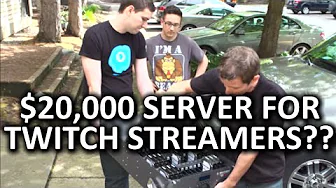
Why would Twitch streamers need a $20,000 server?? N3RDFUSION Visit
0 up · 0 down · 0 ratings
Promos
What on Earth could a bunch of Minecraft players need a massive server machine for?? Squarespace link: Visit squarespace.com and use offer code LTT to save 10% off your first purchase. TunnelBear message: TunnelBear is the easy-to-use VPN app for mobile and desktop. Visit tunnelbear.com to try it free and save 10% when you sign up for unlimited TunnelBear data. N3RDFUSION on Twitch: twitch.tv Discuss on the forum: linustechtips.com Our Affiliates, Referral Programs, and Sponsors: linustechtips.com twitter.com @LinusTech Intro Screen Music Credit: Title: Laszlo - Supernova Video Link: youtube.com iTunes Download Link: itunes.apple.com Artist Link: soundcloud.com Outro Screen Music Credit: Approaching Nirvana - Sugar High youtube.com Sound effects provided by freesfx.co.uk
The video opens with a discussion about optimizing compute resources for a media and streaming workflow, recounting past experiments with video encoding, software choices, and even data loss from a failed raid attempt. The team travels to Nerd Fusion in Seattle to drop off a custom Storinator server, detailing the hardware specifications including dual Intel Xeon E5 2697 v3 processors, 128 GB DDR4 ECC memory, a high capacity 100 TB Seagate storage array, and an upgraded front panel with an LCD for drive health diagnostics. They explain the rationale behind such a powerful server in a Twitch streaming context, especially in terms of storage, offline archiving, and local access for the crew. Throughout the tour, they emphasize the importance of reliability, expandability, and on-site control to avoid latency and cost issues associated with off-site hosting. The video then dives into the specific functions the server will perform: archiving Twitch streams for long-term retention, live transcoding of incoming streams to a 900p format suitable for Twitch, and creating a higher bit rate off-platform stream for select supporters. They describe a multi-VM setup on Unraid including a Windows VM to run Wowza for transcoding, a Linux VM for a cloning tool called Fog to back up guest streaming PCs, and another Linux VM dedicated to running a Minecraft server with low-latency access for local team members. The plan also includes a disaster-preparedness workflow with a third VM to move older footage to cold storage via an autoloading tape drive, as well as a Windows VM to support a comprehensive on-site security camera system. The presenters reflect on how these capabilities extend beyond simple storage, enabling live streaming experiments, guest collaborations, and real-time office monitoring, all while illustrating the broader implications for running a professional streaming operation. The video closes by inviting viewers to share other creators who could benefit from similar hardware, highlighting the potential for on-site, scalable infrastructure and teasing future experiments that may showcase the impact of this server on the Linus Tech Tips workflow, including a quick nod to related affiliate products and community engagement opportunities.
Topics · technology · gaming · hardware · infrastructure
Questions answered
- What is the primary purpose of the Storinator server in this setup?
- The Storinator serves as a centralized on-site storage and processing hub for archiving Twitch streams, long-term data retention, and enabling advanced on-site processing like transcoding and virtualization to support a professional streaming workflow.
- How does the video propose using virtualization to enhance streaming capabilities?
- It uses multiple virtual machines on Unraid, including Windows VM running Wowza for transcoding, a Linux VM for cloning backups of guest streaming PCs, and another Linux VM dedicated to running a local Minecraft server and a security camera system.