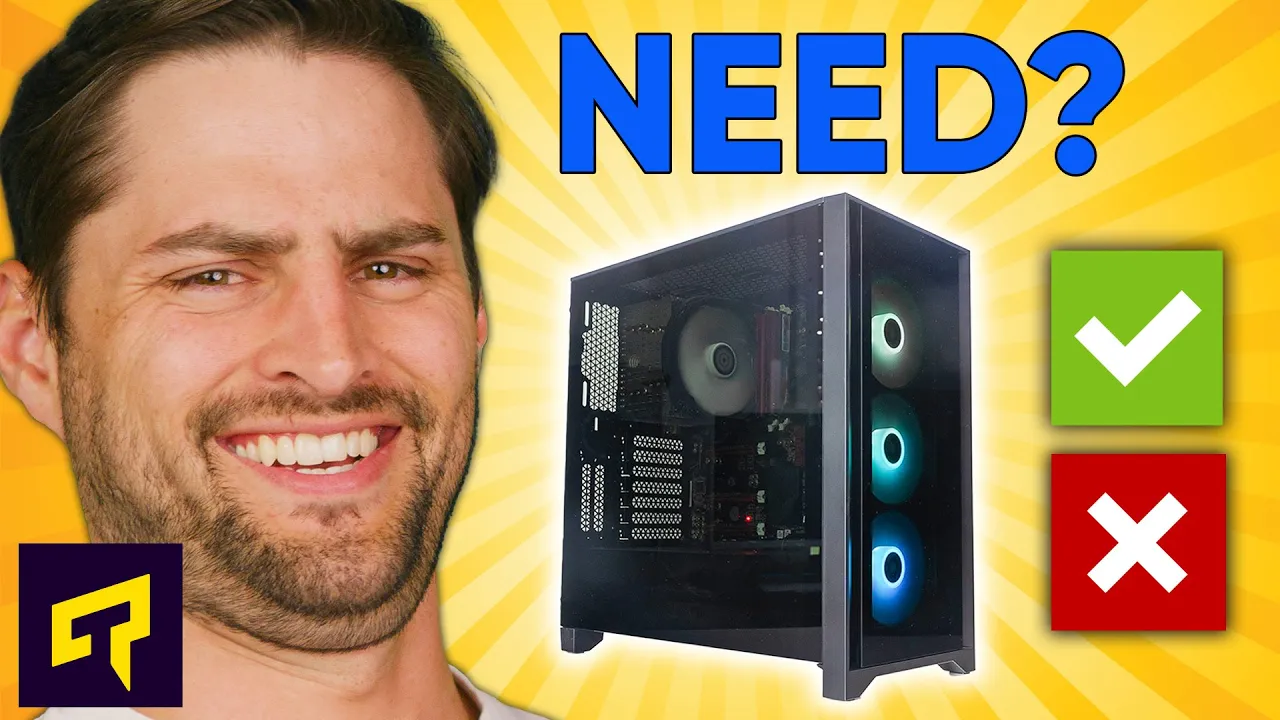
Do You Really Need A PC Case?
0 up · 0 down · 0 ratings
Promos
Visit brilliant.org to get started learning STEM for free, and the first 200 people will get 20% off their annual premium subscription. Are computer cases even really necessary? Leave a reply with your requests for future episodes, or tweet them here: twitter.com ► GET MERCH: lttstore.com ► AFFILIATES, SPONSORS & REFERRALS: lmg.gg ► PODCAST GEAR: lmg.gg ► SUPPORT US ON FLOATPLANE: floatplane.com FOLLOW US ELSEWHERE --------------------------------------------------- Twitter: twitter.com Facebook: @LinusTech Instagram: @linustech TikTok: @linustech Twitch: twitch.tv
The video argues that PC cases are more than just cosmetic shells and actually provide several practical benefits that can impact long term system reliability. It begins by challenging the notion that you should skip a case to save money, clarifying that components kept in the open can be more vulnerable to damage from static discharge, dust, and physical impact. The host explains how cases act as a first line of defense against static electricity and explain that even a small static event on the outside of the case should ground safely, reducing risk to sensitive parts. Dust management is highlighted as a key benefit: cases help keep dust away from vital components and when fans are configured correctly, positive pressure can further minimize dust intrusion. The discussion then covers additional advantages such as noise reduction with certain acoustic-dampened models, portability, and front-panel connectivity, while acknowledging that open benches or test setups may be suitable for specialized use cases like hardware testing or mining rigs. Finally, the host cautions that while caseless setups exist, for the average user it is prudent to invest in a cheap case to avoid mishaps, such as accidental damage during late-night work, and invites viewer feedback for future topics.
Topics · technology · computing · hardware · consumer-electronics · dust-management · hardware-setup
Questions answered
- What is the main protective role of a PC case beyond enclosure?
- The main protective role is to shield components from static discharge, dust, and physical damage, reducing risk to critical parts and improving long-term reliability.
- Why might a case reduce dust buildup compared to an open setup?
- A case creates controlled airflow and, with properly configured fans, can establish positive pressure that minimizes dust ingress and keeps dusty air away from sensitive components.