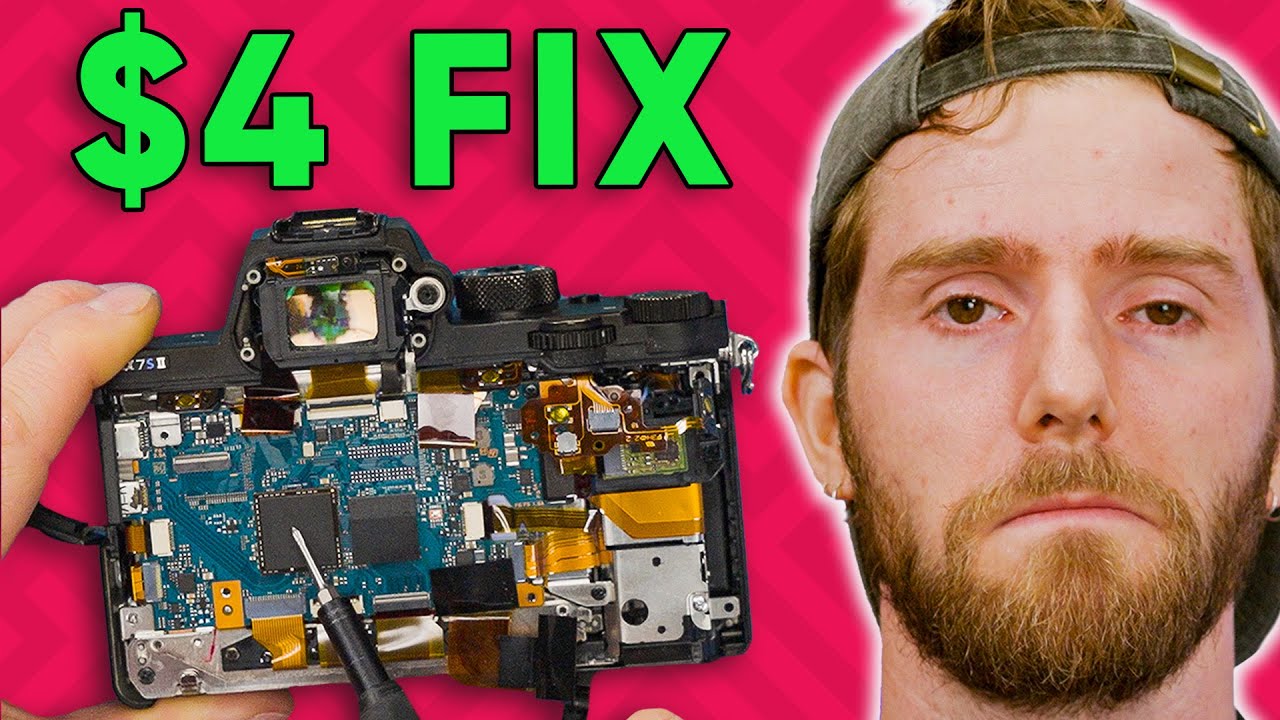
This "cheap" repair almost BROKE me.
0 up · 0 down · 0 ratings
Promos
Visit squarespace.com and use offer code LTT for 10% off Create your build at buildredux.com A cheap and easy fix is all that separates Linus from revamping his streaming setup with a Sony A7S II. Except it wasn't easy. And actually he didn't save much money in the end either... Discuss on the forum: linustechtips.com Buy Sony Alpha a7 II Full-Frame Mirrorless Video Camera On Amazon: geni.us On Best Buy: geni.us On B&H: geni.us Purchases made through some store links may provide some compensation to Linus Media Group. ► GET MERCH: lttstore.com ► SUPPORT US ON FLOATPLANE: floatplane.com ► AFFILIATES, SPONSORS & REFERRALS: lmg.gg ► PODCAST GEAR: lmg.gg FOLLOW US --------------------------------------------------- Twitter: twitter.com Facebook: @LinusTech Instagram: @linustech TikTok: @linustech Twitch: twitch.tv MUSIC CREDIT --------------------------------------------------- Intro: Laszlo - Supernova Video Link: youtube.com iTunes Download Link: itunes.apple.com Artist Link: soundcloud.com Outro: Approaching Nirvana - Sugar High Video Link: youtube.com Listen on Spotify: spoti.fi Artist Link: youtube.com Intro animation by MBarek Abdelwassaa @mbarek_abdel Monitor And Keyboard by vadimmihalkevich / CC BY 4.0 geni.us Mechanical RGB Keyboard by BigBrotherECE / CC BY 4.0 geni.us Mouse Gamer free Model By Oscar Creativo / CC BY 4.0 geni.us CHAPTERS --------------------------------------------------- 0:00 Intro 1:07 Why I'm doing this 2:27 Why we can't use it at work? 3:00 You will need: 4:00 Tear-down 7:04 We found the problem! 8:10 Linus tries Soldering 9:45 Slight problem.. 10:33 ...Solution! 12:40 Fail. 13:12 new problem! 14:16 LINUS MAD 15:30 Nick takes over 16:25 Reassembly 16:55 an LTT Silent Film 17:30 Total Cost :( 19:37 outro
This video documents a high-stakes attempt to repair a Sony a7S II that Linus and the team would rather not replace. It begins with a clear motivation: the micro HDMI port on the camera is fragile and expensive to fix at an official service center, which can push the total cost well beyond the device’s value. The host lays out the equipment list and the plan to disassemble the camera from the bottom, with opinions on why right to repair matters and how mastering such repairs can save money or at least teach valuable hands-on skills. Throughout the early sections, the video emphasizes the dual goals of saving money and gaining expertise, while acknowledging the risk of destroying a camera worth several thousand dollars. The narrative then shifts to the actual tear-down, presenting a careful, step-by-step exploration of internal components, heat management, and the challenges of working with delicate ribbon cables. The segment closes with a realization that the job is more complex than anticipated, setting up the later attempts and the mounting stakes for reassembly and calibration. In the middle portion, the team delves into the practical mechanics of replacing a damaged port and its related circuitry. They identify the micro HDMI connector as the likely failure point and discuss the tools and precision required for soldering on a tiny surface-mount board. As the work progresses, they discover multiple complications: misidentified parts, stubborn ribbon cables, and the risk of heat damage to surrounding components. The crew experiments with heat management strategies, including flux, hot air, and a makeshift hot brick approach, while documenting the escalating tension and humor to keep the process engaging. A key moment comes when a critical ribbon cable is found to be damaged, prompting a pause and a shift in strategy. This section illustrates both the allure and the peril of trying to repair high-end gear in a home workshop. The latter acts of the video reveal the turning points and ultimate outcomes of the repair attempt. After a series of trials, a replacement top housing and board become necessary, and the team confronts the reality that not all parts can be successfully sourced or reassembled. Despite several rebuild attempts, the camera’s functions do not restore fully, and the team must decide whether to continue or to halt the project. In the final stretch, external calibration at a Sony service center becomes the chosen path, underscoring that some problems require manufacturer-level support. The video closes with a reflection on the financial and educational costs of DIY repair, noting that the end result was a partially restored camera that required additional service. The overall message emphasizes careful cost-benefit thinking, transparency about what can go wrong, and the value of learning through ambitious, if imperfect, hands-on repair experiments.
Topics · technology · repair_and_maintenance · camera_equipment · diy_guide · consumer_electronics_review
Questions answered
- What was the main fault found in the camera?
- The main fault was a damaged micro HDMI port which caused external monitoring problems and unreliable video output.
- Why did the team consider right to repair important?
- They argued that repairability helps users understand and fix devices, potentially saving money and encouraging skilled DIY work rather than discarding gear.
- Was the repair ultimately successful?
- No, the repair did not fully fix the camera; additional parts and professional calibration were required.
- What additional costs were involved?
- In the end, a new board and calibration with Sony service were necessary, costing several hundred dollars.