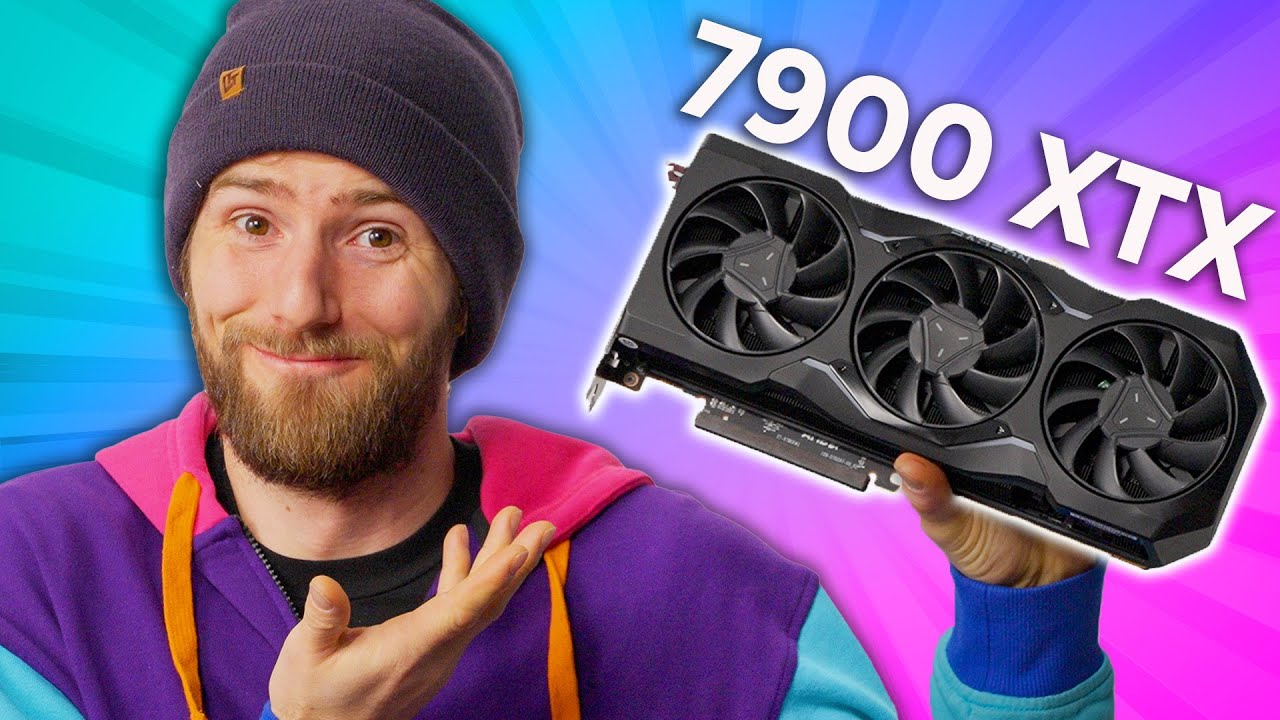
Nvidia was clearly wrong - AMD RX 7900 XT and XTX
0 up · 0 down · 0 ratings
Description
Check out AMD RX 7900 XTs on Amazon: geni.us
Promos
Check out Vessi's Holiday Sale at vessi.com or use code ShortCircuit at checkout if you just missed it for 15% off plus free shipping to CA, US, AU,JP, TW, KR, SGP via their store online. AMD's finally here to strike back against NVIDIA's new big and bold (pricey) 4080 with the new RX 7900 XT and XTX. Linus is here to give you a first look at this new GPU that could be the upgrade you've been waiting for.
Check out AMD RX 7900 XTXs on Amazon: geni.us Purchases made through some store links may provide some compensation to Linus Media Group. Want us to unbox something? Make a suggestion at lmg.gg ► SUBSCRIBE ON FLOATPLANE: floatplane.com ► GET MERCH: lttstore.com ► AFFILIATES, SPONSORS & REFERRALS: lmg.gg ► PODCAST GEAR: lmg.gg ► SUPPORT US ON FLOATPLANE: floatplane.com FOLLOW US ELSEWHERE --------------------------------------------------- Twitter: twitter.com Instagram: @shortcircuityt TikTok: @linustech Facebook: @ShortCircuitYT CHAPTERS --------------------------------------------------- 0:00 Lmao 0:59 Unboxing and size comparisons 2:38 Display outputs and power connector 3:58 XT and XTX size comparison 4:22 Sponsor - Vessi Footwear 5:10 How they got BIG performance improvements 7:21 AI enhancement and encoding 8:54 Potential performance difference (kinda) 9:21 Full release date 9:56 Outro
The video analyzes AMD's RX 7900 XT and RX 7900 XTX, framing them as a compelling counter to NVIDIA's RTX 4080. It begins by setting the scene, noting that AMD is delivering faster GPUs at lower prices than the previous generation and that their form factors are more reasonable for many PC builds. The presenter compares the physical size and power connectors, highlighting that the XT and XTX use dual 8-pin PCIe power connectors and a PCIe Gen 4 x16 interface, which may affect how enthusiasts upgrade on newer platforms. He then dives into the display outputs, including HDMI, DisplayPort, and the new DisplayPort 2.1 UHBR 10, explaining potential real-world implications for high refresh rate 4K and even AI-assisted gaming workflows. The discussion moves to the cards’ power consumption, noting 300 watts for the XT and 355 watts for the XTX, and comments on the height and overall footprint in compact builds. The host expands on AMD's architectural choices, such as chiplet design, multiple memory dies, and decoupled clock speeds to optimize performance per watt, with shader clocks versus front-end clocks running at different speeds to conserve energy. He also explains AMD’s added AI accelerators per compute unit and speculates about future AI-driven improvements, including potential enhancements to encoding and decoding, which has historically been a weak point for AMD compared to NVIDIA NVENC. Ending with practical expectations, the video confirms the XT and XTX launch date of December 13 and anticipates full performance reviews covering power, clocks, and FPS to determine whether AMD dethrones NVIDIA, while noting that the price-to-performance proposition may be favorable for mid-to-high end gaming rigs at roughly $900 to $1,000 for the XT and XTX respectively.
Topics · technology · gaming · hardware · gpu · pc_components · computing · ai
Questions answered
- What is the expected price range for the RX 7900 XT and RX 7900 XTX at launch?
- The XT is expected around $900 and the XTX around $1,000, placing them below NVIDIA's top cards while promising higher frames per dollar.
- What key design choices contribute to AMD's efficiency in the 7000 series?
- AMD uses a chiplet design with multiple memory dies, decoupled clock speeds for shaders and front end, and AI accelerators per compute unit to boost performance per watt while managing power consumption.
- Will UHBR 10 DisplayPort 2.1 connectivity translate into real 4K or 8K performance?
- UHBR 10 DisplayPort 2.1 offers theoretically much higher bandwidth, but real-world 4K at 480 Hz or 8K at 165 Hz remains unlikely at launch; it signals potential future capabilities rather than guaranteed current performance.