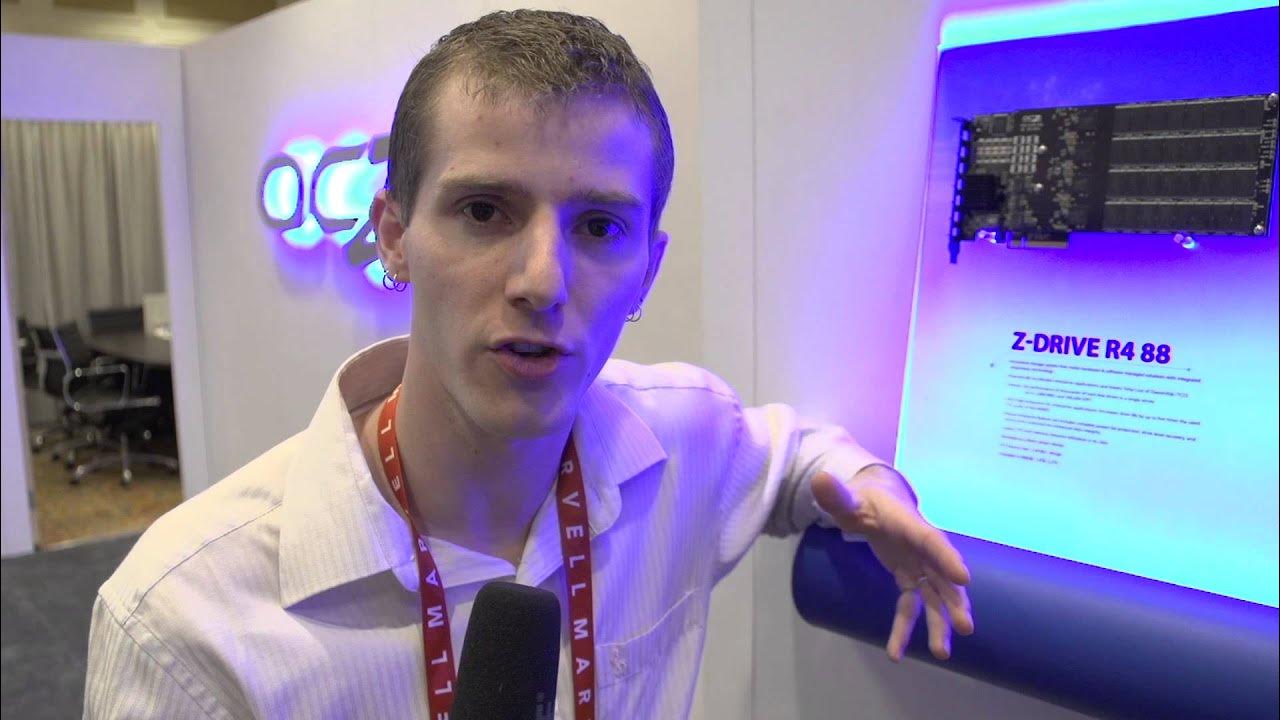
OCZ Consumer & Enterprise SSD Technology Including Linux Caching Linus Tech Tips CES 2013
0 up · 0 down · 0 ratings
Description
OCZ's booth was pretty straightforward and focused on their new Vector consumer SSD, as well as their new Linux SSD caching technology for enterprise drives. Day 6 - video 1
The video provides Linus Tech Tips coverage from CES 2013 focused on OCZ’s latest storage innovations, including the Vector PCIe solid state drive and Linux-based caching technologies for enterprise environments. Linus explains the design philosophy behind OCZ’s transition to in-house controllers with the Everest 2 platform, highlighting performance gains and improved consistency for incompressible data compared with prior generations. He introduces the Barefoot 3 controller, custom firmware, and the six- to twelve-month development timeline that culminated in a high-end PCIe solution capable of up to one terabyte of capacity and substantial sequential and random I/O performance. Throughout the segment, the discussion contrasts SATA 3 limitations with PCIe-based storage, noting the real-world bandwidth impedance from PCIe lanes and the potential benefits of moving to PCIe Gen 3 for further gains. The presentation then shifts to enterprise SSD options, including the Intrepid 3 line, which employs OCZ’s own controller and Everest 2 firmware to optimize for both compressible and incompressible data, positioning these products as complementary to existing Geneva 2 solutions. The host and OCZ representatives discuss software-based acceleration through the LXL platform, revealing how caching layers can dramatically boost IOPS and accelerate mechanical drives by leveraging SSD cache. The segment concludes with a look at cross-platform support including Linux, VMware, and Windows solutions, and hints at future product lines such as WXl for Windows, emphasizing OCZ’s strategy to diversify form factors, interfaces, and caching approaches while stressing extended warranties and design quality. In summary, the CES coverage portrays OCZ as actively redefining its image by investing in in-house tech, expanding caching options across platforms, and pursuing higher performance storage architectures that challenge the traditional mechanical drive bottlenecks. The overall tone is informative and forward-looking, underscoring practical implications for enterprise workloads and enthusiasts alike who seek faster storage with broader compatibility.
Topics · technology · storage · hardware · enterprise
Questions answered
- Wat zijn de belangrijkste innovaties van OCZ op CES 2013 zoals gepresenteerd in de video?
- De belangrijkste innovaties zijn de Vector PCIe SSD met twee Indilinx Barefoot 3 controllers en Everest 2 firmware, de Intrepid 3 SATA SSD met in-house Everest 2 controller, en de LXL cache-acceleratieplatforms voor Linux en enterprise om caching van SSDs of mechanische schijven mogelijk te maken. Er wordt ook gewezen op Windows-solution WXl en VMware-ondersteuning als uitbreiding van caching en acceleratie over meerdere platforms.
- Welke rol speelt caching software in OCZ’s opslagstrategie volgens de video?
- Caching software zoals LXL en de bijbehorende tooling toont hoe bestaande volumes als cachevolumes kunnen worden geconfigureerd en beheerd, met beleidsregels voor welke data als hot data moet worden gecached. Dit verhoogt de IOPS aanzienlijk ten opzichte van puur mechanische volumes en maakt flexibele opslagarchitecturen mogelijk met gemengd gebruik van SSD- en mechanische opslag.