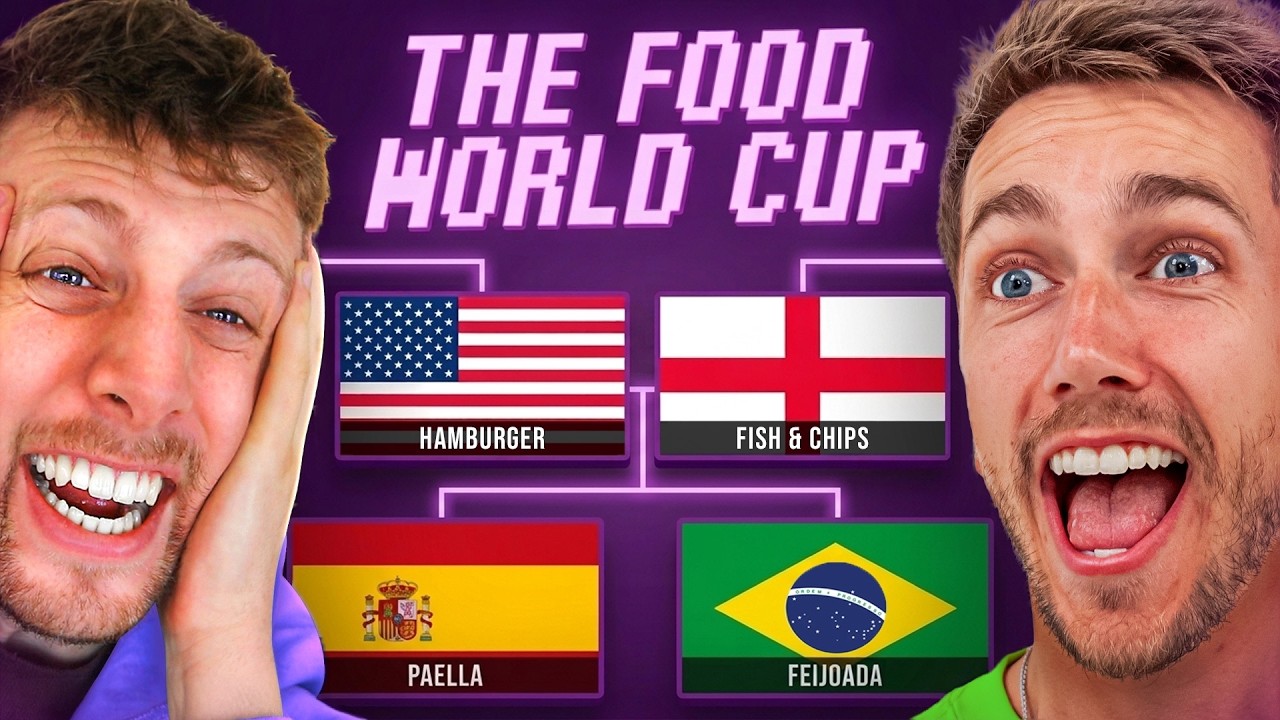
Predicting The World Cup... But It's Based On Food
0 up · 0 down · 0 ratings
Channels and socials
What should we react to? Tell us here: forms.gle : Order food NOW at: eatsides.com : Access exclusive content at: sideplus.com : XIX Vodka: xixvodka.com : Subscribe to our Reacts Channel: youtube.com
: Sidemen Clothing: sidemenclothing.com Subscribe to our 2nd Channel: youtube.com : Sidemen Instagram: @Sidemen : Sidemen Twitter: twitter.com #SidemenReacts #Reacts
The video opens with the Sidemen React team framing a playful World Cup style competition that centers on food rather than football. The hosts acknowledge they have very different tastes, which sets up a lighthearted disagreement about which dishes should advance. They split into groups and begin ranking items like tacos, schnitzel, Korean fried chicken, poutine, fondue, and several regional dishes in a fast, banter-heavy format. Throughout the early rounds, they debate familiarity, personal preferences, and cultural associations, often joking about ingredients like cilantro and dishes they haven’t tried. The conversation quickly turns into a collaborative bracket where they swap positions, argue for favorites, and justify why certain foods deserve higher placement based on taste, novelty, and comfort. The tone remains humorous and competitive, with moments of mutual concession and playful concede-you-win exchanges, culminating in a dramatic, biased semi-final that reflects their personalities and shared experiences with food culture. As the group pushes into the later rounds, they acknowledge gaps in knowledge about several cuisines, joking about language barriers and unfamiliar terms. They continue to compare dishes like sushi versus shawarma, paella versus chivito, and various European era comfort foods, weighing texture, richness, and how filling each option might be. The debate highlights the challenge of representing entire countries with a single dish, while the friends nonetheless celebrate cultural diversity and their own evolving opinions. They call out the iconic status of some items, defend personal favorites, and tease potential future videos that might explore world cuisines in more depth with a chef or more participants. The banter remains friendly, and their enthusiasm for trying new foods shines through as they edge toward a consensus. In the middle and toward the end, the brackets begin to narrow and the pressure increases as each pick’s justification becomes sharper. The exchange moves from casual compliments to more deliberate arguments about why certain dishes should survive rounds and how much an ingredient or dish resonates with their palate. They reveal practical considerations, like healthiness and practicality of eating certain foods in a bracket format, and they acknowledge that some selections are based on iconic status rather than flawless taste. The hosts also insert humor about potential backlash from audiences in different countries, then pivot back to food-driven logic to justify their final placements. The session closes with a light-hearted wrap, acknowledging they could easily have a longer, more exhaustive version of the video with more participants and more meals from around the world. The conclusion emphasizes the fun premise over strict accuracy. They celebrate the foods that did well, especially items like shawarma and sushi, while conceding that several strong contenders were unfamiliar to them and could have performed differently with broader tasting experiences. The video ends on a note about touring world cuisines, inviting viewers to suggest new foods or even a moresidemen-style follow-up featuring chefs or global tastings. They remind the audience that this is a playful bracket, not a definitive ranking of national dishes, and thank viewers for engagement as they tease future dinner-time content. Overall, the video succeeds as an entertaining, food-forward parody of sports brackets, delivering lively personalities, humor, and a curiosity about world cuisines that invites continued discussion and exploration.
Topics · Entertainment · Food · World Culture · Reaction
Questions answered
- What is the general premise of the video and how do the hosts approach it?
- The video frames a World Cup style bracket where Sidemen React members rank world foods rather than teams, discussing preferences, cultural dishes, and personal biases in a banter-filled format.
- Which themes dominate the mid to late rounds of their ranking, and how do they justify choices?
- Themes include taste, familiarity, cultural representation, iconic status, and practicality/health considerations, with arguments balancing humor and subjective palate preferences.
- Do the hosts acknowledge gaps in knowledge about certain cuisines?
- Yes, they often admit unfamiliar dishes and languages, humorously noting language barriers and expressing openness to trying more foods in future videos.
- What is the video’s concluding message about the bracket format?
- The hosts emphasize that the exercise is playful and not a definitive judgment of national cuisines, inviting viewers to suggest future foods and potential follow-up content.