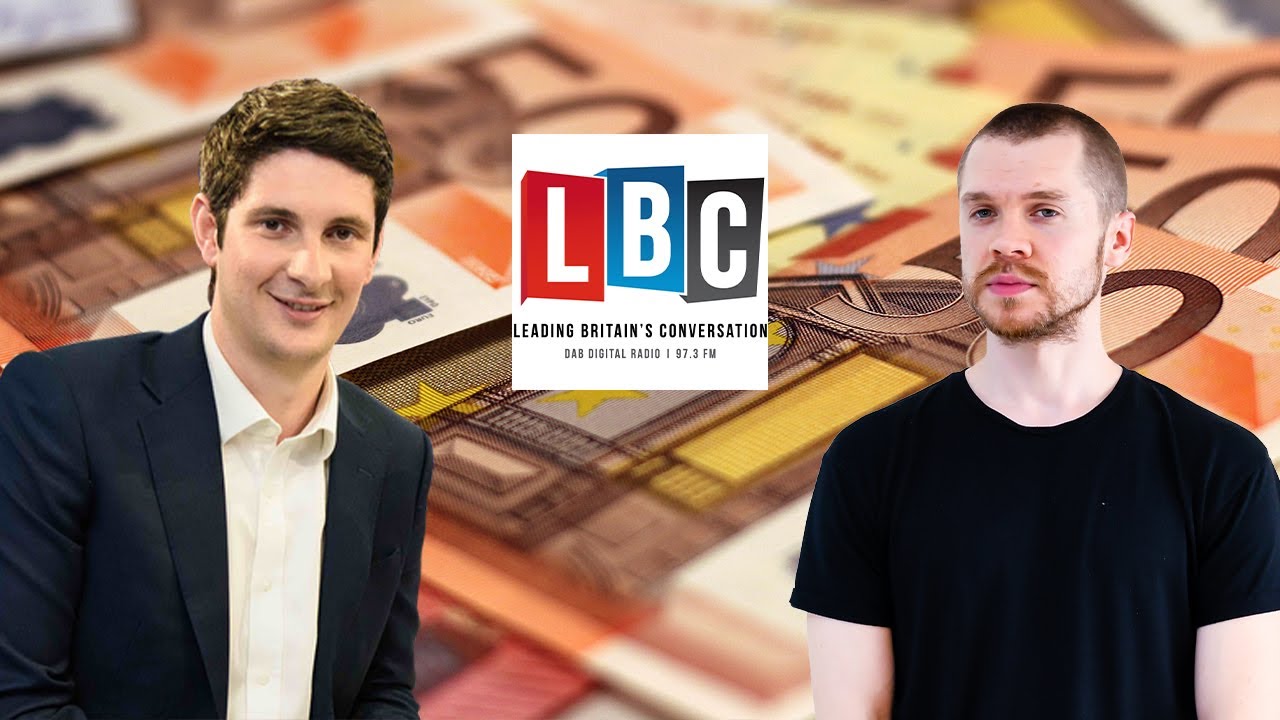
Will We Pay Back the Government Debt? - Gary Stevenson on LBC with Tom Swarbrick
0 up · 0 down · 0 ratings
Channels and socials
Interview with Tom Swarbrick on LBC. Will we ever pay back the government debt racked up over Covid-19? Do we have to? What other problems does it cause if we don't? Broadcast on LBC @ 10.08 on 22/10/2020 Published with permission from LBC SOCIAL MEDIA: WEBSITE - wealtheconomics.org TWITTER - @garyseconomics FACEBOOK - garyseconomics INSTAGRAM - garyseconomics GARY'S ARTICLES: www-express-co-uk.cdn.ampproject.org theguardian.com cityam.com opendemocracy.net opendemocracy.net nationalobserver.com AUDIO FEATURING GARY: anchor.fm MORE VIDEOS: youtu.be - COVID-19 & MONEY youtu.be - RADIO 4 INTERVIEW youtu.be - LBC INTERVIEW youtu.be - TALKRADIO INTERVIEW youtu.be - ANOTHER EUROPE PODCAST PHOTO FROM: lbc.com pixabay.com Backdrop - Shard by The Other Kev on Pixabay Spoken by Gary Stevenson GARY'S ECONOMICS Edited by Simran Mohan MOHAN MEDIA 2020
Gary Stevenson explains on LBC with Tom Swarbrick that the UK government’s Covid-19 response has largely been financed by money created by the Bank of England, rather than traditional borrowing from pension funds or foreign lenders. He describes quantitative easing as the central bank printing money to fund the deficit, effectively creating a debt that is not planned to be repaid in the conventional sense because the lender is a government department itself. He argues that this arrangement breaks normal financial rules, raising the central question of what the long term consequences will be, beyond whether the debt will be paid back. Stevenson emphasizes that the key issue is the impact of massive money printing on inflation, liquidity, and the distribution of wealth, particularly how richer households accumulate assets while ordinary people face job losses and reduced real incomes. He also notes that while stock and asset prices may appear resilient, the real economy could deteriorate with lasting effects on housing affordability and social inequality. The discussion shifts to potential outcomes after the crisis, including how asset inflation could undermine affordability for future generations and why the focus should be on the distributional effects of monetary policy rather than simply the notion of debt repayment. By the end of the interview, Stevenson connects these macro trends to personal experience, highlighting how volatile wealth effects from monetary policy can reshape life opportunities for people who are not already wealthy. Overall, the conversation frames the Covid-19 response as a structural event with profound implications for inequality, housing, and inflation, rather than a transient fiscal anomaly.
Topics · economy · monetary_policy · inequality · public_policy · finance
Questions answered
- What is the central mechanism driving current government funding for Covid-19 relief in this discussion?
- The government is largely funding it through money printed by the Bank of England, i.e., quantitative easing, rather than traditional borrowing from investors.
- Why does Gary Stevenson say this debt is not likely to be paid back?
- Because the money is borrowed from and issued by the central bank, which is part of the government, so repayment in the usual sense is not planned.
- What are the main risks associated with this approach, according to the interview?
- Key risks include a large expansion of the money supply, potential inflation or inflation in asset prices, and increased inequality as richer households accumulate assets while ordinary people face higher costs of living and housing affordability challenges.