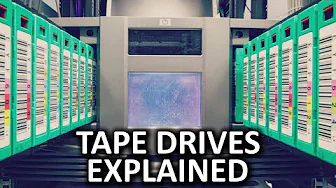
Tape Drives As Fast As Possible
0 up · 0 down · 0 ratings
Channels and socials
Magnetic tape may be ancient history for audio, but it's still an important way to store backup data! What advantages do they have over more common HDDs and SSDs? Thanks to Audible for supporting our channel. Get a free 30 day trial at audible.com Follow: twitter.com Join the community: linustechtips.com
Tape drives may have started as the stuff of early computer history, but they remain a viable solution for archival storage and large-scale backups. The video traces magnetic tape from the very first drive, the Uniservo used with the Univac 1, which occupied an entire room and stored only about 225 kilobytes, to modern plastic tape coated with magnetic substances that enabled high-density recording. Over the years, innovations like using the full tape width and improved recording techniques pushed capacities up to 10 terabytes in a single package, all while the physical media stays remarkably compact and relatively inexpensive to replace. The video also explains why tape is not common for day-to-day computing: access is sequential rather than random, requiring the drive to wind tape back and forth to locate data, which makes it slower than HDDs or SSDs for direct reads. Nevertheless, tape offers strong longevity, stability, and cost-per-gigabyte advantages for long-term backups, with organizations often dedicating tape to archiving and offsite storage rather than frequent access. A notable current demonstration is Sony’s tape technology capable of holding 185 terabytes per cartridge, underscoring that advances in tape storage continue to push the medium forward. The host also promotes Audible, highlighting the value of audiobooks and a free 30-day trial as part of the sponsorship. The overall takeaway is that magnetic tape remains relevant for archival and backup applications, balancing initial drive costs against inexpensive, durable media that scales to very large capacities while not being optimized for everyday computing tasks.
Topics · technology · data_storage · archival_storage · computer_history · backup
Questions answered
- Why is magnetic tape still used for data backup despite newer storage technologies?
- Magnetic tape remains cost-effective for large-scale backups and long-term archival storage due to its durability, longevity, and low media cost per gigabyte. It is well suited for offline storage and offsite backups, reducing the risk of data loss from power or network issues.
- What is the current capacity of a modern tape cartridge?
- Recent tape technologies can hold up to 185 terabytes of data on a single cartridge.
- Why is tape access not as fast as hard drives or SSDs for day-to-day use?
- Tape access is sequential, meaning the drive must wind and search through the tape to locate data, which makes reads slower compared to directly accessing a random location on HDDs or SSDs.