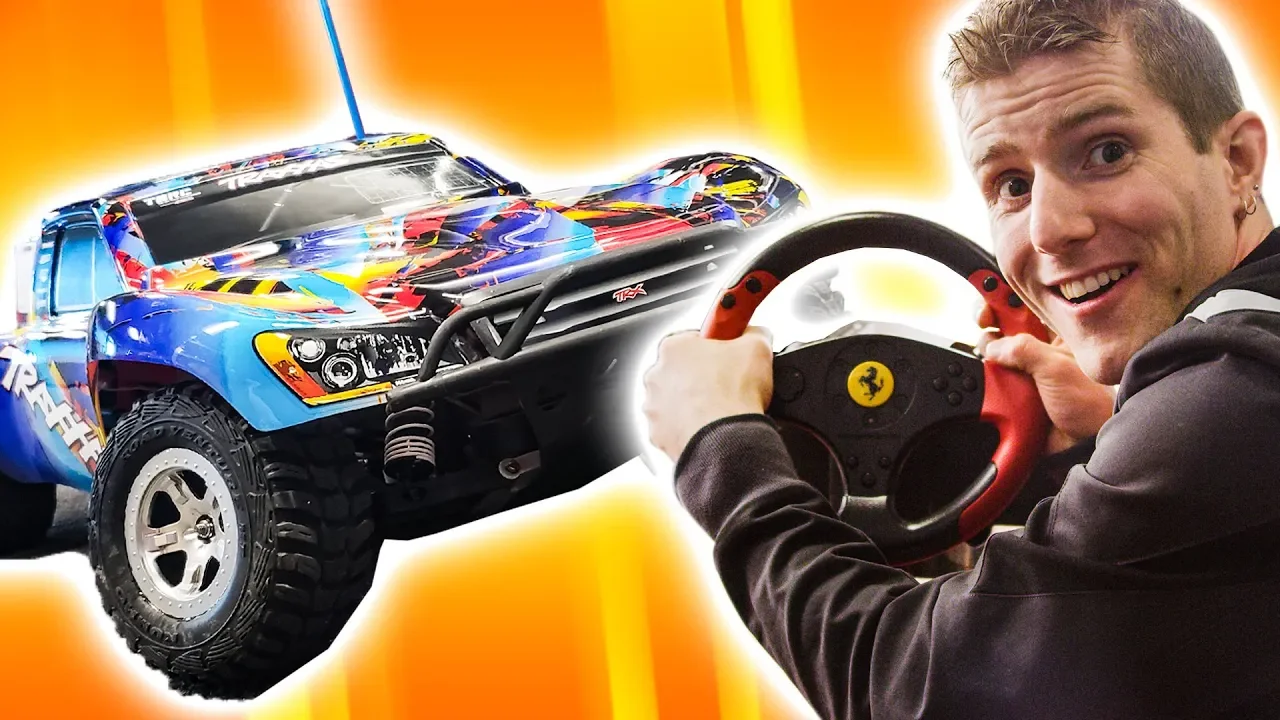
First Person View VR RC Car Racing!!
0 up · 0 down · 0 ratings
Promos
Sign up for Private Internet Access VPN at lmg.gg Save 10% at Ridge Wallets by using offer code LINUS at ridgewallet.com Jake and Linus build a proof of concept VR RC Car racing setup for use at LTX 2019! Get LTX 2019 featuring DreamHack tickets: ltxexpo.com Buy DJI Goggles: On Amazon: lmg.gg Buy DJI OcuSync: On DJI's Site: lmg.gg Buy Thrustmaster Wheels: On Amazon: lmg.gg Discuss on the forum: linustechtips.com Our Affiliates, Referral Programs, and Sponsors: linustechtips.com Get Private Internet Access today at geni.us Displate metal posters: lmg.gg Linus Tech Tips merchandise at lttstore.com Linus Tech Tips posters at crowdmade.com Our Test Benches on Amazon: amazon.com Our production gear: geni.us Twitter - twitter.com Facebook - @LinusTech Instagram - @linustech Twitch - twitch.tv Intro Screen Music Credit: Title: Laszlo - Supernova Video Link: youtube.com iTunes Download Link: itunes.apple.com Artist Link: soundcloud.com Outro Screen Music Credit: Approaching Nirvana - Sugar High youtube.com
The video presents an ambitious proof of concept for first person view (FPV) racing using a real RC car rather than a simulated on-screen vehicle. The hosts discuss the initial constraints for a VR RC setup, including cost, battery life, size, and motion sickness potential, and outline their plan to choose a suitable platform that could run for extended sessions at events like LTX. They explore the idea of using a steering wheel and a throttle/brake pedal setup, and consider how to integrate video transmission with minimal latency while keeping the hardware compact enough to fit into a single testing rig. The segment delves into modifying off-the-shelf components, like adapting a thrustmaster steering wheel and experimenting with potentiometers to match resistance across the wheel and pedals, as they prepare for real-world testing. By the end of the breakdown, the team leans toward a plug-and-play FPV solution from DJI and contends with practical considerations such as cooling for the video transmitter and the need for lightweight, visible mounting that won’t look polished but will work at a live event. The hosts acknowledge the ongoing nature of the project, promising a deeper, step-by-step guide in a follow-up video and teasing the eventual full experience that viewers can expect at LTX 2019. Overall, the video frames the project as a hands-on, iterative exploration of FPV RC racing rather than a finished product, inviting the audience to learn through experimentation and upcoming tutorials. The mid-video discussion shifts toward implementation details, including how to calibrate the RC components, swap pedals from left to right, and how to integrate a camera feed with the headset for real-time driving. They demonstrate the process of tweaking electronics, sourcing components, and 3D printing replacements, while weighing the pros and cons of alternative parts. The team explains the importance of minimizing latency and maximizing video quality, and documents their trials with different potentiometer values and mounting strategies. The segment also captures their practical approach to mounting, cooling, and wiring, with a candid view of the challenges and improvisations typical of a live build. The conclusion emphasizes that while the project is not yet deployment-ready, the experiments have yielded encouraging results and real excitement about future iterations and the eventual live demo at LTX. Viewers are encouraged to stay tuned for a detailed, home-start guide and to follow the team as they refine the setup for a high-energy FPV RC racing experience.
Topics · technology · rc vehicles · virtual reality · diy · fpv · build log · video gear