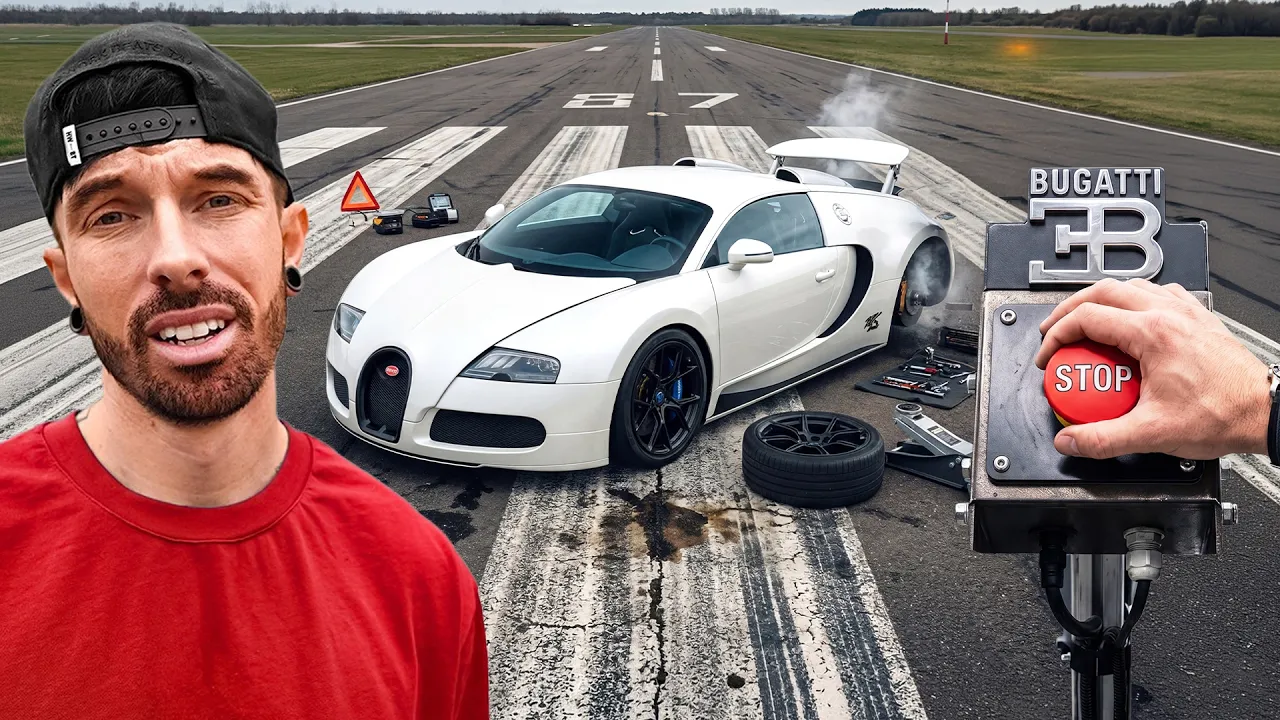
BUGATTI STOP ME ATTEMPTING TOP SPEED IN MY VEYRON
0 up · 0 down · 0 ratings
Description
check out WheelMainia's video here - youtu.be
Promos
Check if your car was damaged with carVertical - using code MAT for 20% off - carvertical.com I bought this reppossed Bugatti Veyron which would drive, but after hours of diagnosing faults we finally fixed the car, serviced it and then got it driving. But the Bugatti Veyron is one of the fastest cars ever made and i wanted to put that to the test. Its capable of 253mph & before i attempted that speed the car needed a list of things to make it safe. Thanks to morrisdesignsuk.com for the decal designing and cutting, Thanks to @P1Autokeys for all the Key work Thanks to @exclusive_composites for the carbon repairs For all PPF and PPF application
check out waxisdead.com Grab a free number plate when you get a personalised reg from car reg with code - MATBMX carreg.co.uk Please
ALL MA MERCHANDISE
Channels and socials
FOR MORE CONTENT
CHECK OUT MY SECOND CHANNEL
Follow Me Here Aswell
Notes
This video documents the ambitious and highly technical process of preparing a Bugatti Veyron for a top speed run, including extensive car reassembly, wrap work, and system checks. The creator explains the goal upfront: to reach the Veyron’s famous top speed of 253 mph, a level of performance that sits near the edge of what’s practical and safe for a car with a storied and fragile ecosystem. The audience is introduced to the multi-step prep, starting with the decision to strip the wrap to inspect the paint underneath and assess panel condition, followed by color decisions and wrap application. The wrap process is shown in a detailed, methodical fashion, with careful measurements, cut lines, and the use of knifeless tape to protect the paint while achieving precise edges. As panels are progressively fitted, the video shifts from cosmetics toward performance readiness, explaining how the undertray, aero pieces, and engine bay details contribute to a stable high-speed profile. This section frames the importance of aerodynamics and system integrity when approaching extreme speeds, clarifying that even small gaps or misalignments could impact top speed performance. The rebuild phase transitions into mechanical preparation, including reinstalling a fresh front splitter, carbon components, and upgraded headlights that visually modernize the car while maintaining the Bugatti aesthetic. The host discusses the secret top speed mode key and how it is intended to adjust the car’s behavior at high velocity, noting that two keys are preferable for reliable operation. In this portion of the build, the conversation pivots to the challenge of obtaining a functioning speed key, the need for proper coding, and the possibility of fabricating a replica key if necessary. The video then pivots to practical diagnostic steps and troubleshooting, where engine misfires and TPMS sensor concerns threaten the plan. Several segments are devoted to chasing and diagnosing misfires, swapping coil packs, and testing electrical fuses, all while explaining the logic behind each diagnostic move and its potential impact on a 1.5 million pound car’s reliability. The creator emphasizes the importance of faultless sensors, tire pressures, and electrical reliability to enable top speed mode, and the narrative includes a running commentary about the delicate dance between chasing a technical fault and maintaining safety. After a series of interim test drives, the car experiences intermittent engine lights and misfires which drive the team to systematically verify every major subsystem, including ignition coils, fuel delivery, and the wiring harness. The crew uses a combination of parts swaps from various high-end sources, cross-checks with diagnostic tools, and a patient, iterative approach to reach a stable, road-ready state. In the latter stages, wheels and tires are addressed, with a transition to wheel upgrades from a premium supplier, alongside a discussion of TPMS relearn procedures and the practical limits of aftermarket TPMS integration on a Bugatti Veyron. The video closes with a plan to take the car out for a controlled test drive to test the reliability of the fixes and the readiness of the car for the top speed run, and it tees up the next steps such as obtaining a properly coded speed key, final calibrations, and a proper track or runway launch setup. Throughout, the host acknowledges the substantial financial and technical risks, celebrates incremental successes, and frames the Veyron project as both an engineering challenge and a personal milestone on a long-running journey of car restoration and performance exploration. The overall arc moves from cosmetic restoration and wrap customization to a high-stakes, data-driven test of engineering limits, with a strong emphasis on safety, verification, and methodical problem solving as prerequisites to attempting a top speed run.
Topics · Autos & Vehicles · Automotive Restoration · High-Performance Cars · Car Tuning · Vehicle Engineering
Questions answered
- What does the Bugatti top speed key actually do, and why is it important for the top speed run?
- The top speed key is designed to enable a specialized mode that prevents the rear wing from deploying and optimizes the car for sustained high-speed operation. It must be used with the car running and all safety checks in place, and manufacturers typically require proper installation and coding. In this video, the host investigates a replica key option and tests its effect, noting that the car must be in the correct state (wheels on the ground, TPMS and other systems ready) for top speed mode to engage.
- What troubleshooting steps are taken for intermittent engine misfires during the test drive?
- The team checks fuse continuity, tests individual fuses with a multimeter, swaps coil packs from Bentley W12 as a potential fix, and clears diagnostic codes to see if misfires recurve. They verify spark plugs, inspect wiring, and reassemble components to isolate whether the misfire is caused by coil packs or other ignition components.
- How is tire pressure monitoring system (TPMS) related to top speed readiness, and what is being done about it?
- The TPMS sensors are essential for the car to run in top speed mode, as correct tire pressures are required for a faultless setup. The video covers attempts to relearn aftermarket TPMS IDs, discussion of the limitations on Bugatti vehicles for relearning IDs, and the possibility of sourcing TPMS solutions to enable high-speed operation.