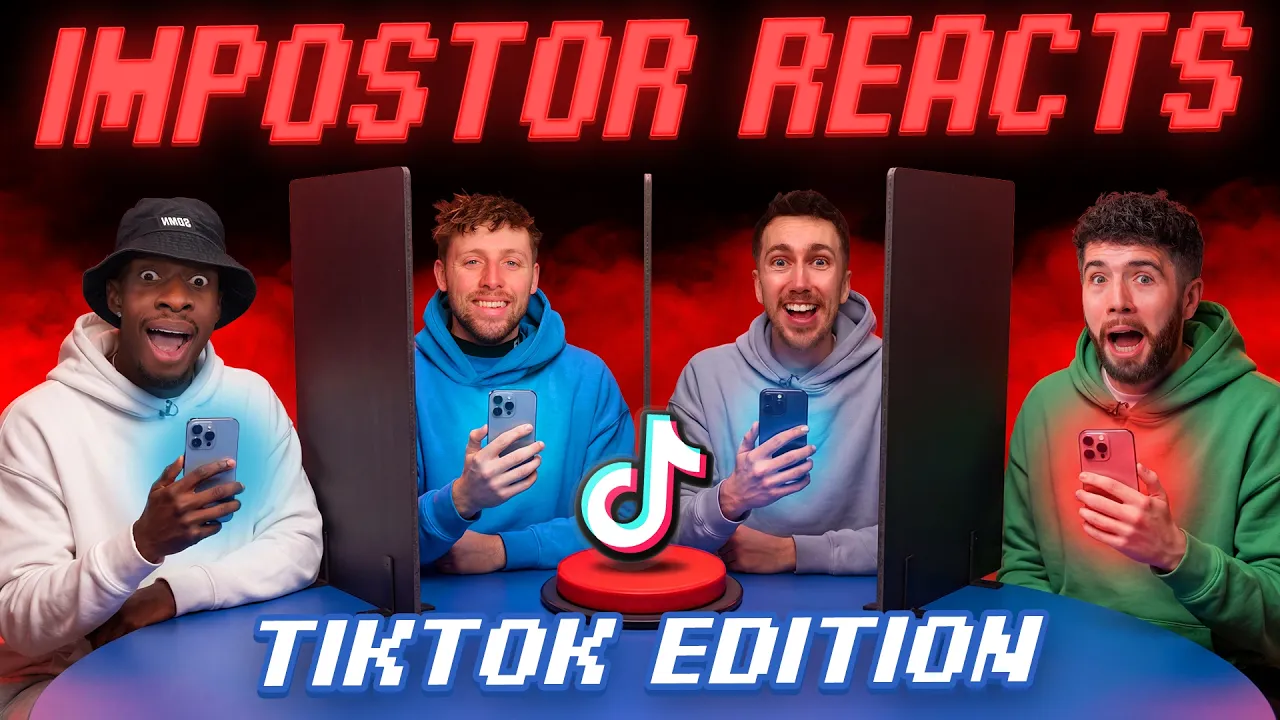
SIDEMEN REACTS BUT ONE OF US IS AN IMPOSTOR: TIKTOK EDITION
0 up · 0 down · 0 ratings
Channels and socials
SEND CLIPS TO REACT USING #SidemenReacts on Social Media! : Order food NOW at: eatsides.com : Access exclusive content at: sideplus.com : XIX Vodka: xixvodka.com : Subscribe to our Reacts Channel: youtube.com
: Sidemen Clothing: sidemenclothing.com Subscribe to our 2nd Channel: youtube.com : Sidemen Instagram: @Sidemen : Sidemen Twitter: twitter.com #SidemenReacts #Reacts #ReactsClips
SIDEMEN REACTS BUT ONE OF US IS AN IMPOSTOR: TIKTOK EDITION brings the familiar Sidemen Reacts format into a TikTok themed setting, with the group trying to identify the impostor based on short clips. The video opens with the gang reasserting the rules as they jump into the first round, noting that one person sees a different clip while the others must describe their clip in one word before voting. The energy is brisk and playful, with jokes about memory and nerves as the players scramble to lock in a word that might not reveal their own status. Round one kicks off with banter about the TikTok format, the birthday shoutouts, and the group’s expectation that the format will deliver the same level of entertainment as their previous impostor episode. This opening establishes the meta game: keep clues broad yet specific enough to provoke deduction while avoiding giving away too much. The exchange shows early doubt and strategic hesitation, highlighting how difficult it is to balance obscure clues with recognizable patterns. In the second round the players pivot to more descriptive options, with several participants expressing nerves and trying to pick words that won’t expose themselves. The banter around potential clues,like the use of familiar phrases or cultural references,demonstrates the crew’s comfort with misdirection. They discuss why certain words might work across TikTok clips, such as additions or other editing cues, and they push each other to commit to a choice while keeping it cryptic. The group’s dynamic is clear: while some players lean into well-known tropes, others push for deviation to avoid becoming obvious impostors. The dialogue also showcases their camaraderie, as jokes and light ribbing punctuate the strategy talk. Viewers see the balance between game sense and personality maintain the show’s rhythm through these early exchanges. As the rounds progress, the pace accelerates and the players start to favor more abstract links that require cross-clip reasoning. In one notable moment the discussion centers on a clip involving a family referencing Ohana, which sparks decoding of cultural and media cues within the TikTok ecosystem. The team debates how obvious or obscure a clue should be, with some voicing preference for widely applicable pivots like “addition” while others push for something more idiosyncratic. The humor remains front and center, with the cast trading playful jibes and reacting to each other’s misreads. This round underscores the core tension of the game: to mislead just enough without becoming unravelingly opaque. The fourth round features a more elaborate “love surge” clip scenario, where the team shifts from abstracting to describing sensations and visuals. The contestants propose links such as “explode” to fit the performative fever of a ticklish romance moment, testing how well a visceral word can anchor a deduction. Laughter erupts as players riff on the clip’s exaggerated mood and the challenge of mapping human experience to a single keyword. The discussion also reveals how personal associations color their judgments, sometimes overpowering objective alignment with the clip. The round wraps with two players leaning into vague strategies, reflecting how the impostor twist rewards both cleverness and risk. Round five continues the pattern of mutual teasing and rapid-fire word exchanges, with the group trading guesses about who might be impostor and what each clue implies. The conversation turns to a Moo Off connecting clip, where the team must parse a humorous, generational meme into a concise descriptor. The tension rises as votes loom, and the players push each other toward a decisive conclusion that could flip the round. The casual chaos and quick references keep the energy high, while the impostor’s need to blend in remains a constant pressure. Viewers are treated to the show’s signature mix of banter, deduction, and coordinated chaos as the rounds stack up. In the final stretch, the teammates grapple with a long sequence of possible links, including candidates like Sanchez, JME, and other pop culture references that require cross-linking across clips. The group’s attempts to triangulate the impostor’s identity reveal both shared and divergent interpretative styles, with some players leaning on obvious thematic ties and others chasing more intricate connections. The payoff arrives in a dramatic climax where the chosen impostor is revealed after a tense vote, followed by roars of laughter at the absurdity of the misdirections. The video closes by recapping the chaos, praising the creative clip selection, and inviting viewers to try the format themselves with the hashtag SidemenReacts, signaling the ongoing appeal of this collaborative experiment.
Topics · entertainment · game_show · reality_show · comedy
Questions answered
- What is the core premise of Sidemen Reacts But One Of Us Is An Impostor TikTok Edition?
- A group of Sidemen react to clips where one player is the impostor and sees a different clip; they describe their clip in one word and vote on who is the impostor.
- How do players decide what word to say in each round?
- They aim to choose an obscure yet plausible word that could fit the clip without giving away their own status, balancing cleverness with ambiguity.
- What type of moments drive the rounds?
- Moments include debates over how to link a word to the clip, reactions to each other’s guesses, and strategic votes that hinge on cross-clip connections.
- What is the role of humor in the game?
- Humor arises from misdirection, banter, and the players’ attempts to stay inconspicuous while guessing impostors, creating entertaining misunderstandings.
- Are viewer comments used to inform the metadata?
- No, the summary is based on the transcript and video content; viewer comments are summarized separately in viewer semantics.