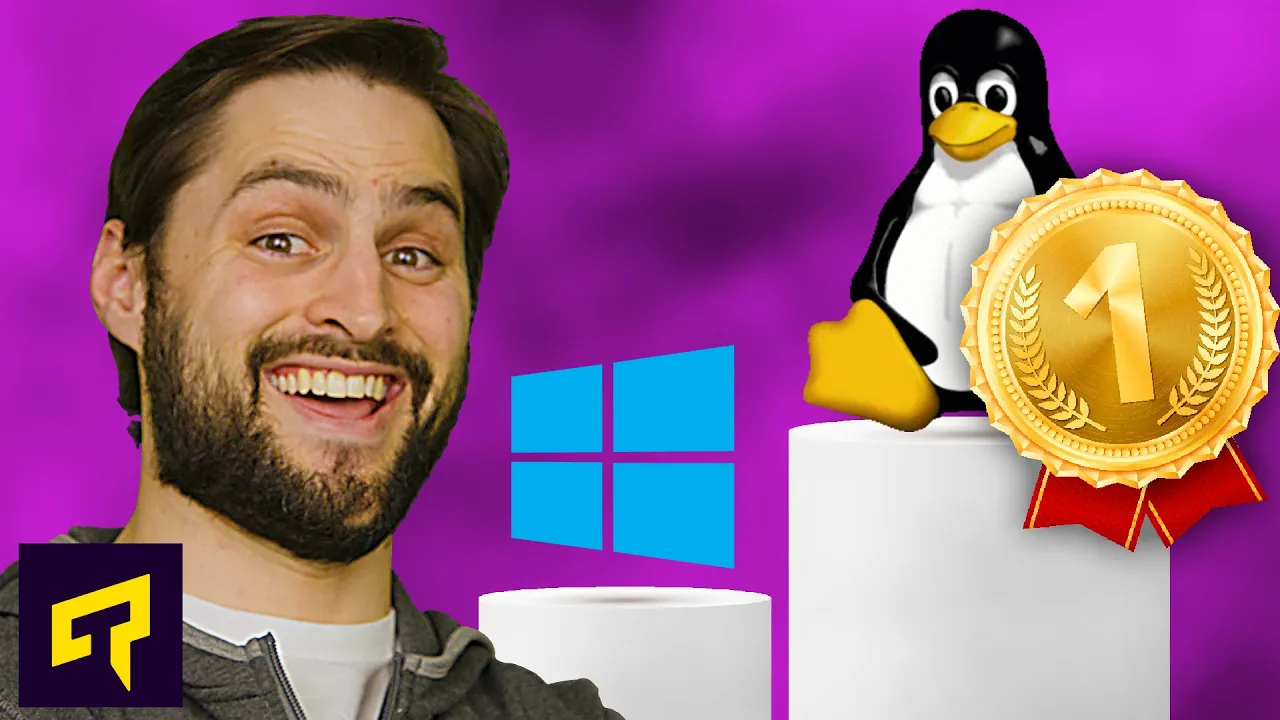
Five Things Linux Does Better Than Windows
0 up · 0 down · 0 ratings
Promos
Get 50% off your Zoho CRM annual subscription with code ZCRM50 at: lmg.gg Does Linux best Windows in enough areas to merit serious consideration as your desktop operating system? Leave a reply with your requests for future episodes, or tweet them here: twitter.com ► GET MERCH: lttstore.com ► AFFILIATES, SPONSORS & REFERRALS: lmg.gg ► PODCAST GEAR: lmg.gg ► SUPPORT US ON FLOATPLANE: floatplane.com FOLLOW US ELSEWHERE --------------------------------------------------- Twitter: twitter.com Facebook: @LinusTech Instagram: @linustech TikTok: @linustech Twitch: twitch.tv
Five Things Linux Does Better Than Windows argues that Linux offers tangible advantages over Windows across stability, customization, security, privacy, and cost. The video frames these as broad, practical areas rather than abstract ideals, beginning with stability: the Linux kernel is described as reliable and less buggy, aided by its modular design and the large, collaborative open-source community. The host emphasizes that many eyes inspect Linux code and patches, which accelerates bug detection and fixes, and notes that this distributed scrutiny helps keep Linux kernels stable on servers and desktops alike. The discussion then pivots to customization, explaining how Linux distributions range from beginner-friendly options like elementary OS and Linux Mint to highly configurable environments, with package managers acting like vetted app stores to simplify safe software installation. The host also highlights modularity as a differentiator, reducing the risk that applications will interfere with the core OS, which reinforces both stability and security. The third point, security, is framed around lower desktop adoption and open-source transparency, making malware targeting less prevalent and isolating any breaches more effectively. The open-source model is presented as a practical security plus, with fewer mono-cultures to exploit. The fourth point, privacy, contrasts Linux with Windows by noting that Linux does not enforce centralized tracking by a single corporation by default, and while some distributions may collect limited data, users can generally opt out or switch to distros that respect privacy more strictly. Finally, the fifth advantage is cost efficiency, arguing that Linux distributions are often free and that most software can be used without paying, which helps users keep money in their pockets, with the caveat that enterprise support exists for organizations that need it. The video invites audience engagement for follow-up topics and emphasizes that Linux’s strengths can appeal to home users especially when they value control, transparency, and cost savings. As a closing thought, the host teases future content exploring scenarios where Linux might not be the best fit, inviting viewers to share their perspectives in the comments.
Topics · technology · open_source · operating_systems · computer_science
Questions answered
- What is the number one reason Linux is considered more stable than Windows?
- Linux is considered more stable largely due to its open-source kernel with many eyes reviewing the code and fixes, plus its modular design that keeps applications from interfering with the kernel.
- How does Linux address privacy compared to Windows?
- Linux emphasizes privacy by default because there is no single company controlling tracking across the OS, and many distributions allow easy opt-out or selection of privacy-respecting options.