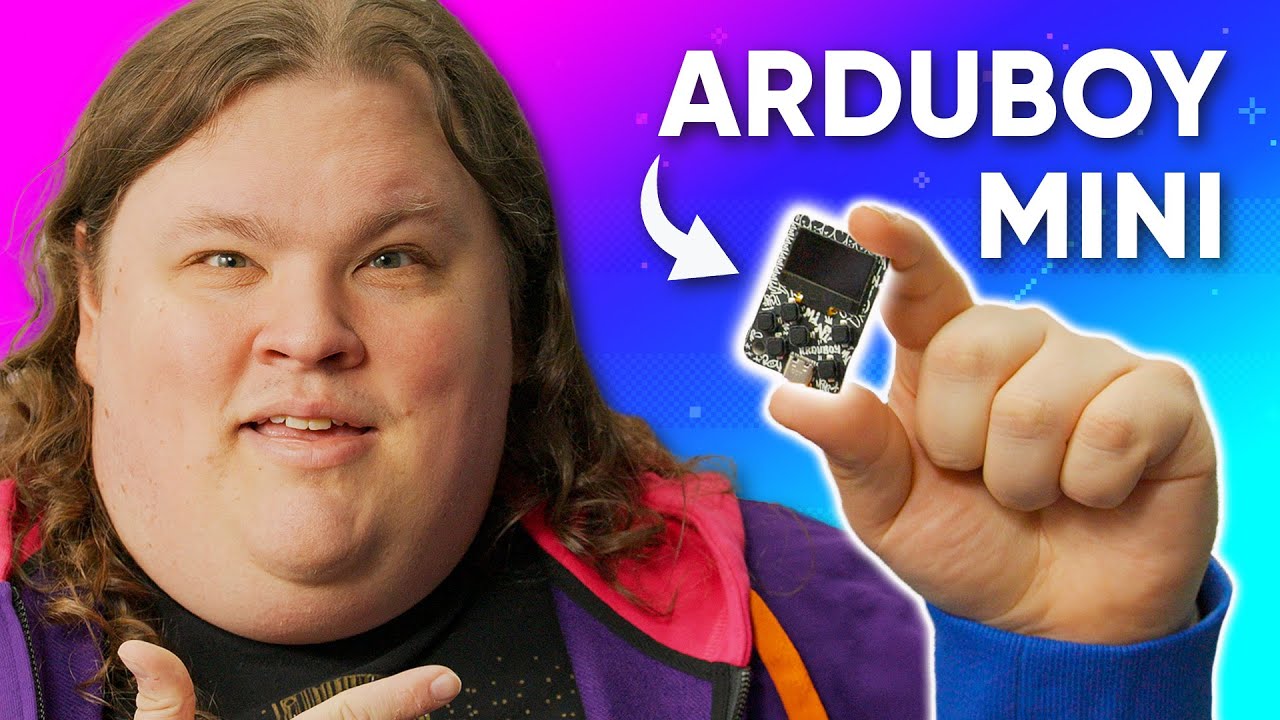
Kids today got it good! - Arduboy Mini
0 up · 0 down · 0 ratings
Description
check out the Arduboy FX and Arduboy Mini which are two compact handhelds with over 200/300 games loaded onto it. Is this actually a viable gaming experience or is there a reason most handhelds are bigger?
Promos
Check out the Vessi StormBurst and their other styles at vessi.com Use code SHORTCIRCUIT for 15% off your entire order and free shipping. Gameboys are cool but they're sooooo big/cumbersome. If only there was something even smaller I could carry around... Luckily, Anthony is here to
Check out the Arduboy Mini: arduboy.com Purchases made through some store links may provide some compensation to Linus Media Group. Want us to unbox something? Make a suggestion at lmg.gg ► GET MERCH: lttstore.com ► LTX 2023 TICKETS AVAILABLE NOW: lmg.gg ► GET EXCLUSIVE CONTENT ON FLOATPLANE: lmg.gg ► AFFILIATES, SPONSORS & REFERRALS: lmg.gg ► OUR WAN PODCAST GEAR: lmg.gg FOLLOW US ELSEWHERE --------------------------------------------------- Twitter: twitter.com Instagram: @shortcircuityt TikTok: @linustech Facebook: @ShortCircuitYT CHAPTERS --------------------------------------------------- 0:00 It's a pun, get it? 0:10 Arduboy FX 3:04 Arduboy Mini 5:44 Sponsor - Vessi 6:20 Looking at the UI 7:23 Gaming 9:07 Why does this exist? 11:45 Overall thoughts 12:28 Outro
The video opens with a lighthearted, slightly teasing tone as the host contrasts the Arduboy FX with earlier compact handhelds, setting up the core question of whether a credit-card sized device can deliver a truly viable gaming experience. The host explains that the Arduboy FX adds 16 megabytes of flash to support over 200 games, a significant upgrade from the one-game limit of the previous version. He highlights the USB connection workflow, noting that unlike older models, you can load new games directly without a computer, which makes the device notably more user-friendly while preserving the open hardware ethos. The discussion then pivots to design details, including the magnetic USB Micro connector, the compact build, and the tactile character of the buttons. The host experiments with the screen, the D‑pad configuration, and the tiny speaker, offering practical impressions about visibility, audio, and how the device feels in hand, while also noting the absence of a built-in battery in the pre-release unit and upcoming battery options. Throughout, there is emphasis on the Arduboy's hackability, modular component accessibility, and the community-driven spirit that underpins the project, with comparisons to other microconsoles and the broader maker movement. In the middle section, the focus shifts to the Arduboy Mini, a smaller, more barebones alternative designed to fit in a wallet-like form factor. The presenter contrasts it with the FX, pointing out the Mini’s lack of a battery in the current prototype and the plan to include a battery and a header for power in the final version. He notes that the Mini relies on external power and runs on an ultra-low power footprint, which allows it to be extremely compact and accessible to younger or beginner makers interested in hardware hacking. The discussion explores price points, with the Mini priced around 30 dollars and the FX around 60 dollars, and considers use cases where a smaller form factor could support casual tinkering, education, or on-the-go gaming. The host also reflects on the value of open-source hardware, arguing that the ability to modify games and hardware offerings fosters deeper learning and creativity, whether for hobbyists or students. He closes the segment by acknowledging diverse preferences: some viewers will want the full console experience, while others will appreciate a highly portable, hackable device that serves as an entry point to electronics and programming. In the closing stretch, the host recaps practical takeaways about who each Arduboy model might suit best, and why the community around these devices matters. He emphasizes that the Arduboy line embodies a balance between user-friendly simplicity and deep hackability, making it appealing to both beginners and seasoned tinkerers. The discussion touches on future possibilities, such as more open-source software, community-driven game development, and potential educational uses that could inspire new generations of coders. The video ends with a light note on the upcoming shipping for the Mini and a prompt for viewers to share thoughts or requests for deeper dives into hardware and software details, inviting a continued conversation about open hardware and compact gaming. Overall, the presentation frames the Arduboy FX and Arduboy Mini as notable experiments in miniaturized, open hardware with strong educational and creative implications, even if they are not universal fits for every user’s needs.
Topics · technology · gaming · open_source · hardware · education