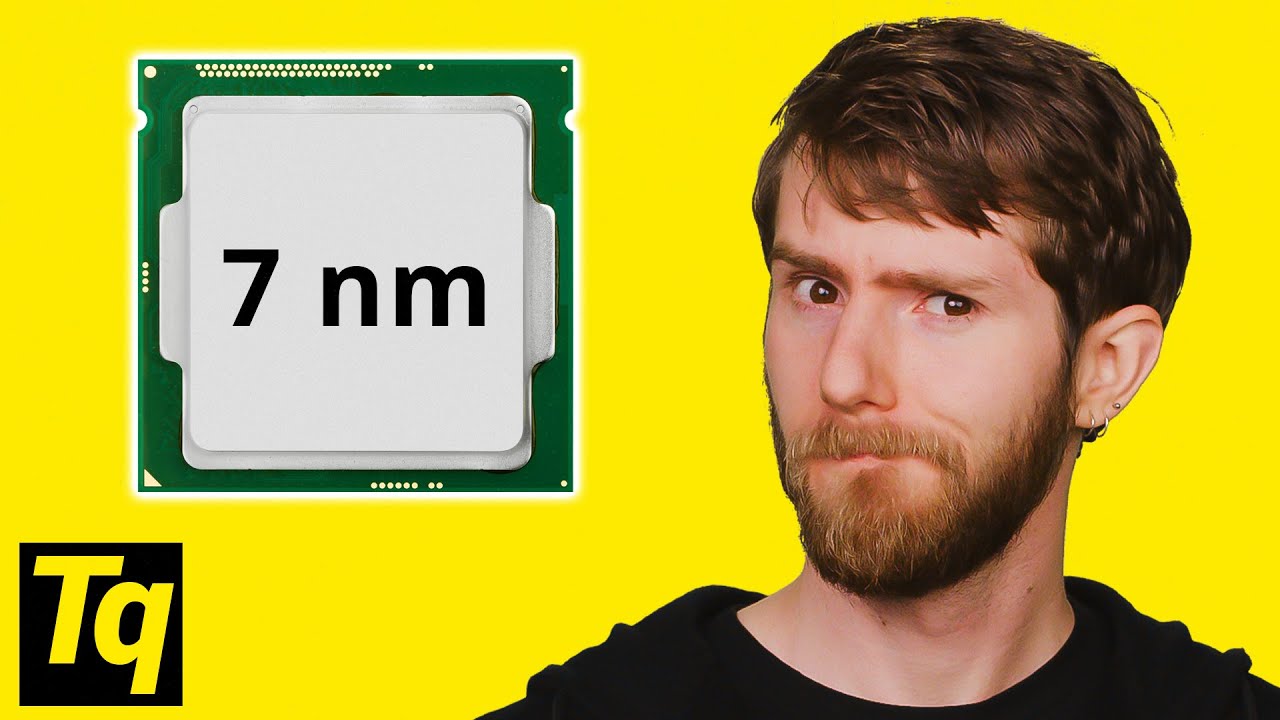
Should You Believe CPU Marketing? - Process Nodes Explained
0 up · 0 down · 0 ratings
Promos
Get 20% OFF + Free Shipping at Manscaped.com with code TQ20 - mnscpd.com Buy an Intel CPU On Amazon (PAID LINK): geni.us On Newegg (PAID LINK): geni.us On B&H (PAID LINK): geni.us Buy an AMD CPU On Amazon (PAID LINK): geni.us On Newegg (PAID LINK): geni.us On B&H (PAID LINK): geni.us Process nodes aren't always what they seem... Leave a reply with your requests for future episodes, or tweet them here: twitter.com GET MERCH: lttstore.com SUPPORT US ON FLOATPLANE: floatplane.com LTX EXPO: ltxexpo.com AFFILIATES & REFERRALS --------------------------------------------------- Affiliates, Sponsors & Referrals: lmg.gg Get Private Internet Access VPN at lmg.gg Get a Displate Metal Print at lmg.gg Support a Creator code LINUSMEDIAGROUP on Epic Games Store: lmg.gg Get a 30-day free trial of Amazon Prime at lmg.gg Our Test Benches on Amazon: lmg.gg Our Production Gear: lmg.gg FOLLOW US ELSEWHERE --------------------------------------------------- Twitter: twitter.com Facebook: @LinusTech Instagram: @linustech Twitch: twitch.tv FOLLOW OUR OTHER CHANNELS --------------------------------------------------- Linus Tech Tips: lmg.gg TechLinked: lmg.gg ShortCircuit: lmg.gg LMG Clips: lmg.gg Channel Super Fun: lmg.gg Carpool Critics: lmg.gg
The video begins by addressing the common assumption that smaller process nodes automatically mean better CPUs. It explains the historical basis for process node science, where the node label originally tracked transistor gate length, and how this metric served as a rough proxy for density and performance. The host and experts recount how Moore's Law traditionally guided expectations that shrinking nodes would yield roughly double the performance every couple of years, which in turn justified the naming progression from node to node. As the discussion progresses, the video reveals that from around 1997 onward, the relationship between node size and actual transistor size drifted, with real transistor dimensions diverging from the label due to changes in measuring methods and the rise of new design strategies. The narrative then introduces FinFET as a pivotal advancement to combat quantum tunneling and leakage in ever-smaller geometries, describing how raising the channel and creating three dimensional transistors allowed higher densities without shrinking gate lengths further. The explanation continues by highlighting how industry practice has kept the 0.7 scaling concept for naming while actual transistor features vary, leading manufacturers to focus more on transistor density, material improvements, and architectural tweaks to boost performance. The video emphasizes that in today’s landscape, process node numbers are not a definitive measure of a CPU’s capability and that real-world performance in games and applications remains the ultimate criterion for shoppers. A closing takeaway underlines practical advice for buyers: look beyond node labels and evaluate performance in actual workloads, then briefly plugs related content and related products. Overall, the episode demystifies process nodes by outlining their historical origins, the shift to cell-based density metrics, and the ongoing evolution toward more sophisticated transistor designs and materials.
Topics · processor technology · semiconductor industry · computer hardware
Questions answered
- Do smaller process node numbers reliably indicate better transistor density and performance?
- Not necessarily. The node label has diverged from the actual transistor size due to changes in measurement methods and integration of new technologies like FinFET, so density and performance depend on multiple factors beyond the node label.
- What does the 0.7 factor historically refer to in process naming, and is it still relevant?
- The 0.7 factor was a rough historical rule used to relate node names to area-based scaling, but it no longer accurately reflects transistor dimensions. Modern performance depends more on density, materials, and architecture than on the node name alone.