The Stock Market is BROKEN (just accept it)
0 up · 0 down · 0 ratings
Channels and socials
You can go to my sponsor aura.com to try 14 days for free. That’s enough time for Aura to start scrubbing your personal info off these data broker sites, without you lifting a finger. At some point over the last few years, investing stopped feeling like analyzing fundamentals and started feeling like watching a game show. Narratives are overpowering balance sheets, and prices are moving without fundamentals catching up. In this video, I'll break down: • Are markets structurally changed, or is this just a short-lived trend • The role of social media in financial markets • What legendary investors are saying about disconnection in markets • How behavioral finance has moved from the fringes of finance into the mainstream Complex topics, simple breakdowns. Join my free weekly newsletter to stay ahead of what's actually happening in markets: casualmarkets.co #economics #stocks #stockmarket #investing #finance #businessnews Disclaimer: The information provided in this video and on this channel (collectively, the “Content”) is for informational, educational, and entertainment purposes only and does not constitute investment, financial, legal, or tax advice, nor a recommendation to buy, sell, or hold any security or investment strategy. Investing involves risk and you must do your own research. Nothing in the Content should be interpreted as creating a fiduciary relationship, financial advisory relationship, or client relationship of any kind. The host, the channel, and all affiliated entities expressly disclaim any and all liability for any direct or consequential loss or damage arising directly or indirectly from the use of, reliance upon, or interpretation of the Content. By viewing or interacting with the Content, you acknowledge and agree to these terms and release the host and all related parties from any and all claims related to your reliance on the information provided.
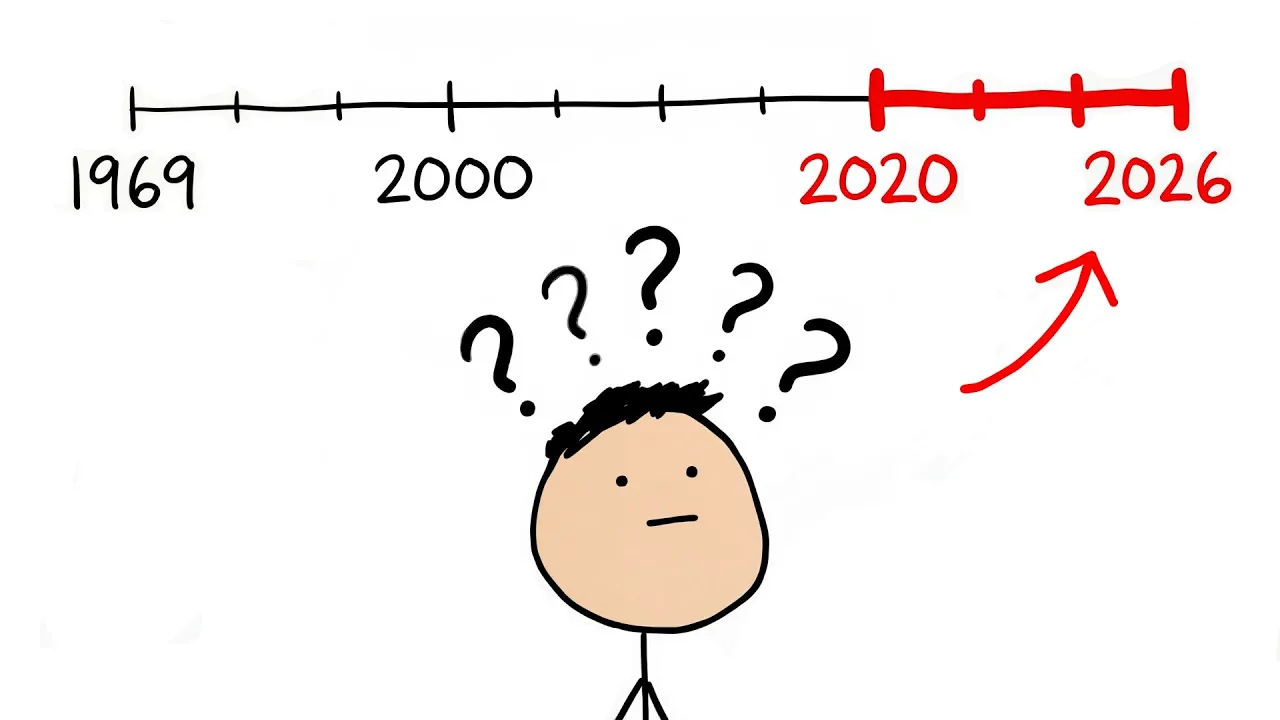
Over the last few years, the video argues that investing has shifted from analyzing fundamentals to behaving like a game show, with prices increasingly driven by stories rather than earnings, cash flows, and economic data. It illustrates this with examples like Reddit turning a weekly options trade into a reported 2000% gain, then sharing screenshots as if the audience just “unlocked” capitalism. The speaker contrasts today’s environment with earlier periods where markets eventually realigned with fundamentals “like gravity,” such as after mania phases in the 1970s large caps, early 2000s internet stocks, and the 2008 banks. The core claim is that, since 2020, the relationship between market prices and fundamentals has felt loose, so that bringing fundamentals back gets met like asking the DJ to play Nickelback. The video frames this change as a “rewiring” of the market story, shifting from long-term value investing to “buy the dip because stocks only go up,” an assumption the speaker says should feel uncomfortable even if it keeps working in the short run. A deeper consequence is suggested: when markets stop behaving the way professionals were trained to expect, experience can become a liability. To explain what could drive this behavior, the video introduces behavioral finance as an “operating system” rather than an edge-case explanation, tying it to human psychology and cognitive biases. It highlights Kahneman and Tversky’s work and argues that after 2020 the question shifted from intrinsic valuation to how people will react to news, with momentum overtaking valuations and prices moving without fundamentals catching up. The speaker then links the mainstreaming of behavioral finance to social media, saying information now spreads over hours instead of months, collapsing the distance between “information” and “reaction,” which can cause prices to move with little regard for fundamentals. Institutions, the video says, have adapted by incorporating narrative inputs and sentiment analysis alongside traditional metrics like cash flows and discount rates. The video also cites Michael Burry as an example of a fundamentals-first investor whose hedge fund was shut down, saying his valuation estimates were no longer in sync with markets. The conclusion is not a definitive call on whether this is a fad or a structural shift, but rather that it is “too early to tell,” because history can imply a bubble that eventually returns to fundamentals, while other structural factors (lower friction, faster narrative spread, and a mass influx of new investors) could represent a new regime where markets price attention as well as cash flows.
Viewers largely react with agreement that the market feels detached from fundamentals, often framing it as mania, gambling, or a repeat of past eras like the 1920s. A recurring sentiment is that narratives and behavioral effects best capture what is happening, with many comments echoing the idea that the market can stay irrational longer than individuals can stay solvent. Humor shows up frequently, including playful “gambling” reactions and references that align with the video’s game-show framing. Some commenters add specific examples or extensions, such as S&P 500 behavior as a quasi savings vehicle, comparisons to tulip mania, and claims that apps and retail flows increase sentiment-driven pricing. Several viewers also express curiosity or uncertainty about whether this will be a temporary bubble or a lasting shift, and many praise the video for clarity, sound effects, or having an enlightening mindset shift.
Topics · finance · stock market · economics · business · education
Questions answered
- Why does the video say value investing can stop working in the stock market when fundamentals are no longer priced?
- If market prices stop reflecting intrinsic value long enough for investors to be forced out due to solvency constraints, value investing may stop being a viable strategy even when it remains conceptually correct.
- How does behavioral finance explain stock market moves compared with traditional efficient market assumptions?
- Behavioral finance assumes markets are driven by human psychology, emotions, and biases, so risk perception, narrative anchoring, and crowd following can lead prices to move in ways that do not match fundamentals.
- What role does social media play in the relationship between stock prices and fundamentals?
- Social media accelerates how quickly narratives spread, which can lead to faster reactions where prices move before fundamentals catch up.
- Did Michael Burry close his hedge fund because market pricing was no longer aligned with fundamentals?
- The video states that Burry shut down his hedge fund because his estimation of value in securities was not, and had not been, in sync with market pricing.
- Is the video’s conclusion that the market change is a fad or a structural shift?
- It argues it is too early to tell, because history supports the bubble phase view, but structural changes like reduced friction, faster narrative spread, and new participation could imply a new regime.