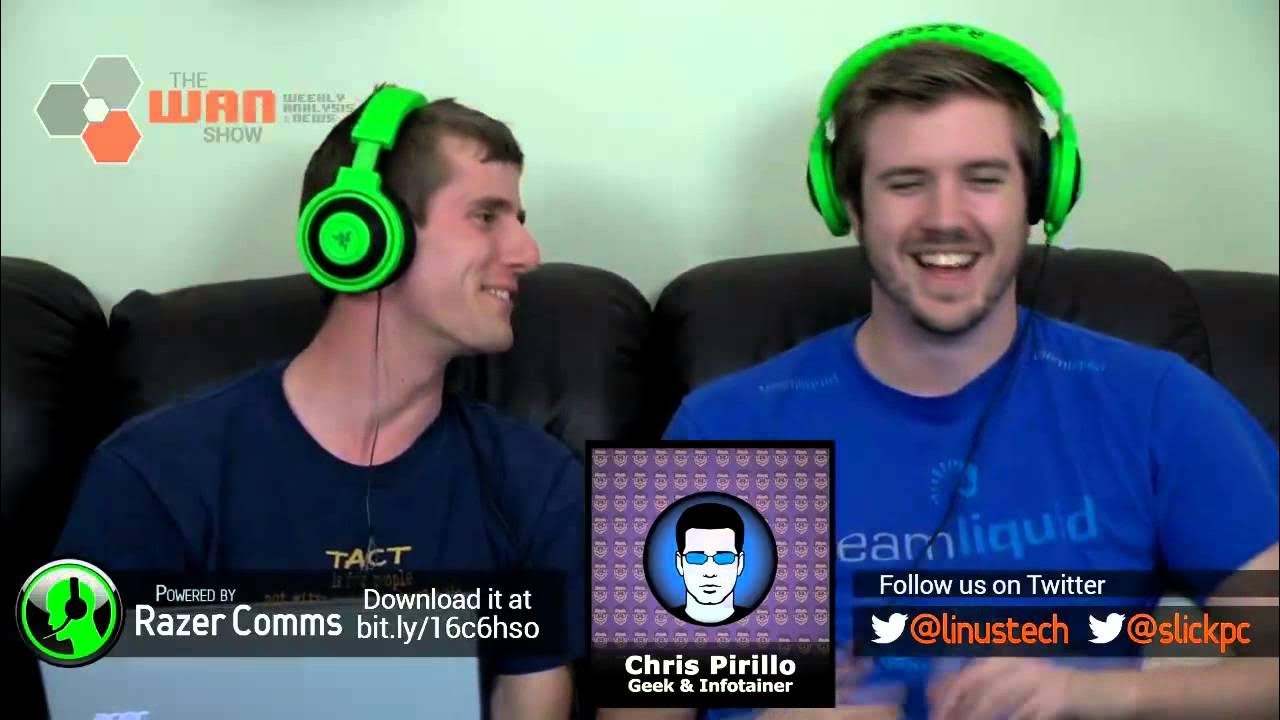
The WAN Show : Win 8 banned on HWBot, and SPACE GLASSES with GUEST Chris Pirillo - August 23, 2013
0 up · 0 down · 0 ratings
Description
After party : Sorry no afterparty this week Razer Comms Link: bit.ly Squarespace Link : squarespace.com Live Stream Doc linustechtips.com 4:00 HW Bot bans Windows 8 benchmarks due to RTC issue 10:40 EA does something good...again? what? 17:20 Diablo 3 Reaper of Souls Xpac coming! 21:38 Ben Affleck as Batman 26:57 Oculus is looking to solve simulator sickness 29:38 ICANN bans dotless domains, Google is sad 31:28 Chris Pirillo Joins the WAN Show! 35:18 Popularity of toys 39:42 Starwars and Disney? 45:00 Space-glasses 58:44 lg Display - 2560x1440 5.5" screen 1:06:08 Mobile Console gaming 1:14:40 Chris Pirillo Twitter Blitz 1:23:31 AMD claims PS4 Has a greater performance advantage than expected 1:25:40 Wacom announces new Cintiq Tablet 1:29:19 MASSIVE price drops on AMD 9590 1:37:45 ESO Online Monthly Fee paid with Micro transactions
The WAN Show episode dated August 23, 2013 presents a multi-topic livestream format hosted by Linus and featuring a guest, Chris Pirillo, also known as LockerNome. The show opens with a light-hearted note about recent hardware and software topics while explaining a relocation of the studio setup and a minor technical hiccup that delayed the stream. The hosts briefly introduce the central topic of Windows 8 benchmarks being banned on HWBot due to an RTC issue, and they explain what HWBot is and why such bans matter for competitive benchmarking. They describe the RTC problem in approachable terms, detailing how the system clock interacts with base clock and multiplier settings in CPUs, and how this interaction can artificially inflate benchmark scores when base clocks are manipulated. The conversation expands to discuss the broader implications for overclocking culture, the potential impact on Microsoft’s patching strategy, and the possibility that this issue could affect non-x86 platforms as well. The hosts analyze how underclocking the base clock and compensating with multiplier adjustments could yield about a 6 to 7 percent difference in benchmark results, and they brainstorm how this might misrepresent real-world performance. They stress that hardware bans do not necessarily imply intentional cheating, but that exploitation of the bug would be plausible in the absence of a fix. The episode then pivots to the scheduled guest, Chris Pirillo, whose presence the hosts describe as a long-awaited return to the WAN Show, and they work through some technical logistics to enable his participation. In the EA segment, Linus and Chris discuss EA’s refund policy for Origin titles, noting that EA is offering refunds within 24 hours of first launch or within seven days of purchase, whichever comes first, and they consider how this policy could influence consumer behavior and developer accountability. The conversation weighs the benefits of such a policy for consumer protection against the risk of abuse, highlighting the balance between encouraging experimentation and preventing misuse of digital licenses. They compare Origin’s approach with Steam, Amazon, and other digital retailers, debating which model better protects gamers while fostering a healthy market for game development and post-launch support. The Diablo III Reaper of Souls expansion is covered next, with Joystick as the source, revealing a new Crusader class, higher level cap, redesigned loot systems, and enhanced endgame content. The hosts express enthusiasm for the loot 2.0 overhaul, noting that rarer, better drops and a reroll stat feature will increase player satisfaction beyond merely farming gold or chasing an auction house model. They discuss Blizzard’s broadened endgame and new mystic artisan as steps toward a more meaningful progression system, while also acknowledging the controversy around loot-centric gratification and the role of random drops in player achievement. Chris Pirillo joins remotely via discussion, and the team maintains a humorous, collaborative tone as they navigate the tech challenges of a long-distance guest with limited equipment. The show ventures into entertainment and tech crossover topics, including Ben Affleck as Batman and the broader public discourse around superhero casting, as well as a Vsauce 3 segment on hypothetical scenarios like Superman punching you, which spurs a lively tangent about Batman versus Superman. They touch on the ongoing discourse around casting, cinema franchises, and the evolving relationship between technology and media storytelling, with opinions ranging from excitement to skepticism about how future productions might handle iconic characters. The Oculus Rift and motion sickness discussion explores potential solutions to simulator sickness, including future hardware like the Virtuix Omni that could enable natural locomotion within virtual environments. The hosts discuss how improved input devices might mitigate discomfort and expand the practical appeal of immersive tech, while acknowledging current user experiences vary based on movement and setup. The episode closes with a sponsor break for Squarespace, followed by a live call with Chris Pirillo, who elaborates on his YouTube career, his focus on geek culture, and his experiences with legacy tech like VHS as a nostalgic touchstone for digital-era audiences. The wrap-up sequence features reflections on the balance between nostalgia and innovation, the enduring appeal of Legos and DIY electronics, and a forward-looking view of how maker culture and consumer-friendly 3D printing may influence the next wave of technology adoption. Throughout the show the tone remains upbeat and collaborative, with a strong emphasis on community, guest interaction, and the ongoing evolution of both hardware and software landscapes. The WAN Show thus serves as a time capsule of late-2013 tech culture, showcasing the convergence of PC hardware, digital distribution, VR development, and cross-media fandom that would shape future discussions in the tech community.
Topics · technology · gaming · media & entertainment · live broadcast · virtual reality
Questions answered
- Why did HWBot ban Windows 8 benchmarks on affected platforms and what is RTC in this context?
- HWBot banned Windows 8 benchmarks because of a real-time clock RTC issue that affects how base clock and multiplier changes alter benchmark timing, potentially enabling inflated scores. RTC is the system clock used for timekeeping in benchmarks, and shifting base clock without increasing the CPU speed can give benchmarks more time to complete tasks, skewing results.
- What is the potential impact of EA's refund policy on digital game sales and development practices?
- EA's refund policy allows full refunds within 24 hours of first launch or within seven days of purchase for Origin titles. This policy pressures developers to ensure launch quality and to deliver functional games at release, or risk returns and reputational damage; it could also influence pricing and post-launch support strategies.
- What new features were discussed for Diablo III Reaper of Souls and why are they significant?
- The expansion introduces a new Crusader class, higher level cap, new endgame content, and a revamped loot system (loot 2.0). These changes aim to reduce loot clutter, improve item usefulness, and make progression more satisfying beyond farming gold, enhancing long-term player engagement.
- How might VR hardware like the Oculus Rift and the Virtuix Omni influence future gaming experiences?
- VR hardware like the Oculus Rift aims to reduce simulator sickness and enhance immersion, while devices like the Virtuix Omni enable physical movement in VR. Together they could create more natural, engaging experiences and expand the market for VR accessories, though comfort and usability remain key challenges.
- What was the guest Chris Pirillo’s perspective on geek culture and content creation?
- Chris Pirillo emphasizes living a geek lifestyle and creating content that spans beyond technology to cover geek culture, Star Wars, Doctor Who, Legos, and maker projects, reflecting his broader interest in communities and fan-centric media.