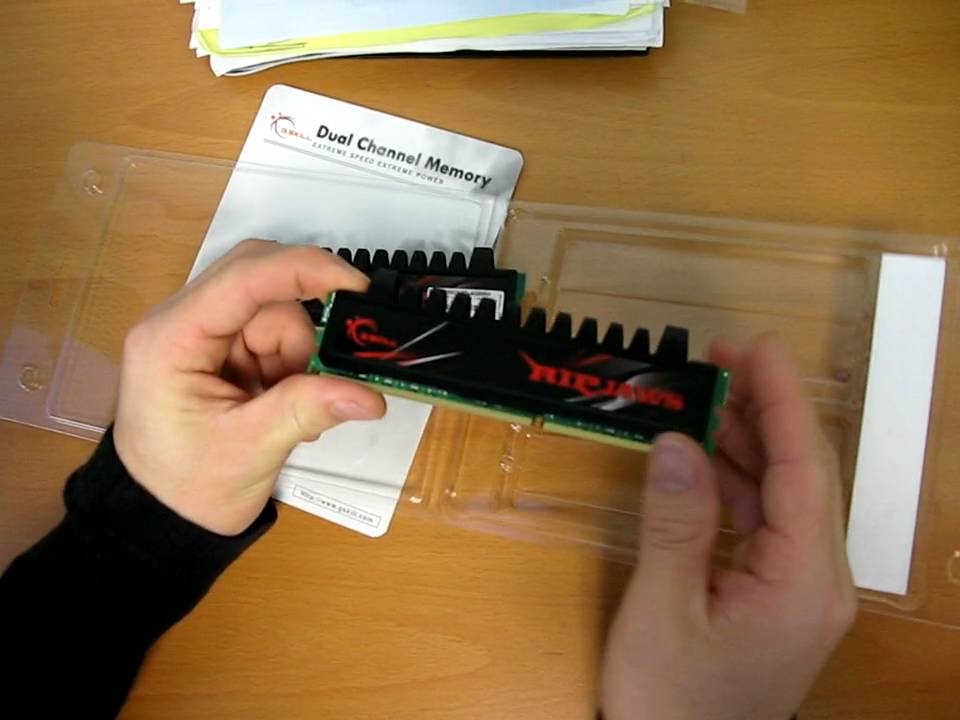
G.Skill Ripjaws DDR3 RAM Unboxing Linus Tech Tips
0 up · 0 down · 0 ratings
Description
RAM isn't always the most interesting thing in the world to some people, but these Ripjaws series DIMMs have been lighting some fires lately both in the record books and in people's homes (not literally in people's homes... I mean they can buy this awesome RAM and take it home...)
The video presents a focused unboxing of the G.Skill RipJaws DDR3 RAM series, emphasizing the kit's alignment with mid to high end performance builds. Linus walks through the packaging and shows the memory modules, noting a black, white, and red color theme that appeals visually and a sticker warning that removing the warranty voids it. He explains the key engineering detail: these modules are optimized for Core i5 systems, and recent revisions reduce operating voltage from 1.65V to 1.6V, facilitating lower heat output and improved long-term reliability. Linus compares older Core i7 platforms, particularly the LGA 1366 with higher memory controller voltages, to illustrate why the newer, lower voltage strategy matters for stability. The RAM chips are described as DDR3-3600 with CL7 timing, and the 4GB kit is highlighted as relatively affordable for enthusiast setups. He also comments on the heat spreader design, pointing out how its shape helps heat dissipation when installed in a case, while acknowledging that spreader design is not the sole determinant of cooling performance. The video closes with appreciation for the hardware and a nod to the ongoing interest in high-speed DDR3 memory, inviting viewers to consider how these modules might perform in their own rigs.
Topics · hardware · unboxing · computer_memory · performance
Questions answered
- What voltage are G.Skill RipJaws DDR3-3600 CL7 modules designed to run at, and what change has been made in newer revisions?
- The modules are optimized for Core i5 and historically rated at 1.65V, but newer revisions reduce operating voltage to 1.6V to lower heat and improve reliability.
- What is the memory capacity and speed specification of the kit showcased, and what is the intended platform advantage?
- The kit is a 4GB set of DDR3-3600 CL7 modules, designed to work well with modern CPUs by allowing higher speeds at lower voltage, benefiting performance and thermals.
- How does the heat spreader design contribute to cooling according to the presenter?
- The heat spreader is shaped to allow heat to dissipate upward and away from the memory chips as air flows through the case, though the presenter notes that spreader design alone is not a guarantee of cooling performance.