Can this phone cure BRAINROT? - Minimal Phone
0 up · 0 down · 0 ratings
Description
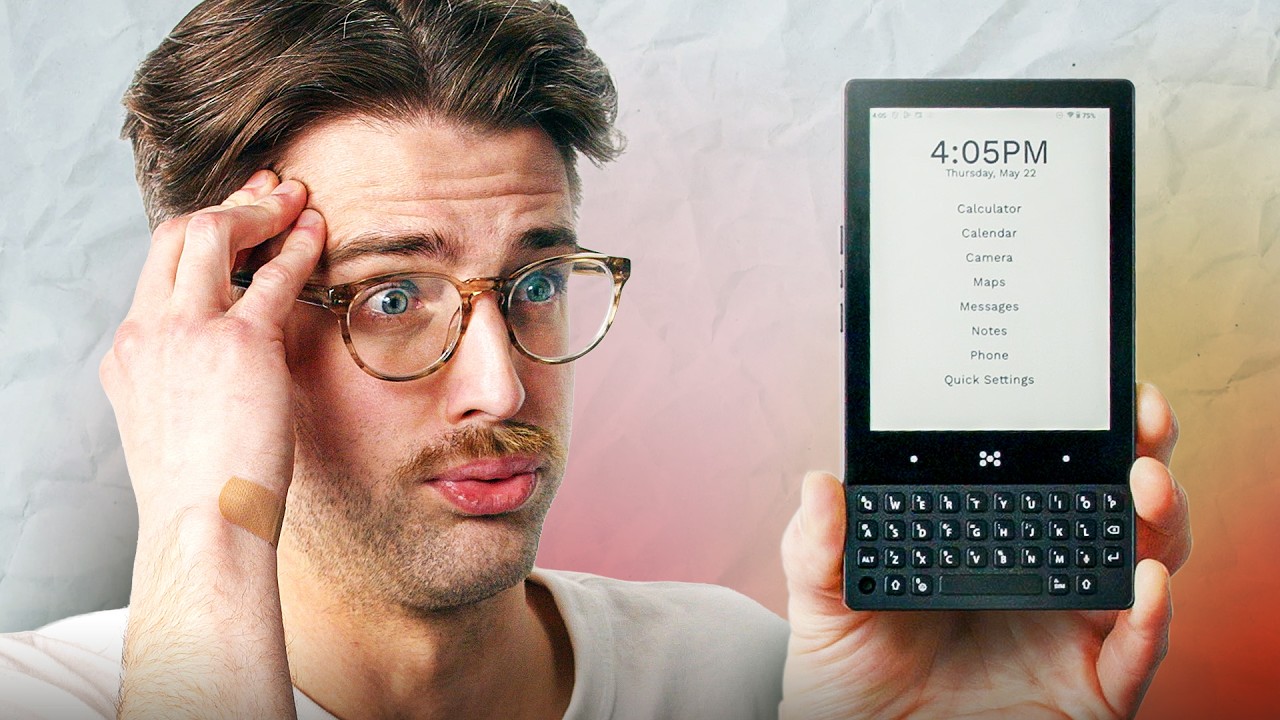
Ready to create your own website? Click this link bit.ly to start your free trial with Wix Riley is a minimal man, and he hates using his phone too much. Luckily, there are plenty of companies promising to solve your addiction with their newest gadget, and the Minimal Phone is the latest to join the trend. With its boxy design, physical keyboard, and e-paper screen, does running full Android make this stand out above the other options widely available, or does it secretly fuel your brainrot addiction?
Promos
Check out the Minimal Phone: lmg.gg Purchases made through some store links may provide some compensation to Linus Media Group. Want us to unbox something? Make a suggestion at lmg.gg ► GET MERCH: lttstore.com ► GET A VPN: piavpn.com ► GET EXCLUSIVE CONTENT ON FLOATPLANE: lmg.gg ► SPONSORS, AFFILIATES, AND PARTNERS: lmg.gg Linus Sebastian is an investor in Framework Computer, Inc CHAPTERS --------------------------------------------------- 0:00 Bad news for gamers 1:01 Unboxing and design impressions 4:11 Sponsor - Wix 4:44 Checking out the OS and screen settings 7:46 Pixel density and using the keyboard 9:20 Trying out slow mode and the cameras 11:36 Speaker impressions and more design thoughts 12:54 Specs and LABS performance results 14:26 LABS battery results and trying the fingerprint scanner 15:55 Overall thoughts and pricing 17:31 Outro
The video opens with a provocative premise about brain rot and the surge of minimal or dumb phones designed to curb heavy smartphone use. The host previews the Minimal Phone, highlighting its boxy form, front physical keyboard, and a display based on e‑ink technology. He notes that unlike some minimalist devices, this phone attempts to keep most essential smartphone capabilities while restricting or reimagining some features to reduce distraction, all while still running Android. The unboxing section confirms what’s included: SIM tool, a modest 10W charger, a USB-C cable, and a Dbrand skin collaboration, with the device sporting a compact 4.3 inch e‑ink display and a fingerprint reader. The review then shifts to first hands-on impressions, focusing on the hardware keyboard, front display, and the overall design philosophy of minimizing cognitive load without sacrificing core tasks. The host also discusses the Android skin running on top of Android 14, noting accessible apps like Maps and Keep, and explains the distinctive refresh rate options that the device provides to control visual activity and battery use. Next, the host conducts a guided tour of the OS, emphasizing customization controls for brightness, backlight color, and keyboard lighting, as well as the screen refresh speed options labeled slow, hybrid, and ultra. He demonstrates the behavior of the home screen, app list, and the ability to access Google Play if a fixed need arises for a traditional Android app, while acknowledging the device’s constraints due to its e‑ink display. The demonstration includes practical typing on the physical keyboard, camera usage in both fast and slow refresh modes, and initial observations about the camera placement and selfie experience. The video then covers media consumption and UI quirks, including navigation quirks in apps like YouTube, audio slider placement, and overall usability with a reduced refresh rate, concluding that the device remains usable but intentionally limited in performance by design. In the core lab results, the host reports on performance metrics from Labs testing, including Geekbench scores around 2,000 in multi-core, a note on thermal throttling being unlikely, and the battery life claim of up to four days. Real-world battery testing with 1080p video streaming yielded about 4 hours and 22 minutes, underscoring that this device is not built for media consumption but for essential tasks and light productivity. Charging performance is also evaluated, showing 144 minutes with a 45W charger and 107 minutes with a 20W charger, signaling balanced but not rapid charging capabilities. The review ends with a candid appraisal: the Minimal Phone is a curious, well-built experiment that serves as a niche option for those seeking self-control and reduced digital distraction, priced around $400 to $500, offering a trade-off between functionality and brain rot mitigation. The closing thoughts acknowledge the broader debate about smartphones, brain health, and social media, praising the existence of a consumer option that encourages mindful use while recognizing that the device will appeal to a specific audience. The host invites viewers to consider whether monochrome mode on a regular Android device or self-imposed app-trimming could achieve similar outcomes at a lower cost, while affirming that the Minimal Phone fills a unique space in the market. The video ends with a gentle nudge to explore related e‑ink tablet options and further minimalist tech experiments, leaving the door open for future updates and comparisons in this niche category.
Topics · technology · consumer electronics · product review · mobile devices · battery life
Questions answered
- What is the core design philosophy of the Minimal Phone and how does it attempt to reduce distraction?
- The Minimal Phone aims to reduce distraction by offering essential smartphone functions with an e‑ink display, a physical keyboard, and an Android-based skin that prioritizes stay‑in‑the‑background tasks over immersive multimedia. It keeps maps, notes, and essential apps like a basic Google Play access while limiting features that typically attract heavy usage.
- How is the display and typing experience on the Minimal Phone described in the video?
- The display is a 4.3 inch e‑ink panel with a 600 by 800 resolution, which is described as slow-refresh and energy efficient. The device includes a physical front keypad for typing, and the reviewer notes that while typing on the keyboard feels clicky and pleasant, the e‑ink display results in a different typing experience than a typical touchscreen.
- What are the key performance and battery findings from the labs testing?
- Labs reported a Geekbench 6 multi‑core score around 2,000, no significant thermal throttling during gaming stress tests, and a real‑world battery life of about 4 hours and 22 minutes for 1080p video streaming. Charging times were 107 minutes with a 20W charger and 144 minutes with a 45W charger, indicating reasonable charging but not ultra-fast speeds.
- Who is the Minimal Phone likely best suited for according to the video?
- It is best suited for users who want a device that supports essential tasks like calling, messaging, maps, notes, and light browsing while actively limiting access to social media and entertainment apps. It appeals to people seeking stronger self‑control and reduced digital distraction, and it sits at an accessible price point around 400 to 500 dollars.