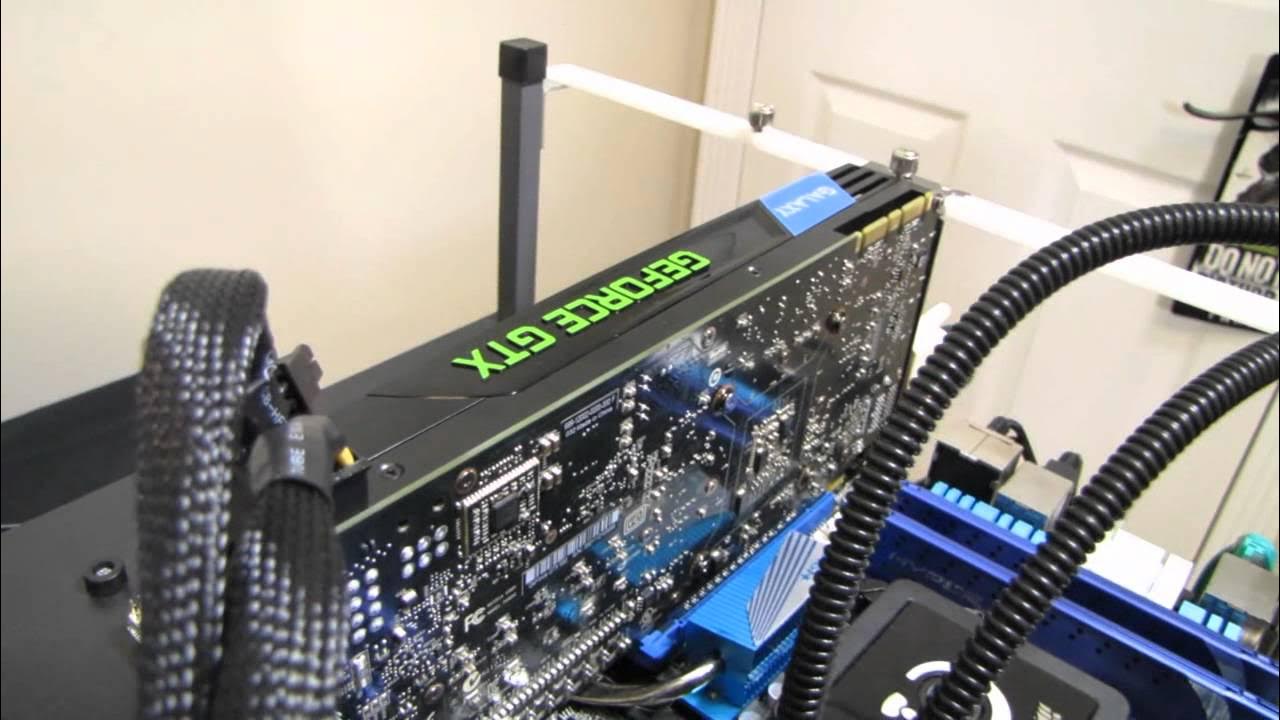
Galaxy GeForce GTX 680 NVIDIA 3D Vision Performance Review Linus Tech Tips
0 up · 0 down · 0 ratings
Description
CA: ncix.com US: us.ncix.com For all the stereoscopic 3D gamers out there I wanted to do some performance testing to help you make the best choice of stereo 3D gaming graphics card. I hope this helps :)
Linus Tech Tips conducts a focused examination of the Galaxy GeForce GTX 680 in the context of 3D Vision gaming, emphasizing what makes Nvidia's ecosystem unique for stereoscopic 3D setups. The video begins by noting that 3D Vision relies on a certified stack: a GeForce GTX 680 GPU, a Nvidia certified 3D Vision display such as the Asus VG236H, and Nvidia glasses. Linus argues that newer light boost-enabled monitors dramatically improve the 3D experience by reducing headaches and crosstalk, while highlighting how Nvidia’s integrated driver profiles and setup wizard streamline the process compared to AMD HD3D, which often requires more manual middleware. He then frames the comparison against the GTX 580, GTX 570, and GTX 590 to show why a GTX 680 can be a compelling upgrade for stereoscopic gaming, particularly in titles like Battlefield 3, Crisis 2, Witcher 2, and Skyrim, where 3D Vision illusions demand significant processing power. The core finding is that enabling 3D Vision generally doubles the GPU workload, pushing the GTX 680 to deliver roughly the same or better performance than the previous generation while consuming substantially less power thanks to 28nm architecture. Throughout, Linus presents specific frame rate deltas, noting that around 20 FPS is not playable without reducing detail, and walks through how the 680 scales with GPU boost and memory configuration to meet the demands of 3D stereoscopy. In closing, he underscores the GTX 680 as a strong single-card option for 3D Vision surround setups, capable of driving three displays from a single GPU when paired with DisplayPort and dual DVI, and thanks Galaxy for providing the card used in the benchmarks.
Topics · technology · hardware · gaming · graphics_cards · 3d_vision · reviews
Questions answered
- What is the primary advantage of Nvidia's 3D Vision ecosystem according to the reviewer?
- The reviewer highlights that Nvidia's 3D Vision ecosystem integrates a GeForce GTX 680 GPU, a certified 3D Vision display, and Nvidia glasses with driver profiles and a setup wizard, delivering a seamless, calibrated 3D experience with less cross talk and headaches compared to AMD HD3D.
- Why might a GTX 680 be preferred over a GTX 580 for 3D Vision gaming?
- Because the GTX 680 delivers roughly the same or better performance in 3D Vision scenarios while consuming significantly less power, thanks to the 28nm process and GPU Boost, making it a strong single-card option for stereoscopic gaming.