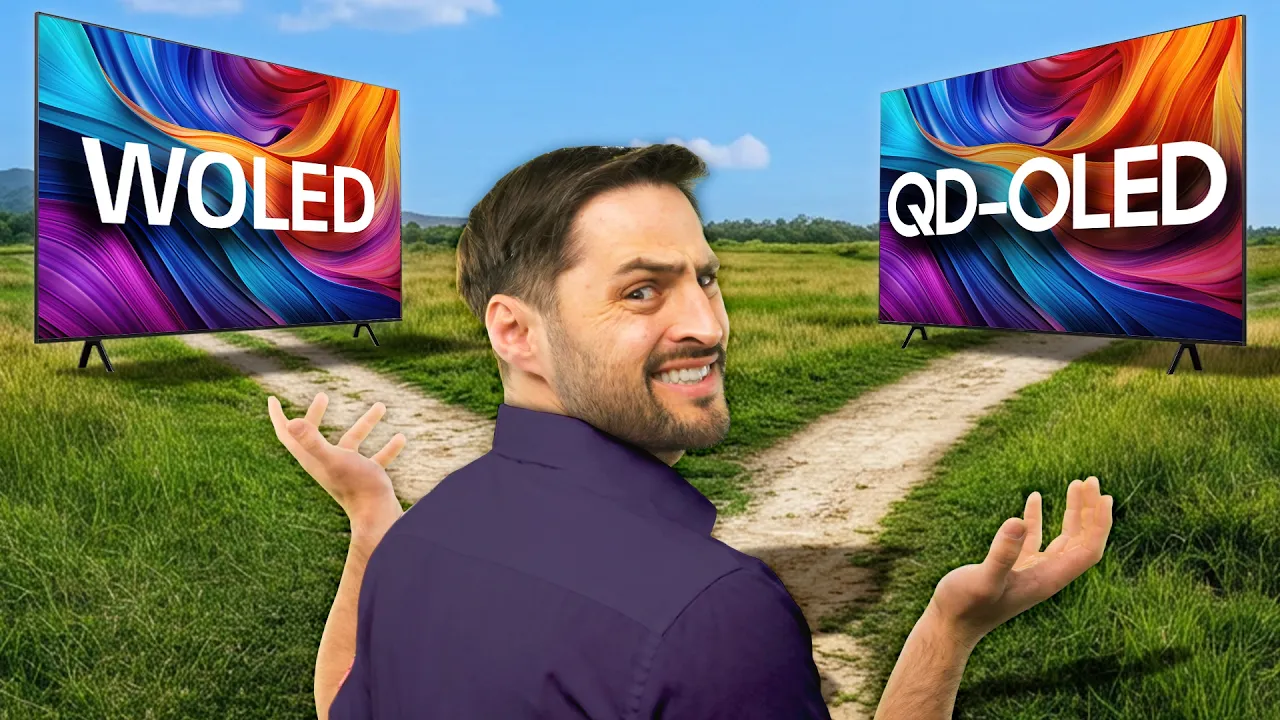
Understanding different types of OLED TVs and displays
0 up · 0 down · 0 ratings
Description
Play War Thunder for FREE on PC, PlayStation, Xbox, and mobile using the links below! New to the game, or returning after six months? You'll get a massive bonus pack on PC and consoles packed with vehicles, boosters, and more. Claim your bonus and start playing today! PC/Console: playwt.link Mobile: wtm.game Remember when OLED was simple? You paid a premium, you got perfect blacks, and you called it a day. Fast forward to 2026, and we’re drowning in an alphabet soup of WOLED, QD-OLED, and "Penta-Tandem" stacks. Today we’re breaking it all down and we’ve got the answers. Special thanks to Ron Mertens, CEO of Metalgrass and founder of OLED-info, for joining us and sharing over 20 years of expertise in the display industry. Leave a reply with your requests for future episodes. ► SHOP OUR PRODUCTS: lttstore.com ► GET A VPN: piavpn.com ► GET EXCLUSIVE CONTENT ON FLOATPLANE: lmg.gg ► SPONSORS, AFFILIATES, AND PARTNERS: lmg.gg
Understanding OLEDs has evolved from a simple equation of perfect blacks and premium prices to a nuanced landscape of flavors like WOLED, QD-OLED, and multi-layer tandem stacks. This video traces the history of OLED panels, starting with LG’s WOLED where white subpixels are filtered into color, and explains how that design enables brightness but can dilute color saturation in HDR scenes. It then introduces the competing approaches that followed, including Samsung’s QD-OLED which uses blue emitters with quantum dot color conversion, and the trade-offs involved, such as the color fringing seen in text due to subpixel layout. The host also delves into longevity challenges, especially with blue emitters, and why newer architectures attempt to address these limits, including the concept of tandem or penta-stack OLED that stacks multiple emitting layers to boost brightness and lifespan. A large portion of the discussion is dedicated to clarifying branding and terminology, noting that terms like TOLED or LOLED may emerge as shorthand for multi-layer stacks, and highlighting that store displays today often look stunning across options. The video grounds the tech in practical consumer advice by acknowledging that, in practice, QD-OLED and WOLED images are highly interchangeable in quality at retail, while real-world buying decisions hinge on factors like price, availability, and personal use case. Throughout, the experts emphasize that there is no one-size-fits-all answer and encourage viewers to weigh brightness needs, color accuracy, and lifetime expectations when choosing an OLED panel. The closing segments summarize the core differences and invite viewers to consider how these OLED flavors perform relative to LCD and QLED alternatives, underscoring that the landscape will continue to evolve in coming years.
Topics · technology · consumer_electronics · displays · televisions · reviews
Questions answered
- What is WOLED and why does it exist?
- WOLED uses white subpixels with color filters to create red, green, and blue, plus an extra white subpixel for brightness, improving lifespan but potentially reducing color saturation in bright scenes.
- How does QD-OLED differ from traditional OLED panels?
- QD-OLED uses blue OLED emitters combined with quantum dots to convert blue light into red and green, providing strong color purity and brightness while changing the subpixel arrangement.