Why Don't the Government Tax the Rich?
0 up · 0 down · 0 ratings
Channels and socials
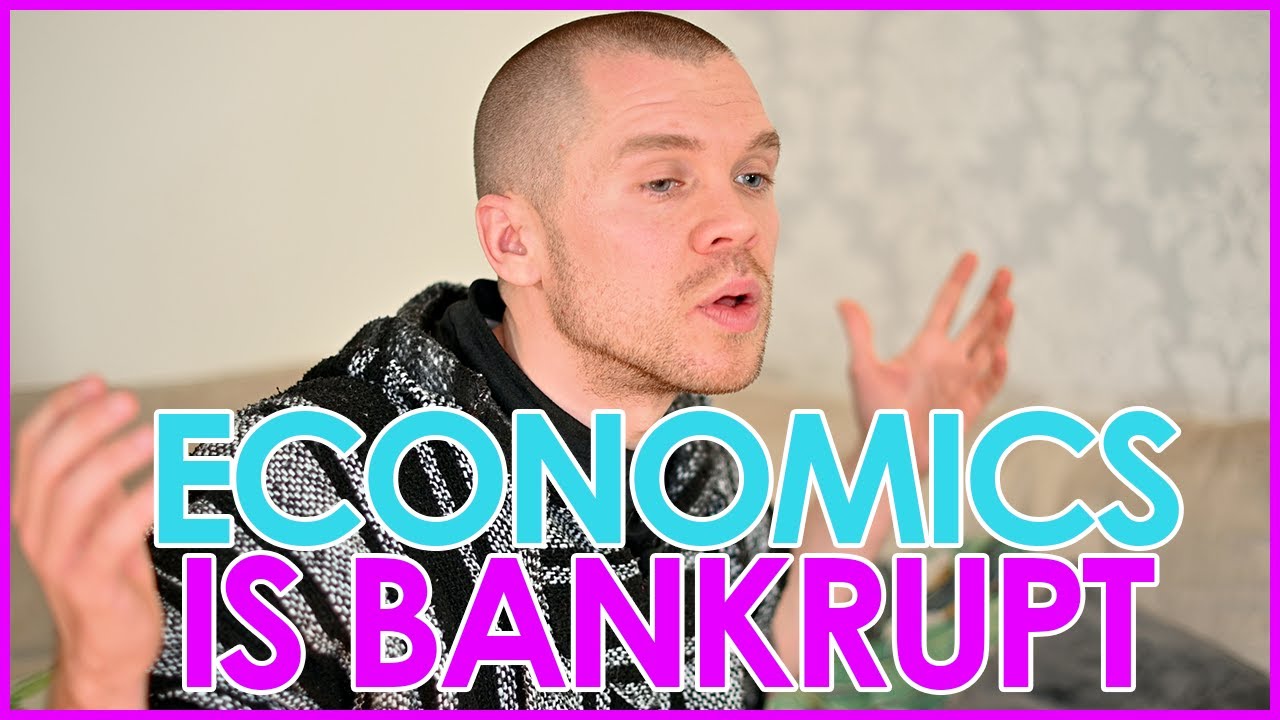
"it goes a lot deeper than simply rich people in government who don't give a ****, there is a problem of our Economic Institutions are intellectually bankrupt and that sounds extreme but listen I've got a degree from LSE, I've got a degree from Oxford, I've worked, I've been in think tanks, I've been in the City, I've been in Economics for 18 years now in many different spaces my honest opinion is that economics is intellectually bankrupt as a discipline" SUBSCRIBE, SHARE & START A CONVERSATION SOCIAL MEDIA: WEBSITE - wealtheconomics.org TWITTER - @garyseconomics - twitter.com FACEBOOK - @garyseconomics - @garyseconomics INSTAGRAM - @garyseconomics - @garyseconomics TIKTOK - @garyseconomics - @garyseconomics YOUTUBE - @garyseconomics - youtube.com Performed by Gary Stevenson GARYSECONOMICS Produced by Simran Mohan MOHAN MEDIA TIMESTAMPS 00:00 - Economics is Bankrupt Intro 01:08 - Politicians Wealth 04:08 - University Economics 07:14 - Memorising Models 09:36 - Ignoring Inequality 11:42 - Substandard Performance 14:47 - Poor Incentives
The video opens with a provocative claim that the economic system is deeply flawed beyond simply the personal wealth of politicians. The speaker argues that economic institutions are intellectually bankrupt and that the field of economics has become obsessed with abstract mathematical models that ignore inequality and distribution. He stresses that politicians themselves are not typically economists and therefore rely on experts who may not consider how wealth and power shape policy. This leads to a governance dynamic where policy decisions about taxing the rich are entangled with the incentives and conflicts of interest among the political and economic elites who would be affected by those policies. The presenter then turns to the university training of economists, describing how many programs emphasize advanced algebra and macroeconomic models that assume away inequality. He contends that this training conditions economists to view the world through a lens that lacks distribution, which in turn biases public policy and media discourse. Throughout, the video interweaves personal anecdotes from experiences at top universities and in the financial sector to illustrate how incentives and professional prestige reinforce the status quo. The speaker argues that these dynamics help explain why governments rarely tax the rich as a matter of policy, despite broad popular concerns, and he calls for a bottom up push from the public to demand changes in wealth distribution and economic thinking.
Topics · economics · public policy · inequality · governance · education · finance