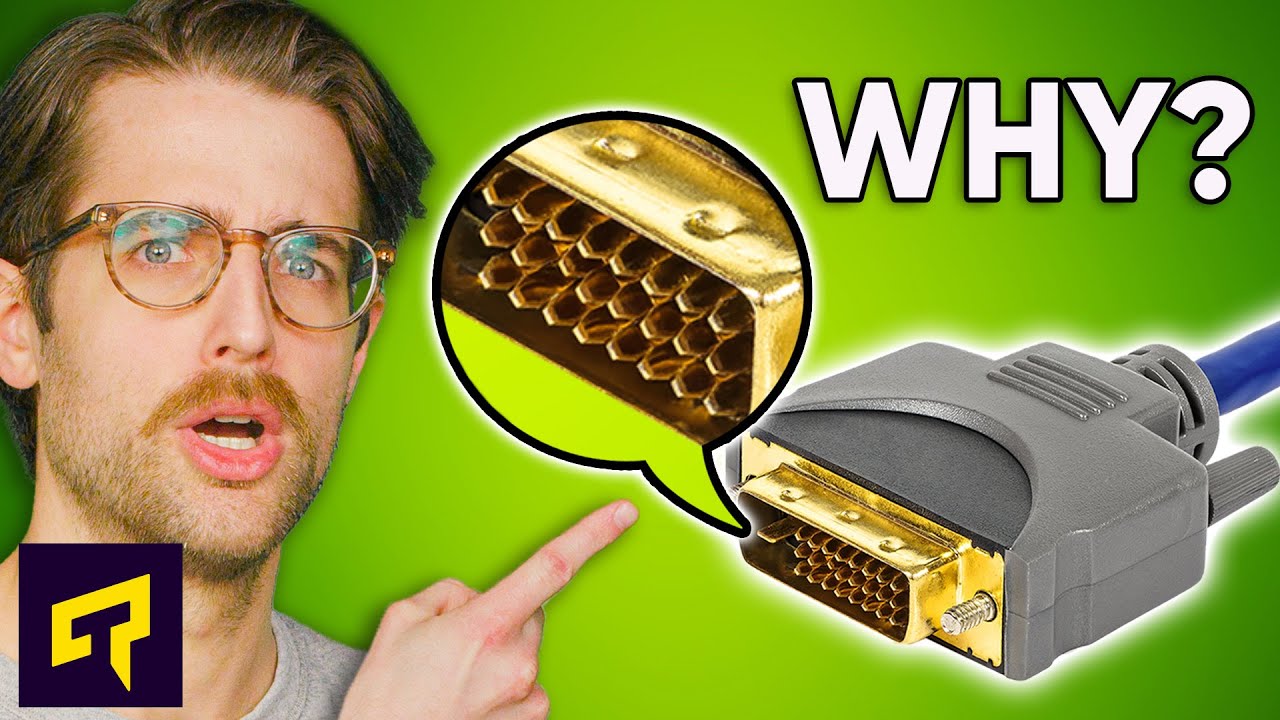
Why Connectors Have So Many Pins
0 up · 0 down · 0 ratings
Promos
30% Off on AICE3 via Indiegogo program, limited 50 backers: bit.ly Get 10% off by using the code "106KQCAX" at: amazon.com Here's why common connectors like USB and HDMI have so many little pins and
Contact
contacts. Leave a reply with your requests for future episodes. ► GET MERCH: lttstore.com ► LTX 2023 TICKETS AVAILABLE NOW: lmg.gg ► GET EXCLUSIVE CONTENT ON FLOATPLANE: lmg.gg ► SPONSORS, AFFILIATES, AND PARTNERS: lmg.gg FOLLOW US ELSEWHERE --------------------------------------------------- Twitter: twitter.com Facebook: @LinusTech Instagram: @linustech TikTok: @linustech Twitch: twitch.tv
The video explains why connectors carry a large number of pins by breaking down practical engineering constraints. It begins with the basic need to separate power and data to avoid interference, noting that grounds return current and that high power in modern devices requires multiple contact points rather than a single pin. The presenter highlights how processors and motherboards spread power across many contacts to support high wattage and multiple voltages, with CPUs pushing well over 150 watts and motherboards requiring 12 V, 5 V, and 3.3 V rails. Beyond power, additional pins enable functions like clock signals, device presence detection, shielding, and special controls such as HDMI CEC, all aimed at preserving signal integrity and enabling features. The discussion then introduces differential signaling as a core reason for multiple data pins, explaining that sending signals as paired positive and negative lines reduces interference and allows higher data rates, which is why modern USB-C, PCIe, and other high-speed interfaces rely on many pins and differential pairs. The video concludes by demystifying the notion that pins are there for aesthetics, emphasizing that the pin density serves real electrical and performance purposes, and inviting viewers to watch related content about CPUs and socket changes while wrapping with a reminder about the channel and upcoming topics.
Topics · technology · electronics · hardware · signal theory
Questions answered
- Why do high-end connectors like USB-C and PCIe use multiple pins instead of a single contact for data transmissions?
- Multiple pins enable differential signaling, where data is sent over paired lines with opposite polarities, reducing interference and allowing higher frequencies and data rates.
- What other roles do pins serve besides power and data in connectors?
- Pins can carry clock signals to synchronize data, enable special functions like HDMI CEC, act as shields to prevent interference, or serve as presence detectors to indicate a connected device.
- Why might CPUs have thousands of pins and how does that relate to power delivery?
- CPU pins allocate dedicated power delivery to handle high wattage and multiple voltage rails, ensuring stable operation without overloading a single contact, especially as CPUs draw large amounts of power at load.