Intel Buried This AI CPU... We Dug It Up! - Centaur Hauls
0 up · 0 down · 0 ratings
Promos
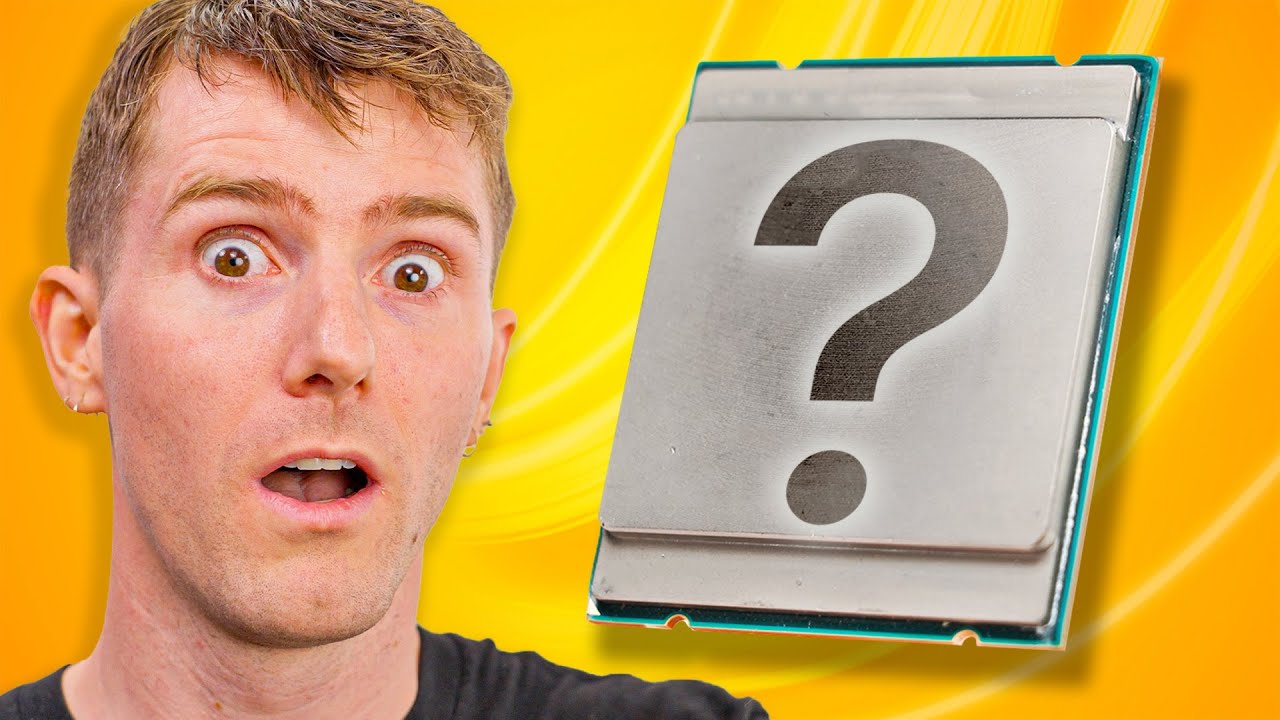
Give your busted console a new lease on life with the help of iFixit! Check them out at ifix.gd Thanks to YouTube for sponsoring this video and discount. Shop the Real Deal on YouTube - and get 20% off a LTT Backpack from today until May 4th. First come, first serve, while supplies last. Discount is applied at check-out solely for select products and purchases driven via the YouTube Shopping buttons on this video. To access the discount, click on the shopping button in the bottom corner of this video or the LTT Backpack in the tagged products section below the description box. From there, you will be taken directly to our website where the discount will be applied at checkout for the LTT Backpack. For YouTube Shopping users only. #ad #ShoptheRealDeal #YouTubeShopping One of the last remaining desktop CPU makers was recently disbanded. Their last prototype, codenamed Centaur Hauls, promised much more than a normal processor could do… Discuss on the forum: linustechtips.com Purchases made through some store links may provide some compensation to Linus Media Group. ► GET MERCH: lttstore.com ► GET EXCLUSIVE CONTENT ON FLOATPLANE: lmg.gg ► SPONSORS, AFFILIATES, AND PARTNERS: lmg.gg ► EQUIPMENT WE USE TO FILM LTT: lmg.gg ► OUR WAN PODCAST GEAR: lmg.gg FOLLOW US --------------------------------------------------- Twitter: twitter.com Facebook: @LinusTech Instagram: @linustech TikTok: @linustech Twitch: twitch.tv MUSIC CREDIT --------------------------------------------------- Intro: Laszlo - Supernova Video Link: youtube.com iTunes Download Link: itunes.apple.com Artist Link: soundcloud.com Outro: Approaching Nirvana - Sugar High Video Link: youtube.com Listen on Spotify: spoti.fi Artist Link: youtube.com Intro animation by MBarek Abdelwassaa @mbarek_abdel Monitor And Keyboard by vadimmihalkevich / CC BY 4.0 geni.us Mechanical RGB Keyboard by BigBrotherECE / CC BY 4.0 geni.us Mouse Gamer free Model By Oscar Creativo / CC BY 4.0 geni.us CHAPTERS --------------------------------------------------- 0:00 Intro 1:00 What's up with this motherboard? 3:47 Who is Centaur and why did they make this? 5:51 Centaur Hauls "CHA" SoC 7:11 It LIVES! - The BIOS 9:27 The Real Deal 10:21 Windows! 11:53 Performance testing 12:57 Games, why not? 15:11 Some apps don't like it, but... 16:43 Linux didn't like it 17:23 Why didn't it get released? 20:33 Alas, poor Centaur, we hardly knew ye
The video opens with a mystery around a Centaur CPU that can fit in an Intel socket but is not an Intel or AMD product, setting the stage for a deep dive into a long-lost x86 design. The hosts establish Centaur Hauls as a historically significant prototype line born from Centaur Technology, a unit that is connected to IDT and Via through a winding patent and licensing history. Early on they painstakingly examine the board’s layout, showing a motherboard without a traditional chipset, a setup full of jumpers and diagnostic pads, and a USB-C port that serves multiple purposes. The presentation foregrounds Centaur’s past: a shared lineage with the Xian and Via Nano lines, and the famous licensing battles that shaped the x86 landscape in the 1990s and 2000s. The segment concludes that the CHA SoC inside this prototype was designed as a high-bandwidth, AI-accelerated platform, with an onboard neural processor called encor intended to leverage large L3 caches and memory for speed, but the execution faced feasibility and timing challenges that prevented commercial release. Transitioning to hands-on discovery, the hosts boot the system to reveal a BIOS built in 2021, well after Centaur’s heyday, and realize this board is a development platform rather than a finished product. They describe a flexible, test-focused environment with fuses and jumpers to alter CPU identity, clock speeds, and feature sets, including AVX 512 support and a bidirectional AI interface that promised unprecedented acceleration. They highlight the absence of a traditional chipset, noting that the entire system is effectively the CPU itself plus a handful of I/O like USB, PCIe, and M.2, emphasizing the experimental nature of the build. The video then maps out Centaur’s historical arc: from the original Centaur Hauls concept to Via’s crossover with Intel, and the eventual fade as the broader market shifted toward GPUs and dedicated AI accelerators. The mounting curiosity pivots toward answering why this project never finished, and the hosts begin a historical tour of Centaur’s lifecycle, patent disputes, and strategic shifts that culminated in Centaur’s decline and absorption of engineers by Intel. With the historical groundwork in place, the hosts perform live hardware testing to demonstrate what the CHA can do. They show BIOS-level experimentation, power-on behavior, and basic readouts from CPU-Z, which reveal the ENCOr AI accelerator, the eight-core configuration, and a speed ceiling around 2.5 GHz. They test basic Windows 10 operation, note the absence of a firmware TPM, and confirm the platform is still able to boot despite the age and development status. Benchmark attempts reveal a sobering reality: C bench and Cinebench interactions produce results that are well behind contemporary CPUs, with 1660 and even modern Ryzen-class performances appearing as fair but distant benchmarks. They also experiment with Linux, finding more instability and driver gaps, which further illustrate the practical challenges of reviving an abandoned, under-supported platform. The narrative then circles back to the strategic question: why did Centaur Hauls not reach completion? The hosts chart the competitive landscape of the late 2000s and early 2010s, where Intel, AMD, and VIA were locked in licensing and patent fights, and where embedded x86 strategies faced a rapidly changing market fueled by AI-focused accelerators and GPUs. They discuss Via’s pivot to embedded markets and China, Centaur’s acquisition by Via and later involvement with Intel, and the broader lesson that timing, licensing, and market readiness can doom even technically promising designs. The video ends on a reflective note about what Centaur’s design represented at the cusp of a new AI era, and why some of the most interesting hardware concepts fail to become mainstream despite strong technical merit. The final takeaway is that Centaur Hauls stands as a historical milestone illustrating the friction between silicon innovation and market structure, a reminder that not every promising prototype makes the leap to production.”
Topics · technology · history · hardware · embedded systems · ai
Questions answered
- What is Centaur Hauls and why is it significant in the history of x86 CPUs?
- Centaur Hauls refers to a prototype x86 CPU developed by Centaur Technology, a venture that later became part of VIA Technologies. It is significant because it represents an early attempt to build a low-cost, embedded x86 processor with an onboard AI accelerator, a concept that foreshadowed modern AI accelerators despite never reaching commercial release due to licensing, market timing, and performance challenges.
- What is special about the CHA SoC onboard the Centaur prototype?
- The CHA SoC included up to eight cores, AVX 512 support, and an onboard AI accelerator called encor designed to exploit the CPU's L3 cache and memory bandwidth. It aimed to deliver high AI workloads with a fast 160 GB/s bidirectional link to the CPU, but the implementation faced practical hurdles in firmware, drivers, and market viability.
- Why didn’t Centaur Hauls become a commercial product?
- Several factors contributed: timing and market dynamics in the late 2000s, licensing and patent disputes between VIA, Centaur, and Intel, and the rapid shift toward GPUs and dedicated AI accelerators that made a CPU-centric AI platform less attractive. Additionally, organizational shifts, acquisitions, and the broader consolidation of the x86 ecosystem reduced the likelihood of continuing Centaur’s embedded x86 strategy.
- What operating systems were tested on the prototype and what were the results?
- Windows 10 ran on the prototype, but there was no firmware TPM or suitable header module, limiting modern Windows 11 viability. Linux exhibited more pronounced issues with boot times and driver support for the encor accelerator, making it less reliable for testing compared to Windows in this case.
- What can we learn from this historical prototype about hardware development and licensing?
- The Centaur case illustrates that technical merit alone is not enough for success; licensing, patent landscapes, market timing, and the ability to secure a production path matter as much as architecture and performance. It also shows how embedded x86 attempts faced a steeper hurdle as ARM and GPUs rose in prominence for specialized workloads.