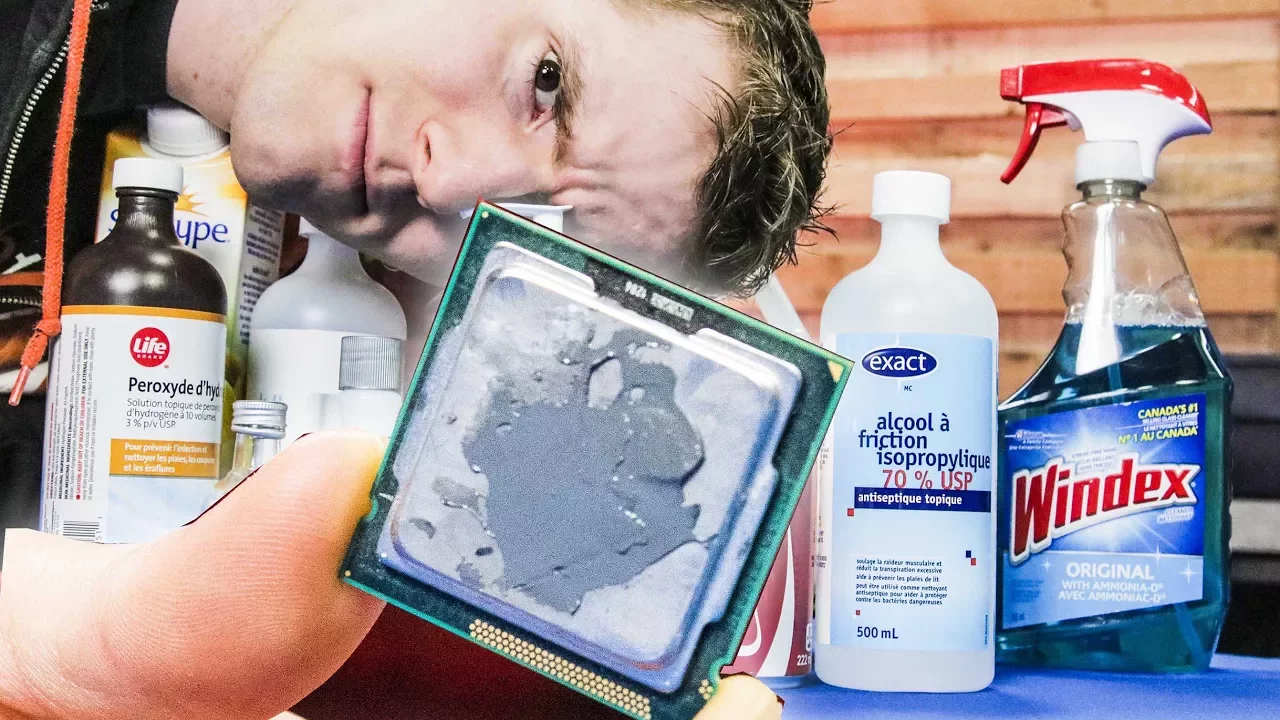
Removing Thermal Compound - The BEST Way?
0 up · 0 down · 0 ratings
Description
Thermal compound is essential to good cooling - But what's the best way to REMOVE it? Sign up for Dollar Shave Club today at dollarshaveclub.com
Promos
Check out G.SKILL's KM570 keyboard on Amazon: geni.us Buy Arctic Silver ArctiClean on Amazon: geni.us Buy IC Diamond on Amazon: geni.us Buy Arctic MX-4 on Amazon: geni.us Buy Arctic Silver ArctiClean on Newegg: geni.us Buy IC Diamond on Newegg: geni.us Buy Arctic MX-4 on Newegg: geni.us Discuss on the forum: linustechtips.com Our Affiliates, Referral Programs, and Sponsors: linustechtips.com Linus Tech Tips merchandise at designbyhumans.com Linus Tech Tips posters at crowdmade.com Production gear: geni.us twitter.com @LinusTech Intro Screen Music Credit: Title: Laszlo - Supernova Video Link: youtube.com iTunes Download Link: itunes.apple.com Artist Link: soundcloud.com Outro Screen Music Credit: Approaching Nirvana - Sugar High youtube.com Sound effects provided by freesfx.co.uk
The video conducts a systematic experiment to determine the best way to remove thermal compound from CPUs, challenging the common wisdom of using simple isopropyl alcohol. Linus and team test a wide range of solvents, including household items like orange juice, beer, vinegar, vodka, nail polish remover, and Goo Gone, alongside purpose-made cleaners from Arctic and other brands. They apply a grain-of-rice amount of two paste types, one thin and one particulate, on a clean CPU and heatsink, then let each solvent work for a minute or two before wiping and assessing residue with coffee filters. The methodology emphasizes a controlled approach: use the heatsink as the test surface, wipe gently, and use coffee filters to gauge cleanliness without relying on brute force. Across the MX-4 and Arctic Silver ArctiClean tests, several surprising performers emerge: some household items work surprisingly well for thin pastes, while others leave visible residues or fail to remove sticky components. The video ultimately highlights that isopropyl alcohol, Goo Gone, Arctic Clean, and even vodka can be effective under certain conditions, with the caveat that paste type and how long the solvent sits on the surface influence results. The host humorously demonstrates that membrane-like residues or delicate components can be damaged by overzealous cleaning, and he concludes with practical, accessible options for different paste types, including a note on the best overall performer and a reminder that low-cost household items can be viable in a pinch. The presentation wraps with a recap of the strongest performers, a nod to user-friendly tools like coffee filters, and a lighthearted sign-off that invites viewers to share their own experiences and discuss performance tradeoffs. Finally, the video links to related products and community resources, encouraging further exploration of safe and effective cleaning methods for computer hardware.
Topics · technology · hardware · science-and-technology · how-to · product-testing · electronic-maintenance
Questions answered
- What solvents were tested for removing thermal compound in the MX-4 and Arctic Silver tests?
- A wide range of solvents were tested, including isopropyl alcohol (70% and 99%), vodka, beer, orange juice, vinegar, nail polish remover, Windex, Goo Gone, distilled water, and Arctic Clean among others.
- Which solvent performed best for removing thermal paste from thin pastes like MX-4?
- Isopropyl alcohol (especially 99%) and Arctic Clean performed very well, with vodka and some other household items also showing strong results depending on the paste type.
- What is the recommended practical takeaway for cleaning thermal paste in pinch scenarios?
- In a pinch, household items such as Goo Gone or alcohol-based cleaners can be effective, but the best default remains isopropyl alcohol, with attention to the paste type and allowing the solvent to act before wiping.