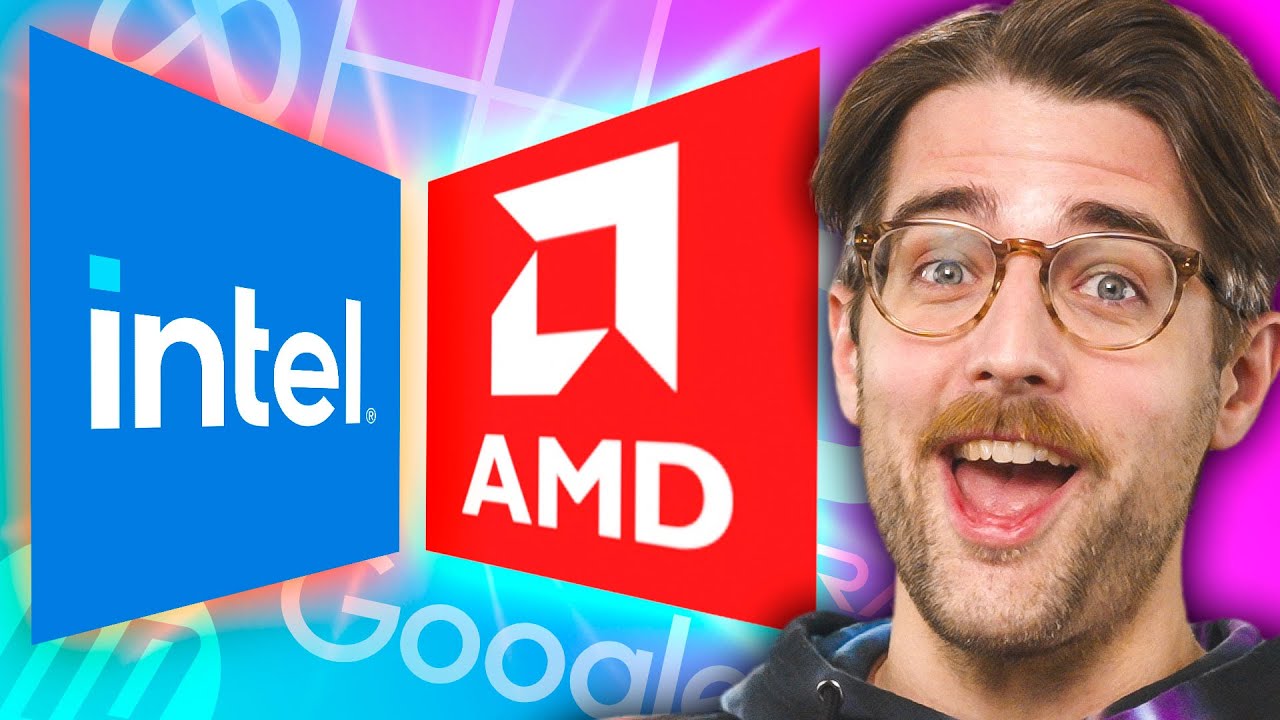
The Unthinkable Has Happened
0 up · 0 down · 0 ratings
Promos
Get The Chairman Pro Package for 20% OFF + Free International Shipping with promo code TECHLINKED at manscaped.com ► GET MERCH: lttstore.com ► GET EXCLUSIVE CONTENT ON FLOATPLANE: lmg.gg ► GET A VPN: piavpn.com ► LISTEN TO THE TECH NEWS: lmg.gg ► SPONSORS, AFFILIATES, AND PARTNERS: lmg.gg ► OUR PODCAST GEAR: lmg.gg NEWS SOURCES: lmg.gg --------------------------------------------------- Timestamps: 0:00 i got enemies, got a lotta enemies 0:09 Intel + AMD form x86 Advisory Group 1:49 Amazon, Google want nuclear power 3:39 Windows 11 24H2 Update bugs 6:37 QUICK BITS INTRO 6:46 FTC's click-to-cancel rule 7:24 Adobe's video generator in beta 8:05 SpaceX catches rocket in mid-air 8:44 uBlock Origin unsupported in Chrome 9:10 Ecovacs vacuums scream at owners
The video titled The Unthinkable Has Happened surveys a wave of surprising alliances and controversial moves in tech and energy. It opens by noting that Intel and AMD have joined forces to form the x86 Advisory Group, bringing together industry giants and even well known figures like Linus Torvalds and Tim Sweeney as luminaries. The segment explains the strategic motivation behind this unlikely coalition, especially as Arm and other accelerator technologies threaten to broaden the competition beyond traditional x86 dominance. A key point is the juxtaposition of established CPU giants with the momentum behind Arm servers and non-x86 designs, suggesting a strategic push to defend legacy ecosystems while exploring new architectures. The discussion also teases upcoming hardware demonstrations, such as Intel’s Panther Lake on a 18a process node and the anticipated Ryzen 9 9800X3D reveal, framing these as part of a broader narrative about market positioning, benchmarking leaks, and the pressure to prove relevance in a shifting landscape. In the middle section, the video shifts to energy and policy, highlighting Google and Amazon’s investments in small modular reactors (SMRs) as a path to scalable nuclear power for data centers and AI workloads. The coverage explains various company strategies, including Google's plan to procure power from SMR developers and Amazon’s participation with utility partners to study SMRs for existing facilities. This portion underscores the appeal of SMRs to reduce upfront costs and regulatory hurdles, while also addressing public concerns about proliferation and safety given historical nuclear legacies. The presenter connects these energy moves to the broader AI energy demand narrative, noting Microsoft and other tech players actively pursuing cleaner and more efficient power sources to sustain ever-growing compute needs. The segment ends with a candid discussion of the state of nuclear energy, including global examples and the evolving technology that promises safer, more compact reactors alongside legitimate concerns about policy and deployment timelines. The final portion turns to software, updates, and consumer tech governance. Windows 11 24H2 is depicted as having launched with notable bugs, such as connectivity drops and input anomalies in Chromium-based apps, file system checks misclassifying data, and a problematic cache update. The host highlights real-world user impacts, including driver and SSD issues tied to memory buffer configurations that worsened after the update. In quick bits, the video covers FTC rules on click-to-cancel subscriptions, Adobe Firefly’s new text-to-video beta with licensing safeguards, and SpaceX’s dramatic mid-air catch of a Starship booster as a metaphor for precision tech engineering under pressure. The closing notes critique Chrome extension support and cyber-physical risk vectors in consumer devices like robotic vacuums, tying together themes of software reliability, regulatory oversight, and the evolving threat landscape in everyday tech use. The overall takeaway emphasizes a moment of rapid change across hardware, software, and policy, with audiences watching closely how these developments reshape tech strategy and user experience.
Topics · technology · science & tech news · computing · energy & power
Questions answered
- What is the x86 Advisory Group and who joined it?
- The x86 Advisory Group is a coalition announced by Intel and AMD that includes major industry players like Microsoft and Google, plus luminaries such as Tim Sweeney and Linus Torvalds, aimed at steering the future of x86 and related computing strategies.
- Why are SMRs (small modular reactors) relevant to tech companies?
- SMRs offer a potentially scalable and cost-effective source of nuclear power, which can help data centers and AI compute facilities manage energy demand more reliably, aligning with tech companies' goals to improve efficiency and reduce outages.
- What issues did Windows 11 24H2 reportedly cause?
- Reported issues include widespread connectivity problems after updates, disappearing mouse cursors in Chromium-based apps, and file system checks misclassifying files, with some advising rollback to earlier builds.