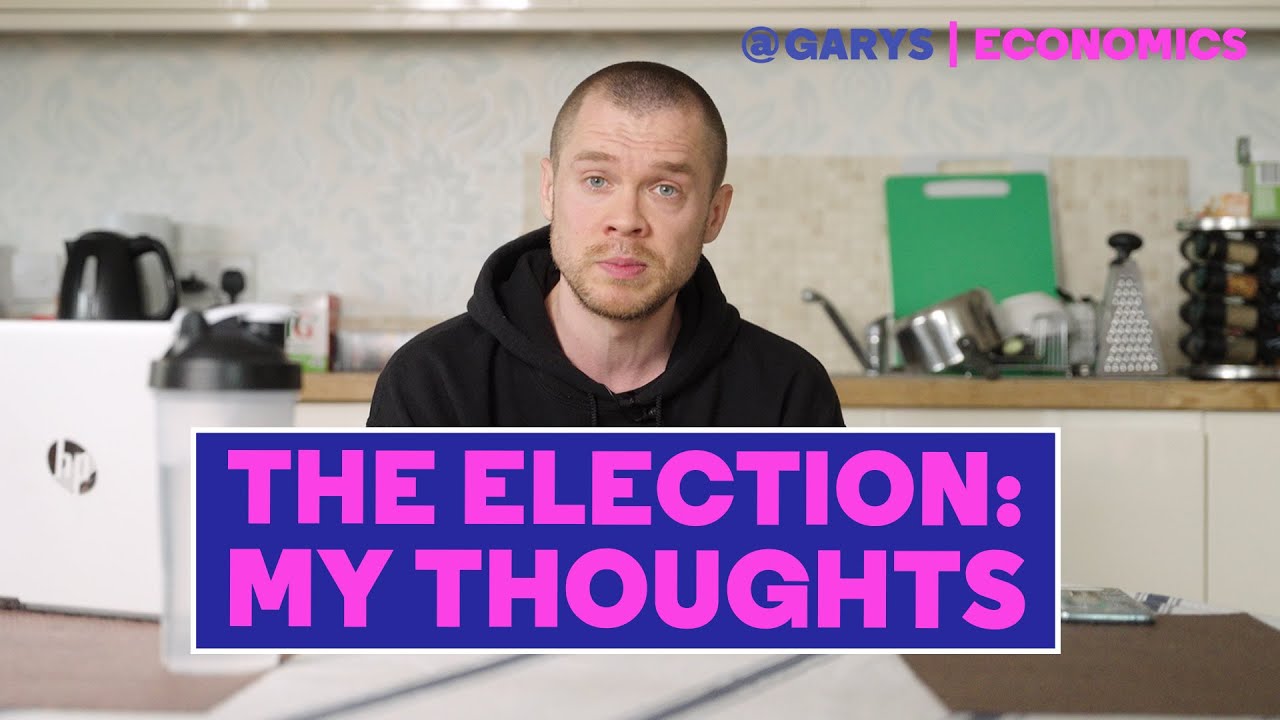
This is how I'm going to vote
0 up · 0 down · 0 ratings
Channels and socials
There's an election coming up, and the tories are going to lose. But don't get too excited, because I don't have much hope in Labour either. Here are my thoughts. I mention a previous video, Inflation WILL Fall This Week, which you can watch here - youtube.com This is where you can swap your vote: swapmyvote.uk UNDERSTAND, SHARE & PUSH BACK WEBSITE - garyseconomics.org TWITTER - twitter.com FACEBOOK - @garyseconomics INSTAGRAM - @garyseconomics TIKTOK - @garyseconomics YOUTUBE - youtube.com PATREON - patreon.com DISCORD - discord.gg BLUESKY - bsky.app SUBSCRIBE, SHARE & START A CONVERSATION Performed by Gary Stevenson @garyseconomics
This video frames the upcoming election through the lens of economics, arguing that inequality and the falling living standards of ordinary people are the core issues. The host begins by describing politics as a source of hype that rarely translates into meaningful change, and emphasizes that his focus is on how wealth concentration affects everyday life. He highlights Rupert Murdoch as an example of media influence shaping political outcomes and argues that tax policies tend to favor the rich, while the life of everyday families deteriorates. He then predicts that a Labour government will come to power but expresses skepticism about whether they will meaningfully address inequality or living standards. The opening segments set up a broader thesis: without tackling wealth concentration, the living standards of ordinary people will continue to decline, regardless of which party governs. This leads to the core message that politics should be viewed as a long-term effort, a marathon rather than a sprint, focused on structural changes to distribution and taxes on the rich. The middle sections analyze the mechanics of the election, including why the current government called for a short-term win while inflation appeared favorable. The speaker argues that the inflation rate is expected to dip temporarily, which the Conservative government is attempting to credit, and that this will influence the election narrative. He discusses the two-party system, the likelihood of a Labour majority, and the limited policy space for meaningful reform within the current political framework. Throughout, there is a critical stance toward both major parties: conservatives for expanding inequality and Labour for not taking decisive action on wealth taxation. He maintains that manifestos will promise much, but funding those promises would require higher taxes on the rich, which he believes neither party is willing to risk politically. The speaker also notes a rare win for his movement: the Green Party adopting a policy he has long championed,an annual wealth tax targeting wealth above 10 million pounds,a development he sees as a validation of his activism and a sign for future momentum. As the discussion advances, the host pivots to strategy and organizing beyond the ballot box. He explains why he is voting for the Green Party despite acknowledging they are unlikely to win, arguing that electoral signals matter and can create space for more ambitious policies in the future. He reflects on how the Greens’ manifesto aligns with his goals and why growing their vote could influence the policy debate even if they do not form government. He also discusses vote swapping as a tactical choice for those determined to remove the Conservative government, urging viewers to act in a way that reduces division and keeps the focus on inequality and fair taxation. The speaker emphasizes collaboration and persistence, noting that changing policy requires sustained pressure from ordinary people rather than reliance on politicians alone. In closing, he frames democracy as a process that can be steered by public demand, and he invites viewers to stay engaged, vote for their best combination of strategies, and keep fighting for better living standards over the long haul. The final stretch ties together hopeful signs with a sober assessment of the political landscape. He recalls earlier videos that predicted inflation would fall, arguing that this timing influenced the electoral call and that optimistic forecasts should be tested against real outcomes. He reiterates that both major parties appear unwilling to tax the rich at the level needed to restore living standards, framing this as a structural problem rather than a partisan one. While acknowledging the political realities of first-past-the-post and the limits of the Greens, he stresses the importance of ideas and movement-building to shift the political discourse in future elections. He uses historical parallels, including Brexit, to illustrate how persistent public pressure can eventually compel major parties to adapt their platforms. The closing remarks blend determination with pragmatism: the fight for equality is ongoing, the marathon continues, and viewers are encouraged to participate, vote with their values, and stay engaged in the long fight for a fairer economy.
Topics · education · economics · politics · elections · inequality · taxation · green party · democracy