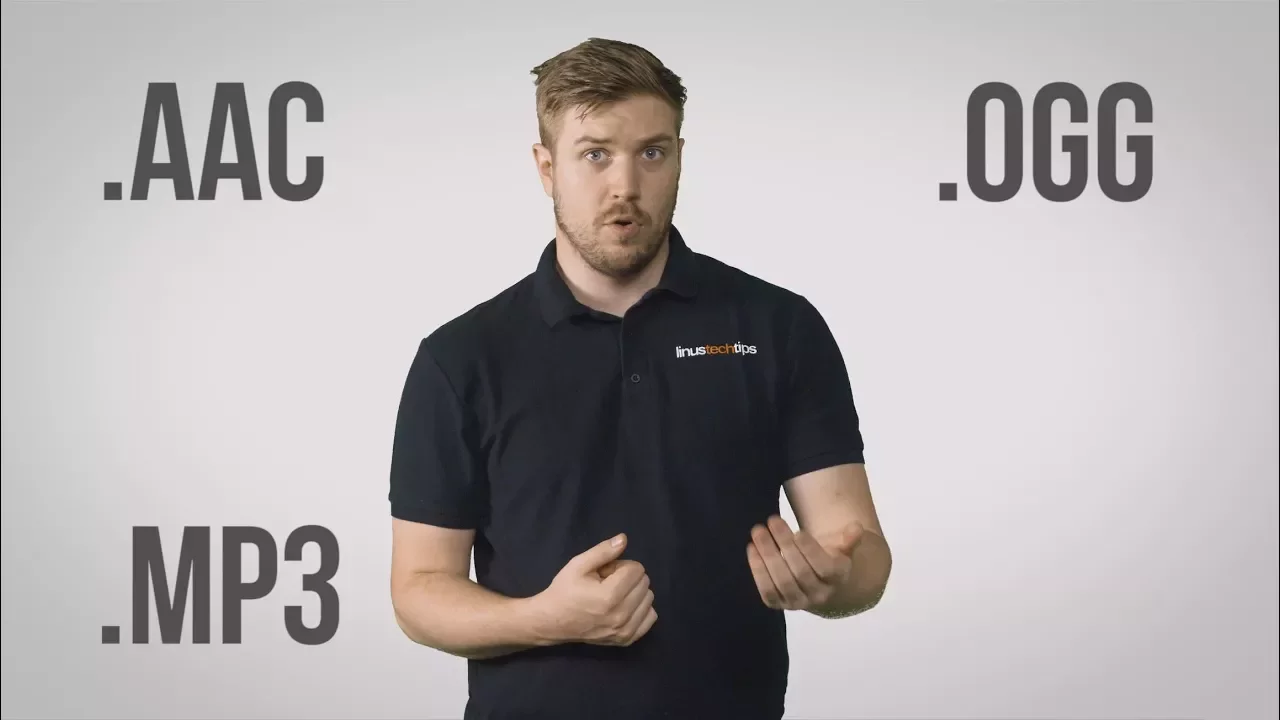
Audio File Formats - MP3, AAC, WAV, FLAC
0 up · 0 down · 0 ratings
Promos
What's the difference between common audio file formats like MP3, AAC, WAV, and FLAC? Freshbooks message: Head over to freshbooks.com and don’t forget to enter Tech Quickie in the “How Did You Hear About Us” section when signing up for your free trial. Techquickie Merch Store: designbyhumans.com Techquickie Movie Poster: shop.crowdmade.com Leave a comment with your requests for future episodes, or tweet them here: twitter.com Follow: twitter.com Join the community: linustechtips.com
The video explains why there are multiple audio file formats and what each type brings to the table for different users and scenarios. It starts by contrasting common lossy formats like MP3, AAC, and Vorbis with lossless options, noting that lossy formats discard parts of the original signal to shrink file sizes while preserving perceived quality for most listeners. The host uses simple analogies and concrete numbers, such as typical uncompressed CD bitrates around 1411 kbps and common MP3 bitrates like 256 kbps, to illustrate how much data is dropped in lossy compression. The discussion then elaborates on why lossless formats such as FLAC and ALAC exist, highlighting that they retain all original audio information and still achieve smaller sizes through efficient encoding techniques that exploit redundancy. The video also touches on high‑end uses, mentioning Dolby TrueHD, DTS HD Master, and Dolby Atmos for home theater setups, where spatial audio and multiple channels come into play. Finally, the presenter compares practical tradeoffs between uncompressed WAV/AIFF for editing and mastering versus using widely compatible formats for everyday listening, concluding that choice should depend on listening goals and context rather than rigid rules. The overall message is that while MP3 remains ubiquitous, the right format depends on the listener’s priorities, whether it is portability, editing flexibility, or ultimate audio fidelity, and that a balanced approach is often best.
Topics · audio · technology · science · consumer electronics · home theater
Questions answered
- What is the main tradeoff between lossy and lossless audio formats?
- Lossy formats reduce file size by discarding some audio data, which can slightly degrade quality, while lossless formats compress data without losing information, preserving original quality but often with larger file sizes.
- When might you prefer uncompressed WAV or AIFF over compressed formats?
- When you need maximum editing flexibility, precise signal integrity, and minimal processing, such as in professional audio production or mastering.