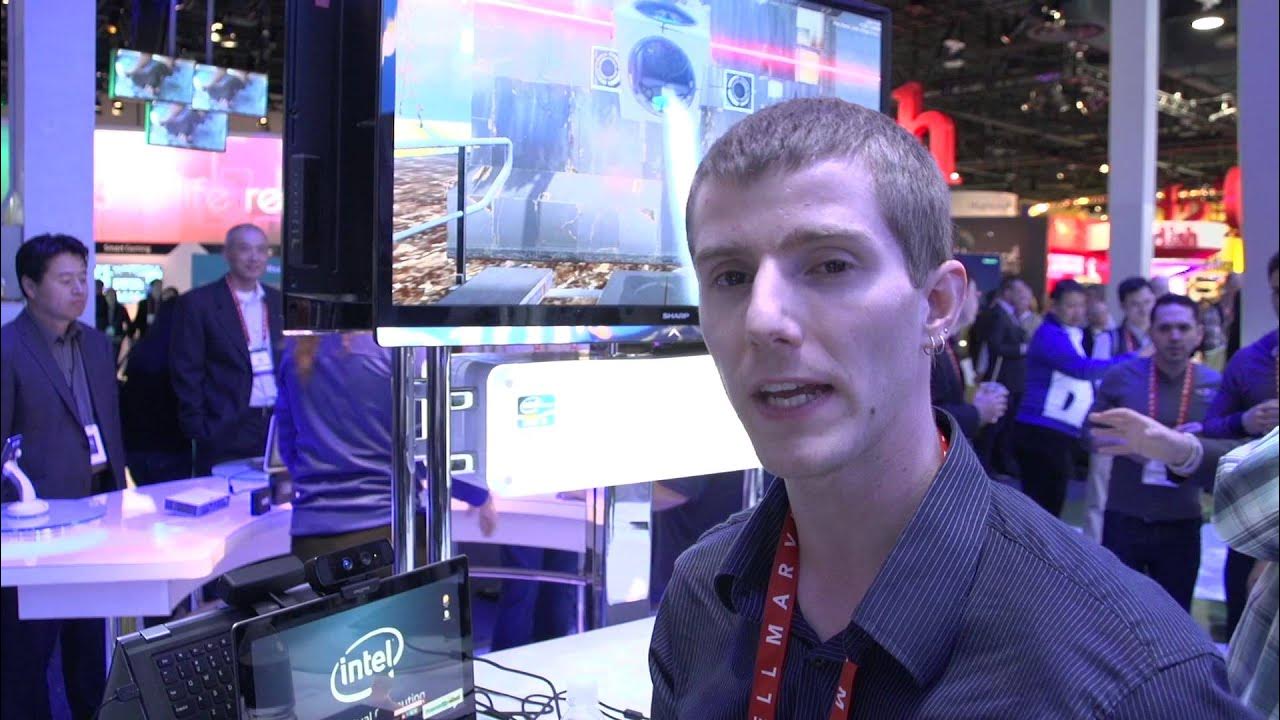
Intel Perceptual Technology Demo - Look Ma, No More Keyboard & Mouse! Linus Tech Tips CES 2013
0 up · 0 down · 0 ratings
Description
Intel's booth is always a very cool look into the future of technology. This year they are showing how we are eventually going to be interacting with our computers in much the same way we now interact with people. Day 3 - video 21
The video presents an early look at Intel’s perceptual technology concept showcased at CES 2013, where Linus Tech Tips demonstrates how interaction with computers could move beyond traditional keyboard and mouse. The host explains that the display setup combines an infrared emitter, infrared receiver, and a webcam to enable both 2D and 3D gestures, similar to motion-tracking systems like Kinect. He describes potential applications such as interpreting user emotions, heart rate, and pupil dilation to adapt gaming or video experiences, for example by suggesting game changes when the player or their partner shows disinterest. A live demonstration shows a 3D controller-like device and a gravity-gun/portal-like gram of interaction that users can manipulate within a virtual space, illustrating the concept of manipulating objects without direct contact. The segment acknowledges this is an early prototype, noting substantial work remains before a consumer-ready product, but emphasizes the promise of perceptual computing for more natural human-computer interactions. The overall takeaway is that Intel is exploring immersive, sensor-driven interfaces that read user state and intent to guide media and gameplay, signaling a shift toward more intuitive, embodied computing in the near future.
Topics · technology · demonstration · virtual-reality · human-computer-interaction
Questions answered
- What is the core idea behind Intel's perceptual technology as shown in the CES 2013 demo?
- The core idea is to interact with computers using 3D gestures and sensor-driven inputs, removing the need for a keyboard or mouse, by leveraging an infrared camera and related sensing to interpret gestures and user states.