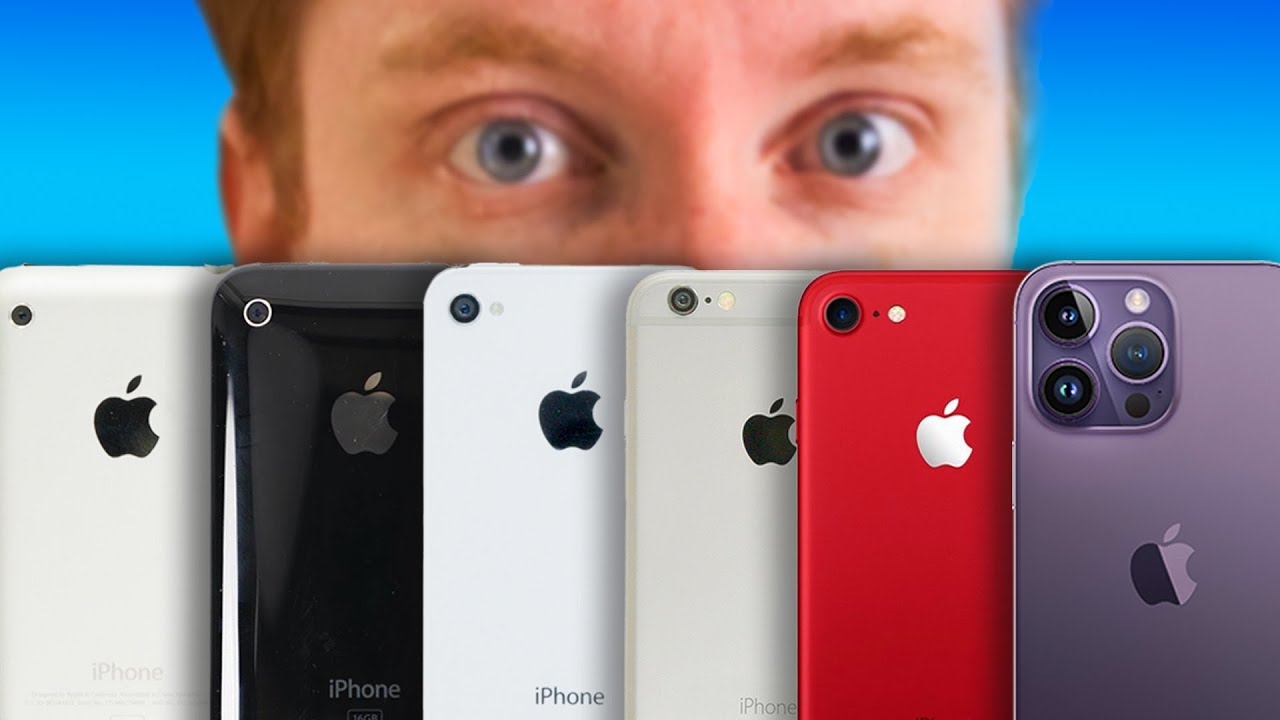
We tried every iPhone Camera...
0 up · 0 down · 0 ratings
Promos
Join us in War Thunder for FREE at playwt.link and get an exclusive bonus using our link - thanks for supporting the channel For over a year, Brandon Lee has been hoarding a bin of iPhones intending to test their cameras. So, I took him at his idea to see how the iPhone camera has evolved. Sony A9: geni.us Sigma 24-70 F2.8 Art: geni.us iPhone 14 Pro: lmg.gg iPhone 14 Plus: lmg.gg iPhone 13: lmg.gg Purchases made through some store links may provide some compensation to Linus Media Group. ► GET MERCH: lttstore.com ► AFFILIATES, SPONSORS & REFERRALS: lmg.gg ► PODCAST GEAR: lmg.gg ► SUPPORT US ON FLOATPLANE: floatplane.com FOLLOW US ELSEWHERE --------------------------------------------------- Twitter: twitter.com Instagram: @macaddressyt Facebook: @MacAddressChannel CHAPTERS --------------------------------------------------- 0:00 Intro 0:56 This was Brandon's idea 2:02 What we're taking and what we're taking it with 2:45 The first iPhone 3:20 Thanks WarThunder 3:43 Influencers love the 3GS?! 4:28 Things picked up with the iPhone 4 4:56 When the phone camera got serious 5:54 The 5S is contentious 7:43 How we got to now 10:04 The RAW difference 10:45 How does Portrait mode fit? 14:03 Final Thoughts
The video examines how iPhone camera quality has evolved by putting 23 different iPhone models side by side and comparing three types of photos: a daytime building shot, a nighttime desk shot, and a portrait with Portrait Mode. The hosts describe the idea as Brandon Lee’s brainchild, driven by a long-standing fascination with capturing light, and they retrace the major leaps in iPhone photography from the original model through the iPhone 14 Pro. Early models are characterized by very basic capabilities and limited focus and resolution, while notable milestones include the iPhone 4 bringing a large step forward in image quality and the iPhone 4S delivering a dramatic jump in overall photo clarity. The discussion delves into how processing and software have shaped outputs, contrasting the more “natural” look of RAW captures on modern devices with the highly processed results of older generations. A key moment in the analysis is the shift to Pro RAW and the 48 megapixel sensor on the iPhone 14 Pro, which the hosts argue represents a meaningful improvement in dynamic range, color accuracy, and low-light performance. The video also explores how Portrait Mode has evolved, using examples from various generations to illustrate how Apple’s algorithmic approach handles depth, edge detection, and background blur, and whether newer hardware justifies its additional processing. Throughout, the hosts weigh practical implications for photographers and casual users alike, including how these advancements influence whether someone might upgrade or switch platforms. The episode closes with reflections on the broader trajectory of iPhone photography, acknowledging that while newer phones offer impressive capabilities, the relationship between software processing and perceived image quality remains a nuanced topic that can vary by use case. Viewers are encouraged to share their experiences and opinions, and the hosts tease future explorations of camera tech and potential leaps beyond the current generation.
Topics · technology · photography
Questions answered
- Which iPhone generation marked the biggest perceived jump in photo quality according to the hosts?
- The iPhone 4S is described as delivering the biggest jump in photo quality in the iPhone's lifetime, with clearer detail and stronger overall performance.
- What is Pro RAW and why is it significant in this video?
- Pro RAW is highlighted as a significant development because the 48 megapixel Pro RAW output provides a more natural look with greater dynamic range and color accuracy, reducing over-processing compared to earlier generations.
- How does Portrait Mode on iPhone evolve in the discussion, and what are the practical concerns?
- Portrait Mode is shown as improving through generations, using algorithmic depth effects with the main wide camera. The hosts discuss practical limitations like proximity requirements and potential edge distortions, noting it can be less reliable in some scenarios.
- Why do the hosts compare photos with different lighting conditions, and what do they aim to illustrate?
- They compare daytime, nighttime, and portrait shots across iPhone generations to illustrate how hardware improvements and software processing interact under varying lighting, helping viewers understand where the biggest gains come from and how users might benefit in real-world photography.