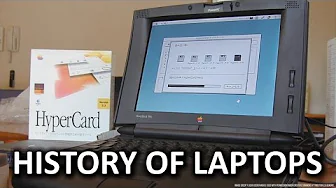
History of the Laptop
0 up · 0 down · 0 ratings
Description
We've gotten used to thin, light, yet powerful laptops that can do almost everything a desktop can - but it wasn't always that way! Learn about the history of laptops, from the earliest bulky portables to the sleek machines of today. Freshbooks message: Head over to freshbooks.com and don’t forget to enter Tech Quickie in the “How Did You Hear About Us” section when signing up for your free trial. Follow: twitter.com Join the community: linustechtips.com License for images used in this video: creativecommons.org
The video traces the evolution of portable computing from early room-sized machines to the slim laptops we know today. It begins with the 1968 concept of the D‑Book by Alan Kay, highlighting how the idea of portable computing emerged as an educational tool rather than a consumer gadget. The narrative then follows the IBM 5100 of 1975, describing its giant 24 kilogram frame and 5‑inch display as a milestone that proved you could pack substantial computing power into a single chassis, albeit at a heavy price. Moving forward, the Osborne 1 of 1981 popularized the term laptop and demonstrated the challenges of portability, with its bulky form factor and twin‑screen design. The 1983 Grid Compass offered a flat display and lighter weight, though compatibility hurdles limited its widespread adoption, while other firms began racing to balance price, weight, and performance. By the late 1980s, devices like the NEC UltraLite pushed weight even lower, and the device‑class name notebook started to take hold, signaling a shift from novelty to practical business tool. The mid‑1990s brought transformative software and input innovations with the PowerBook lineage from Apple, introducing the built‑in trackball and later the touchpad, which helped establish the modern laptop ergonomics. Windows 95 in 1995 then standardized BIOS interactions and power management, simplifying manufacturing and boosting interoperability across hardware and drivers, which accelerated mass adoption. In the following years, wireless networking, solid state storage, and better displays became standard, and new form factors such as netbooks and 2‑in‑1 convertibles emerged. The narrator closes with a forward look at ever thinner and lighter machines, suggesting that future laptops may become nearly paper‑thin while hinting at the ongoing balance between portability and capability. Overall the video blends design milestones, performance leaps, and evolving software ecosystems to explain why laptops evolved from room‑filling machines into the ubiquitous everyday devices we rely on today. It emphasizes a pattern of incremental improvements,drives toward lighter weight, better displays, integrated pointing devices, and standardized software interfaces,that collectively opened up portable computing to a broad audience of users, not just engineers or elites. The concluding message is one of continuous innovation, where portability does not mean sacrifice but rather invites ongoing refinement in both hardware and software to keep up with user needs and expectations.
Topics · technology_history · computer_hardware · mobile_computing · science_and_tech
Questions answered
- What was the first portable computer that resembled modern laptops, and when did it arrive?
- The Grid Compass in 1983 is often cited as the first laptop to resemble what we consider a modern portable computer, featuring a flat display and a lighter form factor.
- Which software development milestone helped standardize laptop design in the mid 1990s?
- Windows 95, released in 1995, helped standardize hardware interactions via BIOS, improving power management and reducing the need for diverse drivers, thus simplifying manufacturing.