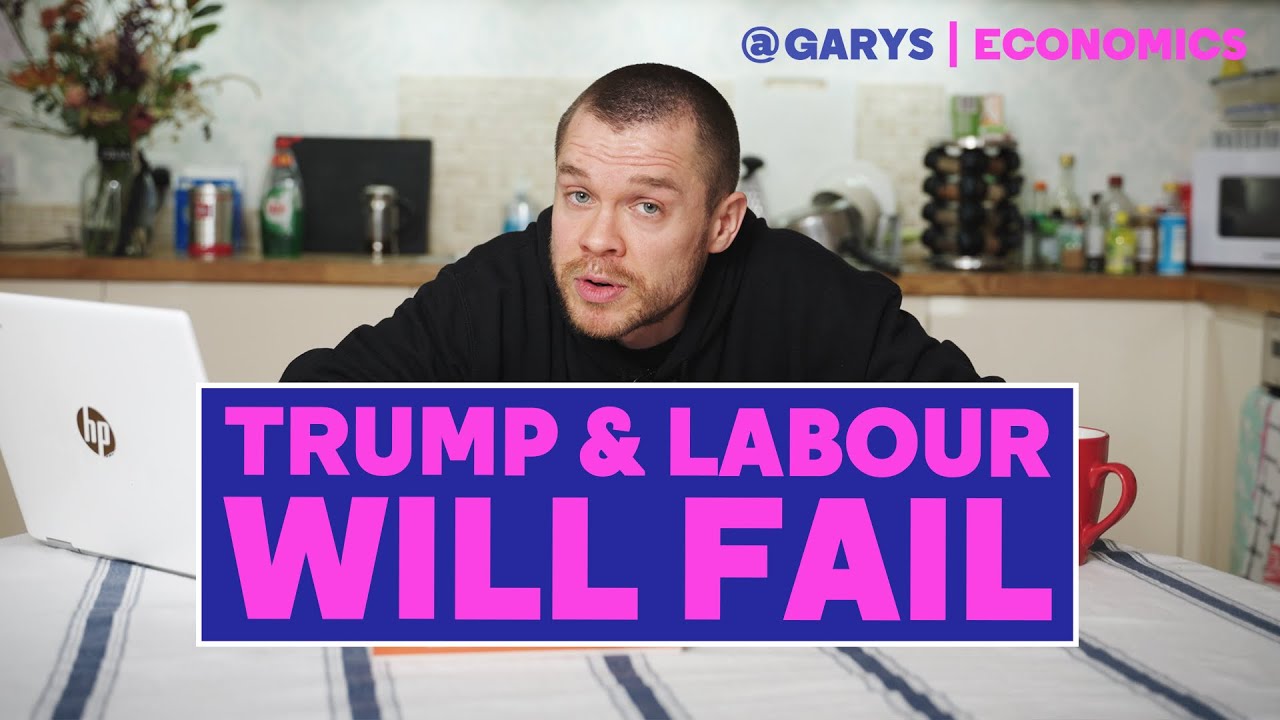
Why Labour and Trump will both fail
0 up · 0 down · 0 ratings
Promos
They have the same problem – and don't have a solution. UNDERSTAND, SHARE & PUSH BACK SPOTIFY - open.spotify.com INSTAGRAM - @garyseconomics TIKTOK - @garyseconomics BLUESKY - bsky.app X - twitter.com FACEBOOK - @garyseconomics PATREON - patreon.com DISCORD - discord.gg WEBSITE - garyseconomics.org SUBSCRIBE, SHARE & START A CONVERSATION Performed by Gary Stevenson @garyseconomics
Gary Stevenson's analysis focuses on why both Labour in the UK and Donald Trump in the US are likely to fail economically, despite occupying opposite ends of the political spectrum. He frames the discussion around a shared problem: rising wealth inequality and the misalignment between macro economic indicators and the lived experiences of ordinary people. He argues Labour’s approach, described as managed sensibilism, leans on borrowing, taxing, and investing more as a supposedly sensible path, but warns that this will fail because it does not address distribution or the real resource constraints faced by working people. The speaker supports his critique by comparing Labour’s plan to experiences in the United States under Biden and in Germany, where similar policy blends did not yield durable improvements in living standards. He emphasizes that high level GDP growth masks widening inequality and that policy must target wealth distribution to sustain living standards for the majority, not just the top earners. The analysis then turns to Trump, noting that his proposed policies on tariffs and immigration are popular rhetoric but economically fragile when scaled, due to domestic production readiness and market distortions. He argues that both Labour and Trump will end up resisting the necessary steps to actually implement their shouted promises, ultimately reinforcing inequality and poor living standards. The video closes with a call to shift political focus from red versus blue to protecting working people’s resources, and with a historical reminder that the fight to tax wealth, not work, is essential to safeguarding future generations’ prosperity.
Topics · economics · public policy · politics · education · socioeconomics · global affairs
Questions answered
- What is meant by Labour's 'managed sensibilism' and why does the speaker think it will fail?
- Managed sensibilism is described as borrowing, taxing, and spending more with increased investment, framed as a sensible policy by mainstream economists. The speaker argues it will fail because it relies on large-scale investment without adequately addressing wealth distribution and inequality, and because real resources are constrained by tax and borrowing limits, leading to falling living standards for the majority.
- Why does the presenter compare Trump’s tariffs and immigration stance to Conservative government actions in the UK?
- The presenter explains that both Trump and Conservative rhetoric on immigration and tariffs sounds protective and popular but actual policy implementation often lags or misaligns with economic needs. In both cases, sectors dependent on immigrant labor and industrial capacity may suffer if policy is not carefully prepared and targeted, leading to weaker economic outcomes than promised.
- What is the suggested policy focus to protect living standards according to the video?
- The video urges focusing on redistribution by taxing wealth rather than work, and on ensuring resources follow a fair distribution to protect the middle and working classes. It emphasizes transparency about who gains from policy and argues that protecting ordinary people requires active measures to counter rising inequality, not just promoting growth numbers.