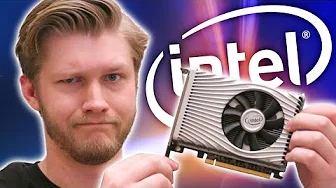
Intel's Dedicated Graphics - I'm skeptical...
0 up · 0 down · 0 ratings
Promos
Remotely monitor and manage your server or PC at lmg.gg and get 20% off Pulseway's Teams plan. Thanks to Pulseway for sponsoring our CES 2020 Coverage! At CES Intel unveiled their DG1 - their first attempt at making a dedicated graphics card... since the last two times they tried and failed. So will history repeat itself, or is the third time the charm? Our Affiliates, Referral Programs, and Sponsors: lmg.gg Get a Displate Metal Print at lmg.gg Get a 30-day free trial of Amazon Prime at lmg.gg Linus Tech Tips merchandise at lttstore.com Our Test Benches on Amazon: amazon.com Our production gear: geni.us Twitter - twitter.com Facebook - @LinusTech Instagram - @linustech Twitch - twitch.tv Intro Screen Music Credit: Title: Laszlo - Supernova Video Link: youtube.com iTunes Download Link: itunes.apple.com Artist Link: soundcloud.com Outro Screen Music Credit: Approaching Nirvana - Sugar High youtube.com
The video opens with Linus expressing a healthy dose of skepticism about Intel’s move into dedicated graphics, even though he is holding a DG1 sample in hand. He frames the discussion within a long history of Intel graphics attempts that frequently fell short of consumer expectations, tracing the lineage of failed efforts from Auburn to Larrabee and beyond. The host acknowledges that while a discrete GPU from Intel could bring interesting possibilities, especially when paired with CPUs for mobile devices, the real question is whether this third attempt will translate into a compelling product for gamers. He notes that the CES 2020 demonstration showed a working sample running Warframe, but the frame rate dipping below 60fps raised caution signs about the maturation timeline. The narrative then shifts into a detailed history lesson, recounting the early days of graphics hardware, the ambitious Auburn project, and the missteps that followed, before circling back to the DG1 as a potential inflection point. The host underscores Intel's strategic advantage in tightly integrating CPU and GPU components for mobile platforms, where power and cooling constraints create a unique opportunity for improved gaming experiences on slim laptops. He remains hopeful that software optimization and broader ecosystem support could unlock substantial gains, even if a consumer-ready GPU never matches Nvidia or AMD in raw performance. The video closes with a forward-looking note that the next couple of years will be telling for Intel’s graphics ambitions, and invites viewers to subscribe for more updates on how Intel fares in future iterations. The second paragraph delves into the CES 2020 reveal and the broader context of Intel’s ambitions. Linus describes how the DG1 could signal more than just a standalone graphics card, emphasizing the potential for a coordinated effort with Intel’s CPUs to push mobile and thin-and-light gaming capabilities. He highlights the importance of turbo boost, power management, and thermal constraints in delivering a smooth gaming experience on small form-factor devices, suggesting that even if the DG1 doesn’t topple Nvidia or AMD, it could meaningfully shift the landscape by enabling better integrated performance. The discussion also touches on how software partners and driver optimization will influence real-world results, noting that performance benchmarks and developer support will be critical to judging DG1’s impact. Throughout, the host blends humor and historical context with technical insights, keeping the focus on what a true gaming-optimized Intel GPU would need to succeed. The video argues that the most compelling outcome would be stronger competition that benefits all gamers, particularly in mobile gaming scenarios, while maintaining a cautious stance about short-term results. The overall takeaway is a measured optimism grounded in a deep dive history and a clear-eyed expectation that meaningful progress will require time, software maturity, and ecosystem coordination.
Topics · technology · history · hardware · gaming
Questions answered
- What is the Intel DG1 and why is it significant for gamers?
- The DG1 is Intel's first attempt at a dedicated graphics card in years, marking a potential shift in how Intel could integrate CPU and GPU for gaming, especially on mobile devices. Its significance lies in the possibility of closer CPU-GPU coordination to optimize performance within power and cooling constraints, rather than just raw GPU power.
- Why is Intel’s track record with discrete GPUs historically problematic?
- Historically, Intel’s discrete GPU efforts, such as Auburn and Larrabee, failed to deliver competitive gaming performance and ultimately did not reach the consumer market as gaming GPUs. The video notes these attempts ended without the intended impact for gamers, shaping a skeptical view of a third attempt being any different.
- What factors will determine whether the DG1 succeeds in the market?
- Key factors include driver and software optimization, strong ecosystem and developer support, performance that meets or surpasses expectations in real games, and the effective integration with Intel CPUs to deliver compelling mobile gaming experiences while staying within power and thermal limits.