NVIDIA GeForce GTX 590 Maximum Overclocking Results Linus Tech Tips
0 up · 0 down · 0 ratings
Description
ncix.com Let me start by saying I do NOT recommend doing this... Normally I have no qualms about showing you guys how to overclock and unlock your hardware, but the power consumption and heat output of this card goes up so dramatically when overclocked, I do not know what the long term effects would be....
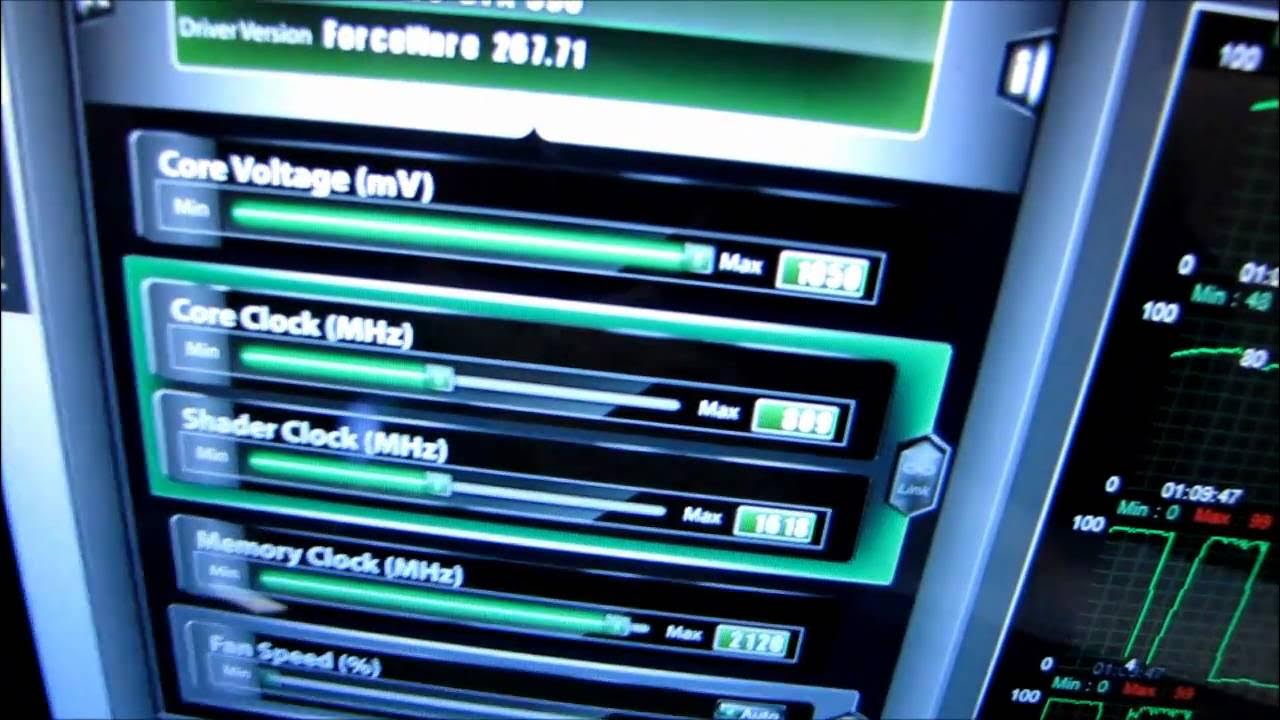
Linus Tech Tips investigates how far a GTX 590 can be pushed beyond stock speeds using advanced overclocking. The host starts by testing the latest Afterburner beta that supports overvolting and carefully evaluates whether the underclocked GF11 configuration on the GTX 590 can approach the performance of a single GTX 580 when voltage is increased. He explains that although the hardware cannot match single-card performance at the same voltage, he manages to push the core clock well beyond stock, hitting approximately 809 MHz with a shader/clocks aligned to the higher end, and memory clocks exceeding 2.1 GHz. The host notes that this comes with dramatically higher power draw and heat, and he explicitly warns viewers about potential warranty implications and long-term reliability. He then shares the final benchmarking results, using 3DMark 11 with an extreme overclock and later comparing to stock results, highlighting a marked but variable performance uplift across applications. The temperatures stay high, with peaks around the upper 80s Celsius and power consumption reaching over 500 watts from the wall, sometimes approaching 550 to 570 watts in demanding games like Metro 2033. Across tests, the overclocked GTX 590 demonstrates notable performance gains in some scenarios, with the author reporting up to roughly 15 percent improvements in certain workloads, and he emphasizes the practical realities of heat, noise, and power when chasing higher clocks. In closing, Linus thanks viewers for watching, suggests further experiments with cooling and firmware modifications, and invites audiences to subscribe for more hardware reviews and overclocking content, while reiterating the experimental and warranty-related caveats of pushing a GPU beyond stock specifications.
Topics · hardware · overclocking · graphics · technology
Questions answered
- What core and memory clocks were achieved on the GTX 590 during the overclocking session?
- Core clock reached 809 MHz and memory clock exceeded 2.1 GHz.
- What were the observed temperatures and power usage during the overclocked benchmarking?
- Maximum temperatures hovered in the upper 80s Celsius, with power consumption from the wall often over 500 watts and sometimes up to 550 to 570 watts in demanding workloads.
- What cautions did the presenter give about overclocking the GTX 590?
- Overclocking increases heat and power, may void warranties, and long-term reliability is not guaranteed; the card used had no warranty in the test scenario.