Why the Oil Crisis Is (Secretly) Good...
0 up · 0 down · 0 ratings
Channels and socials
Check out Abacus chatllm.abacus.ai The Strait of Hormuz carries ~20% of the world's oil every single day. So when tensions escalate, everyone assumes an oil crisis follows. But what if that's only half the story? In this video, I'll break down: • Why the Strait of Hormuz is the most important chokepoint on the planet • Why oil shocks don't hit every country equally • How the United States became the world's largest oil producer • Why this may be much more than just an oil crisis Complex topics, simple breakdowns. Join my free weekly newsletter to stay ahead of what's actually happening in markets: casualmarkets.co All illustrations, visuals, and animations in this video are original and hand-drawn by a freelance artist. Disclaimer: The information provided in this video and on this channel (collectively, the “Content”) is for informational, educational, and entertainment purposes only and does not constitute investment, financial, legal, or tax advice, nor a recommendation to buy, sell, or hold any security or investment strategy. Investing involves risk and you must do your own research. Nothing in the Content should be interpreted as creating a fiduciary relationship, financial advisory relationship, or client relationship of any kind. The host, the channel, and all affiliated entities expressly disclaim any and all liability for any direct or consequential loss or damage arising directly or indirectly from the use of, reliance upon, or interpretation of the Content. By viewing or interacting with the Content, you acknowledge and agree to these terms and release the host and all related parties from any and all claims related to your reliance on the information provided. #finance #stocks #oil #economics #investing
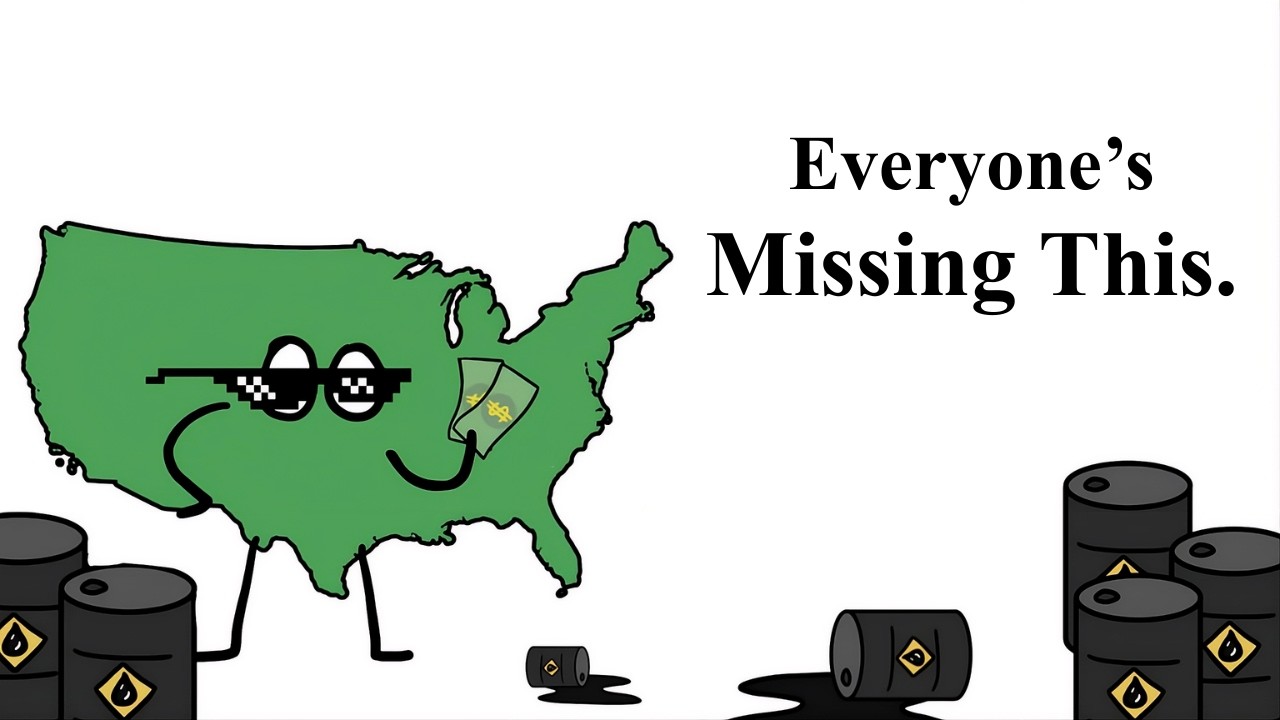
The video opens by arguing that the world expects an oil crisis whenever tensions escalate around the Strait of Hormuz. It explains that the Strait is the key sea passage from the Persian Gulf to open ocean, and that roughly 20% of the world’s oil passes through it every day. However, the host claims the mainstream story may be only half the picture because oil shocks do not hit every economy equally. The argument shifts from “crisis” to “positioning,” emphasizing that the real question is who is exposed and how. A major part of that exposure claim is historical and structural. The host contrasts the past, when the United States was heavily dependent on foreign oil, with the present, when the US has unlocked massive shale reserves and is the world’s largest oil producer. The video then argues that because most Strait of Hormuz oil is not headed to the US, the shock becomes asymmetric: for the US it is framed mainly as a price problem since oil is globally priced, while for Asia it becomes both a price and a supply access problem. It supports this with trade flow details, stating that China, India, Japan, and South Korea account for roughly 75% of the oil moving through the Strait, and that losing access can translate into rationing and stalled production. The video adds a second layer by extending the chokepoint concept beyond oil to natural gas. It claims the Strait also carries roughly 20% of global liquefied natural gas supply, with Qatar and the United Arab Emirates sending over 90% of their LNG exports through the Strait. The host says the United States has become the largest exporter of LNG, which can shift the market dynamic toward substitution when supply is disrupted elsewhere. To illustrate market reaction, it cites reported stock moves such as Venture Global LNG up nearly 40% over the past month and Cheniere Energy up nearly 15%, tying the “scarcity creates opportunity” framing to energy companies and exporters. Midway through, the video briefly transitions to a sponsor about AI tool selection and routing, then returns to the geopolitical question of winners and losers. From 5:55 onward, the host frames Strait disruption as leverage rather than only energy fear. If the United States can tolerate the shock better due to its position in oil and LNG markets, the video asks who bears the bigger cost, answering China. It acknowledges China’s preparation, including diversifying suppliers, building strategic reserves, and expanding imports from countries like Russia, Brazil, and Venezuela, but argues these safeguards only delay the exposure. The host quantifies China’s reliance by stating it consumes about 15 to 16 million barrels per day and imports roughly 11 million barrels, with a large portion coming from the Middle East through the Strait. The closing takeaway is that the timing might point to geopolitical leverage: as Strait tensions rose, US and China trade negotiations were also reaching a critical point, so the host suggests the Strait could function as a chokepoint for power, not just for oil.
Viewers largely react to the analysis as both entertaining and controversial. Many praise the storytelling quality, calling it “rare” or “amazing,” and appreciate the core reframing of Hormuz as a chokepoint for power rather than only oil. A frequent criticism is that the host allegedly left out important second order effects and related commodities, with commenters specifically citing fertilizer, helium, refining constraints, and broader logistics beyond energy. Several viewers argue the “good for” framing is misleading for everyday people, pointing to gasoline and diesel price impacts, inflation concerns, and the idea that winners like oil companies do not translate into benefits for the public. Other commenters raise petrodollar or currency-angle objections, including claims about payments in yuan and whether US actions truly increase pressure on China. There is also some confusion or disagreement about how much the US is insulated versus still constrained by global markets, plus requests for follow ups that address missing nuance.
Topics · economics · finance · markets · stock market · business · education
Questions answered
- How much of the world’s oil passes through the Strait of Hormuz each day?
- Roughly 20% of the world’s oil passes through the Strait of Hormuz every day.
- Why can an oil shock affect the United States differently than Asia?
- The video’s core claim is that the United States mostly experiences a price effect because oil is globally priced, while many Asian economies face a supply access problem when energy supply routes are disrupted, which can translate into rationing and stalled production.
- Which countries account for most of the oil moving through the Strait of Hormuz, according to the video’s breakdown?
- China, India, Japan, and South Korea are stated to account for roughly 75% of all the oil moving through the Strait.
- What share of global LNG supply flows through the Strait of Hormuz, and which exporters rely on it heavily?
- The video states the Strait carries roughly 20% of global liquefied natural gas supply, and that Qatar and the United Arab Emirates send over 90% of their LNG exports through the Strait.
- In the leverage framing, which country is portrayed as the biggest loser if the Strait of Hormuz is disrupted?
- China.