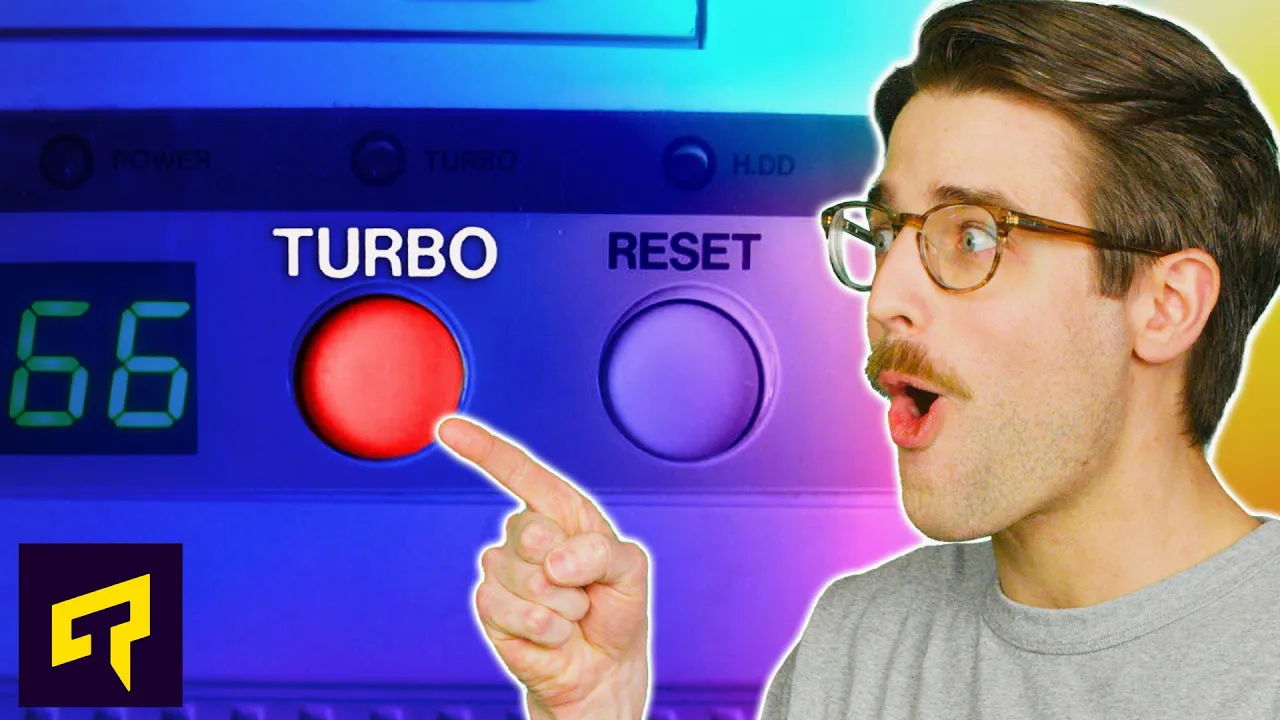
Why PCs Had a TURBO Button
0 up · 0 down · 0 ratings
Promos
Set up your own server today and get a $100 60-day credit at: linode.com Older computers often had a button marked TURBO - was it a button that could make your PC go faster with just one press? Why don't current PCs have this feature? Leave a reply with your requests for future episodes. ► GET MERCH: lttstore.com ► LTX 2023 TICKETS AVAILABLE NOW: lmg.gg ► GET EXCLUSIVE CONTENT ON FLOATPLANE: lmg.gg ► SPONSORS, AFFILIATES, AND PARTNERS: lmg.gg FOLLOW US ELSEWHERE --------------------------------------------------- Twitter: twitter.com Facebook: @LinusTech Instagram: @linustech TikTok: @linustech Twitch: twitch.tv
The video explains that the turbo button on older PCs was not simply a one click speed boost but a purposeful way to synchronize software expectations with hardware timing. In the early days, many programs were written with the assumption of slower CPUs, such as the original 8086 running at 4.77 MHz, and as consumer PCs evolved to faster 286 and 386 processors, these programs began to run too quickly, causing erratic behavior, especially in games where on-screen elements would move too fast. The turbo button essentially slowed the CPU to a lower, more compatible performance state so aging software could execute at the intended pace. Some machines even displayed an LED readout indicating the current CPU speed, high or low, to help users understand which mode the computer was operating in. Over time, as software and hardware matured, the paradigm shifted toward relying on real-time clocks for consistent timing rather than clock speed, which is why modern CPUs and systems no longer use a turbo button. The video concludes by showing how the underlying idea persists in modern contexts, including emulation software like DOSBox and community mods that let users adjust virtual clock speed for retro or modern tasks, and it notes that some contemporary motherboards still offer a physical overclocking toggle for enthusiasts. The host also plugs sponsor Linode and ties the historical discussion to how quick, decisive actions, like a turbo boost, can translate to efficient remote server management today. Finally, the narrator teases future episodes and invites viewer suggestions while you should like, share, and subscribe for more hardware history.
Topics · technology · history · computing · hardware · gaming · software · emulation · education
Questions answered
- What did the turbo button actually do on older PCs?
- It slowed the CPU to a lower performance state so older programs and games would run correctly by matching the software's timing expectations.
- Why did modern PCs stop using a turbo button?
- Because software started relying on a real-time clock and a wider variety of CPU speeds, making a single hardware speed control unnecessary for consistent timing.