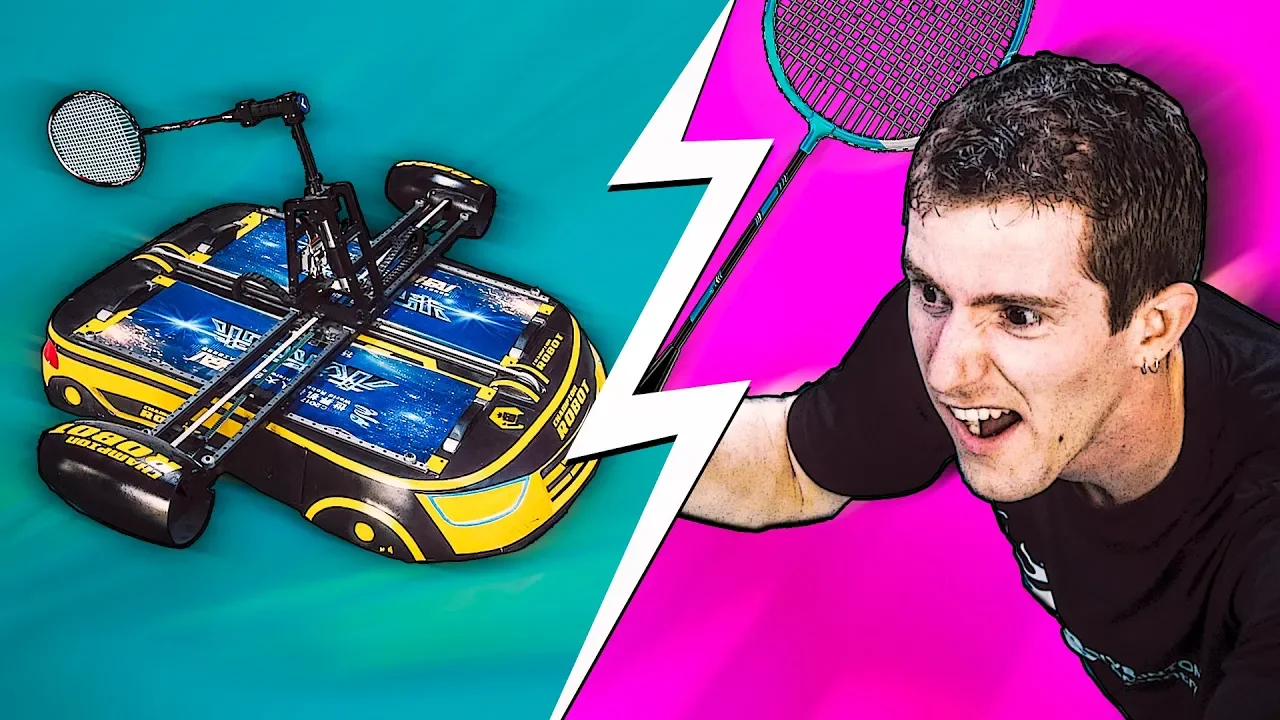
I went to CHINA just to try this!
0 up · 0 down · 0 ratings
Promos
Check out Videoblocks at videoblocks.com Robots are poised to take a HUGE number of jobs in the next few decades, but do we also have to worry about them out-doing us at our HOBBIES too?? Buy badminton gear on Amazon: geni.us Discuss on the forum: linustechtips.com Our Affiliates, Referral Programs, and Sponsors: linustechtips.com Linus Tech Tips merchandise at designbyhumans.com Linus Tech Tips posters at crowdmade.com Our Test Benches on Amazon: amazon.com Our production gear: geni.us Get LTX 2018 tickets at ltxexpo.com Twitter - twitter.com Facebook - @LinusTech Instagram - @linustech Twitch - twitch.tv Intro Screen Music Credit: Title: Laszlo - Supernova Video Link: youtube.com iTunes Download Link: itunes.apple.com Artist Link: soundcloud.com Outro Screen Music Credit: Approaching Nirvana - Sugar High youtube.com Sound effects provided by freesfx.co.uk
The video documents Linus Tech Tips visiting a university institute in China to see and test a life-sized badminton playing robot. Initial explanations reveal that the system uses two Baumer cameras with high resolution and fast frame rates to perform stereo computer vision and track the shuttlecock in near real-time. The host learns that the base stations and cameras work together to predict the shuttle’s landing point with delays as low as about 10 milliseconds, enabling the robot to react quickly on the court. The session starts with a private demo where the robots play a fully robotic game, illustrating how the racket, servo, and movement on the court are coordinated without traditional human sensors. As the demonstration progresses, the host notes that the robot frequently returns to the center position, which optimizes its next shot, and observes the prototype’s evolving capabilities. The video also lays out practical details for potential buyers, including price around 65,000 USD for the complete system and the power and computing setup in the base station. In later segments the researchers discuss future enhancements like blocking a smash or using AI to predict the opponent’s shot and react proactively, signaling a path toward a commercial product. The host reflects on the interplay between robotic automation and human skill, suggesting a future where technology might surpass human performance in niche hobbies, while also highlighting the current limits of the technology and the human element still required for optimal play.
Topics · technology · education · robotics · science
Questions answered
- What makes the badminton robot able to respond so quickly to shuttle movement?
- It uses two high-resolution stereo cameras at 180 frames per second and a predicted trajectory with a very short delay, allowing its control system to decide a swing within about 10 milliseconds after the shuttle starts moving.
- What is the approximate price of the complete system and what does it include?
- The complete system is about 65,000 US dollars and includes the robot, base station with cameras, and supporting hardware for operation.