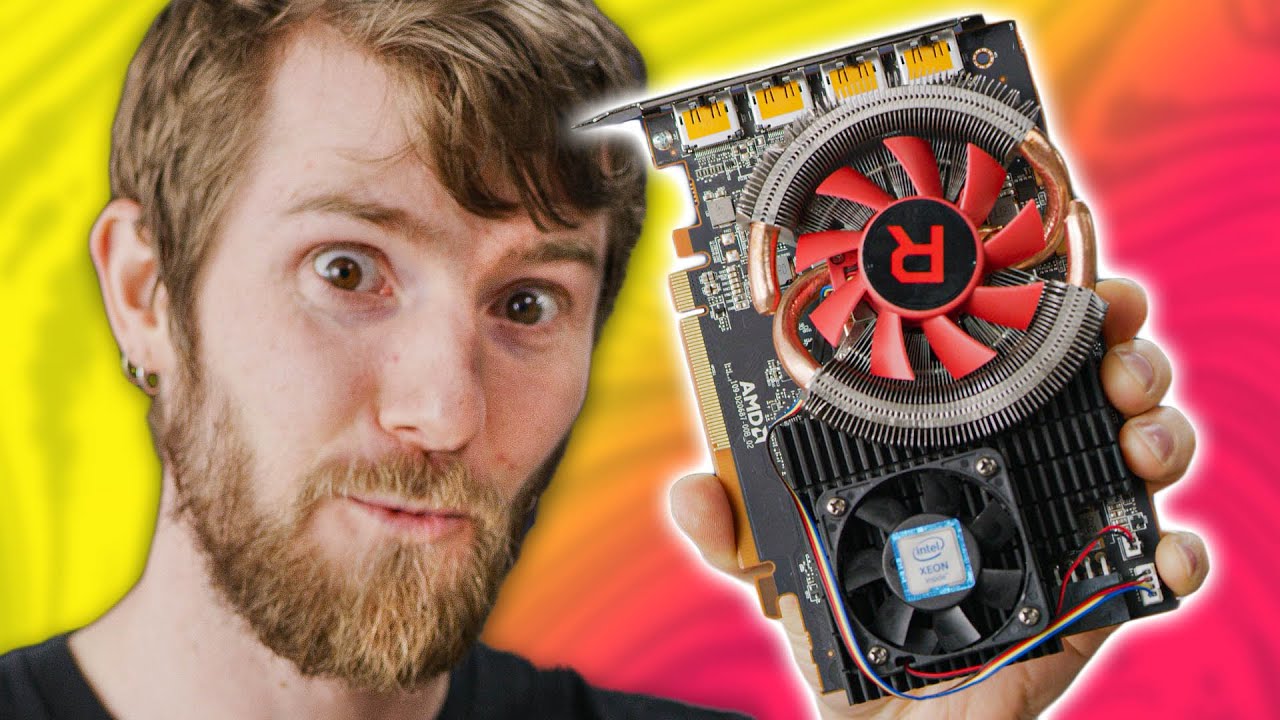
We got the GPU AMD wouldn’t sell…
0 up · 0 down · 0 ratings
Promos
AMD’s Vega wasn’t the most powerful GPU in the world, but they had some plans for it that never saw the light of day. Now that we’ve got one of the axed cards, was it for the best? Buy AMD Vega GPUs On Amazon (PAID LINK): geni.us On Newegg (PAID LINK): geni.us On B&H (PAID LINK): geni.us Purchases made through some store links may provide some compensation to Linus Media Group. Discuss on the forum: linustechtips.com GET MERCH: lttstore.com SUPPORT US ON FLOATPLANE: floatplane.com LTX EXPO: ltxexpo.com AFFILIATES & REFERRALS --------------------------------------------------- Affiliates, Sponsors & Referrals: lmg.gg Get Private Internet Access VPN at lmg.gg Get a Mech Keyboard: geni.us NEEDforSEAT Gaming Chairs: geni.us Get a Displate Metal Print at lmg.gg Use code LINUSMEDIAGROUP on Epic Games Store: lmg.gg Get a 30-day free trial of Amazon Prime at lmg.gg Our Gear on Amazon: geni.us FOLLOW US ELSEWHERE --------------------------------------------------- Twitter: twitter.com Facebook: @LinusTech Instagram: @linustech Twitch: twitch.tv FOLLOW OUR OTHER CHANNELS --------------------------------------------------- Techquickie: lmg.gg TechLinked: lmg.gg ShortCircuit: lmg.gg LMG Clips: lmg.gg Channel Super Fun: lmg.gg Carpool Critics: lmg.gg MUSIC CREDIT --------------------------------------------------- Title: Laszlo - Supernova Video Link: youtube.com iTunes Download Link: itunes.apple.com Artist Link: soundcloud.com Outro Screen Music Credit: Approaching Nirvana - Sugar High youtube.com Monitor And Keyboard by vadimmihalkevich / CC BY 4.0 lmg.gg Mechanical RGB Keyboard by BigBrotherECE / CC BY 4.0 lmg.gg Mouse Gamer free Model By Oscar Creativo / CC BY 4.0 lmg.gg
The video begins with a sense of rarity and curiosity as Linus explains he has acquired a long lost AMD Vega 16 prototype, a card that never reached the market. The host walks through the physical card, highlighting odd design cues like a dev board header, a mixed cooling solution, and a bottom edge that only supports PCIe eight lanes despite a 16x connector, suggesting it was intended for a laptop rather than a desktop gaming GPU. They discuss how such a card would have been validated in a desktop environment, and speculate on its intended market segment, like a workstation or a special purpose GPU, given the absence of HDMI ports and the unusual power connector. The team then attempts to boot and read the card with modern drivers, finding that many fields are unknown or misread by GPUz, and realizing AMD’s own drivers would need manual IDs to recognize an unreleased device. Linux comes to the rescue as Anthony experiments with a Manjaro kernel patch set designed for Vega 16, aiming to get the GPU to render, albeit with caveats such as driver support, memory mapping, and power management changes. The video shifts to practical testing, including using a Linux boot drive, a display reconfiguration to an onboard GPU, and a controlled overclocking approach to see if the Vega 16 can render games and demonstrate real performance. By the end, the card shows limited but real usefulness in a Linux environment, rendering a game at playable frame rates with notable caveats like potential memory and driver issues, while the team conservatively concludes that a full AMD driver and hardware engineering effort would be needed to realize the card’s intended potential. The host stresses that the objective was exploratory rather than a definitive sales pitch, and closes with appreciation to the donor, a nod to related experiments, and a reminder that the hardware won’t be returned in a fully functional state for daily use. Overall, the video blends hardware forensics, cross-platform driver experimentation, and the humor of dealing with rare, unreleased tech to illustrate what might have been and what can still be learned from it.
Topics · technology · computing · hardware · linux · gaming · cpu_gpu_hardware · open_hardware · semiconductor_research
Questions answered
- What was unusual about the Vega 16 prototype's PCIe interface?
- The board appeared to be a desktop-like design with a 16x connector but only had pins enough for an 8x PCIe interface, suggesting it was intended for a laptop or a nonstandard form factor.
- Why did Linux become essential in this exploration of the prototype?
- Linux allowed the team to boot the system and run Vega 16-specific tests with patched kernel parameters, enabling rendering and experimentation despite limited or missing official driver support.
- What did the team conclude about the card's final release potential?
- They concluded that without a full AMD hardware and software effort, including proper drivers and power management tuning, the card would not be ready for release or broad consumer use.