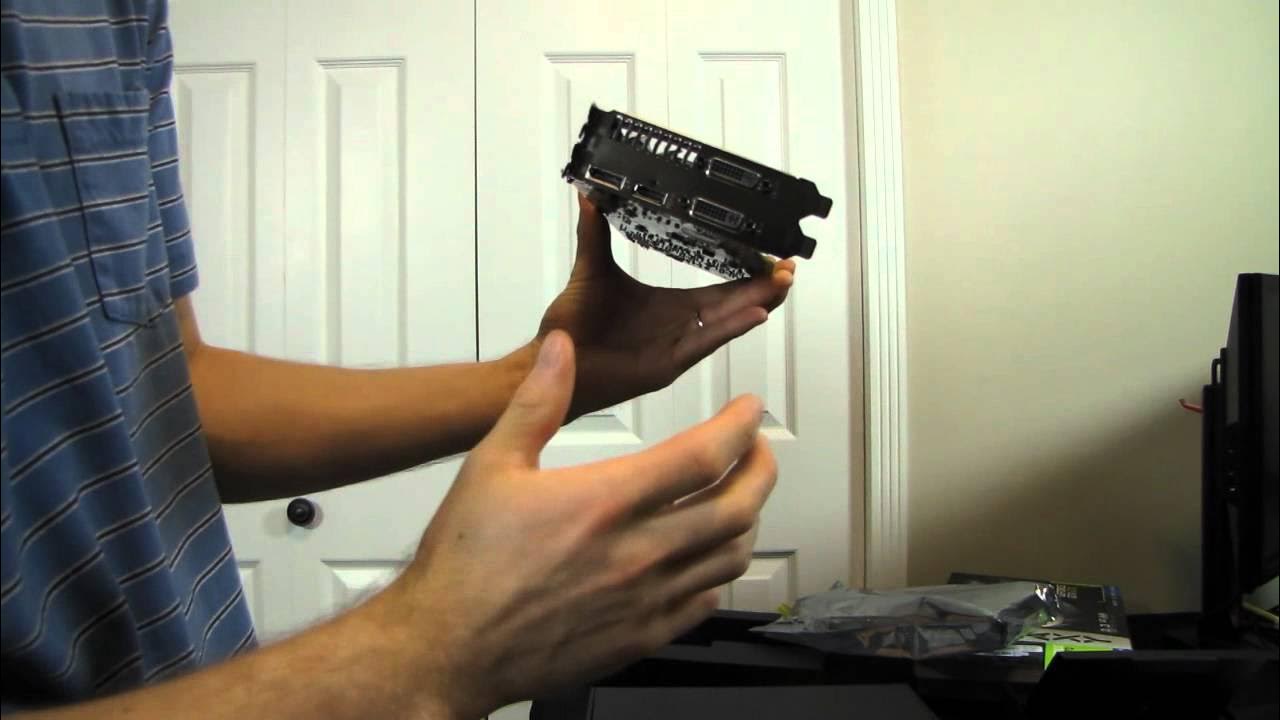
Galaxy GeForce GTX 670 GC Dual Fan Video Card Unboxing & First Look Linus Tech Tips
0 up · 0 down · 0 ratings
Description
CA: ncix.com US: us.ncix.com This is one of the more AWESOME looking non-reference GTX 670s. This thing looks absolutely amazing!
The video delivers a detailed unboxing and first-look at the Galaxy GeForce GTX 670 GC Dual Fan Video Card, emphasizing its non-reference design and enhanced cooling system. The host highlights that this card uses a short reference PCB but pairs it with a custom aluminum shroud and a beefy dual-fan cooler, featuring four heat pipes and a large radiator-style heatsink. He notes the factory overclock to slightly over 1 GHz, while memory remains at 6 GHz, and explains how Nvidia’s features such as TXAA anti-aliasing, GPU Boost, and adaptive vsync are implemented to balance image quality, power use, and performance. The video also covers connectivity options including dual DVI, HDMI, and DisplayPort, as well as support for 4K displays and Nvidia 3D Vision, situating the card as a high-end option within the GTX 670 lineup. Throughout the unboxing, the presenter contrasts the non-reference Galaxy card with the reference PCB, pointing out how Galaxy has moved power delivery components to the left side and added ventilation holes in the PCB to improve airflow over critical components, a design choice presented as both practical and innovative. He also comments on the implications for case ventilation, noting that the two 92 mm fans are likely to run cooler and quieter than the reference design, but advising viewers to ensure their cases have good airflow since some exhaust air will remain inside the case. The segment closes with a recap of key specs, a firsthand assessment of build quality, and a call to action to subscribe for more unboxings and hardware content from Linus Tech Tips.
Topics · hardware · graphics_cards · technology · unboxing
Questions answered
- What are the key features of the Galaxy GTX 670 GC Dual Fan compared to the reference design?
- Key differences include a non-reference aluminum cooling shroud with dual 92 mm fans, four heat pipes, and enhanced airflow due to ventilation holes in the PCB. The card also uses a long-term overclocked clock near 1 GHz with 6 GHz memory, and it adds an 8-pin PCIe power connector alongside a 6-pin, supporting robust cooling and power delivery.