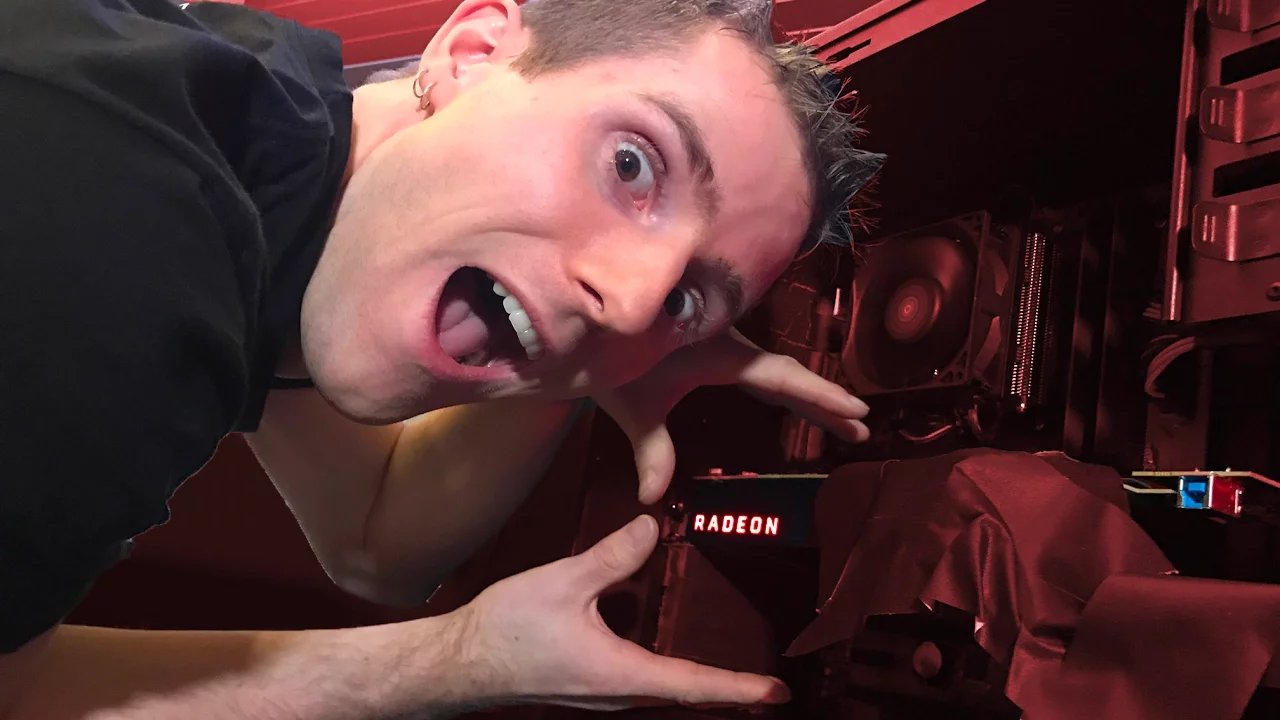
Hands LITERALLY On AMD Vega!
0 up · 0 down · 0 ratings
Channels and socials
Thanks to AMD for sponsoring this video from CES 2017! Learn more about Radeon Vega: ve.ga and stay up to date with all things Radeon at @Radeon AMD Vega - it's real, and though the card we saw here at CES is still very much an engineering sample, it looks like it's going to be pretty freaking exciting... Follow: twitter.com @linustech Join the community: linustechtips.com
The video takes viewers inside AMD's CES 2017 suite where Linus Tech Tips showcases the Vega accelerator family with a focus on gaming performance and new architectural features. It begins by presenting two impressive demos, including a 4K rendering setup using a four‑card Radeon Pro SSD cache array, teamed with a 200GB data set to yield photorealistic frames in near real time. The host highlights the practical implications for gaming, emphasizing Doom in 4K Ultra settings with TSAA X8 and Vulkan Ultra, claiming solid performance well over 60 FPS on Vega hardware. The discussion then shifts to core Vega pillars: the new cache architecture capable of handling gigabytes to terabytes of data, an advanced geometry pipeline able to process vast polygon counts, a new compute engine called Next Compute Unit (NCU), 16‑bit data types advantageous for HDR, and a novel draw stream binning rasterizer that reduces memory fetches without requiring game rewrites. The segment also demonstrates power monitoring capabilities introduced for engineers, including live visibility into CPU and GPU power signals, underscoring AMD’s emphasis on power efficiency alongside raw performance. Throughout, the video blends hands‑on hardware exposure with candid commentary about engineering samples, product timing, and the collaboration between Vega and Ryzen hardware, concluding with thanks to AMD and a call to subscribe for more CES coverage. The narrative interweaves technical depth with accessible explanations for a broad audience, illustrating not only what Vega can do but why those features matter for future gaming and content creation. The host punctuates the excitement with demonstrations that anchor theoretical claims in observable results, such as sustained 60 FPS in 4K, while acknowledging the engineering nature of the samples and the ongoing work ahead before a consumer release. The wrap‑up reinforces the message that Vega represents a significant step forward in GPU architecture, with practical tools for developers and engineers to optimize power and performance, and it invites viewers to stay tuned for more updates as the product journey progresses toward market availability in 2017.
Topics · technology · gaming · hardware_reviews · consumer_electronics
Questions answered
- What are the four main pillars of Vega highlighted in this video?
- The four pillars are the new cache architecture, the new geometry pipeline, the new compute engine called Next Compute Unit (NCU), and the new pixel engine known as the draw stream binning rasterizer.
- What is the purpose of the power monitoring feature shown in the Vega demos?
- The power monitoring feature allows engineers to remotely observe power and electrical signals from the CPU and GPU with no overhead, helping optimize power usage and performance during development.